Car Appraiser Berlin Friedrichshagen – Structured Recording and Reliable Assessment
Factual documentation, a traceable sequence, clear results
If a vehicle has been damaged in Friedrichshagen, one thing matters above all: a structured, traceable record of all relevant findings. We describe step by step how damage is recorded in an orderly way, which photographic perspectives and which documents are useful, and how this leads to an assessment of whether the vehicle can continue to be used safely. During the first inspection, we systematically distinguish between visible body damage, function-related elements, safety-relevant components such as brakes or steering, and the repair status. We also record measuring points, the condition of fitted parts and any existing previous damage in writing, so that later statements on the cause of the accident and on whether the vehicle can be restored remain traceable. The aim is clear documentation that helps you classify the condition of the vehicle and recognise possible short-term operating restrictions, without a final valuation having been made yet. Friedrichshagen on the Müggelsee has a busy shopping street in Bölschestraße and many quiet cobbled residential streets around it. As a car appraiser in Berlin Friedrichshagen, we inspect your vehicle where it is parked. What else we offer as a car appraiser in Berlin & Brandenburg is described on the home page.
Inspection location

Why a structured recording of findings matters
A structured recording of findings reduces uncertainty and creates manageable decision points, especially after an incident in Friedrichshagen. The first inspection is not just about counting dents or scratches, but about specifically recording details relevant to the assessment: which components are mechanically affected, which functions are restricted, which add-on parts are loose or missing, and which repair status is recognisable. For you as the vehicle owner, it is important to have photos with reference points, measurement notes on panel gaps and details of the tyres and lighting fitted at the time. Vehicle documents, the latest MOT/HU entry, service records and previous findings, if available, are also relevant. With such a systematic collection, it is easier to judge later whether the car can still be operated in the short term, which measures are urgent and which aspects need to be dealt with separately in a later valuation or cost calculation. We structure the recording so that you can follow the order of the inspection: exterior damage, function tests, underbody inspection, interior observations, document check and photo documentation.
Specific steps of the structured inspection
The following points show which areas are routinely covered in a structured recording. Each point is documented and prioritised so that you can make well-founded decisions about using or repairing the vehicle.
Exterior findings and photo documentation
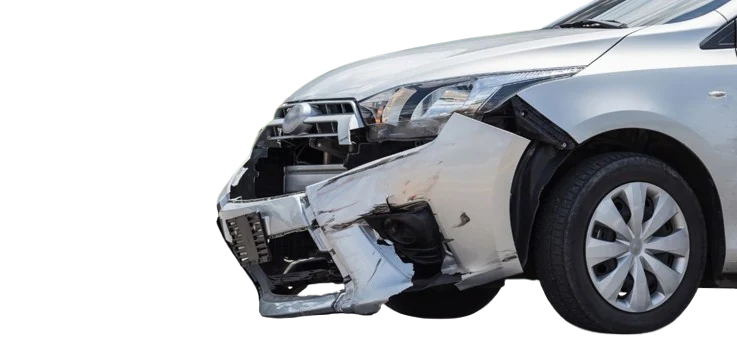
First, all exterior damage is visually checked and photographed from defined angles. We note the location, extent and surface character – whether it is paint chipping, cracks or deformation – and add comparison photos of the intact area where possible. Measurements and clear reference points are recorded so that the repair requirement and, if necessary, the comparison with previous damage remain reliably traceable later. This structured photo and text documentation is the basis for every further assessment. We also offer this service in neighbouring areas such as Köpenick and Mahlsdorf.
Function tests and safety-relevant components
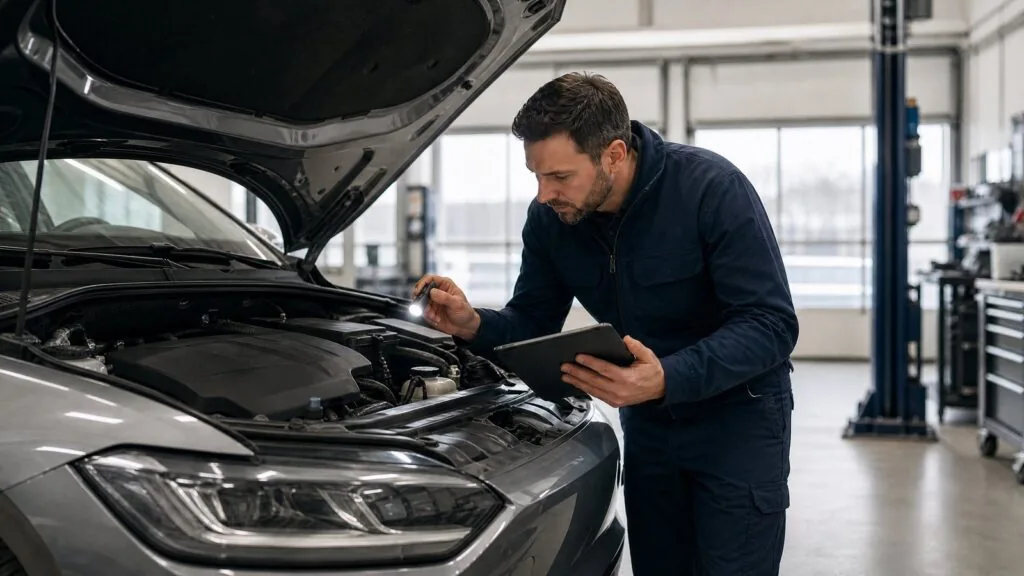
We then concentrate on function checks: lighting, steering play, braking force and suspension behaviour are tested in a traceable order. Faults or restrictions on safety-relevant components are highlighted separately and given urgency levels. This makes it clear whether the vehicle needs technical work before it is driven again or whether temporary measures are possible. The inspection is carried out so that later assessments of operational safety and repair priority are reliably documented.
Underbody, mountings and signs of repair
Checking the underbody and the mounting points provides information about structural stress and possible signs of repair. We record defective brackets, distorted mountings, worn bearings and signs of straightening work in writing. Visible welding seams, reworked underbody protection or freshly painted areas are documented and related to visible previous damage. On this basis, you can better judge whether professional repair is required or whether the damage is purely cosmetic.
Interior and technical controls
In the interior, airbag warning lights, seat belts, controls and effects on the vehicle structure are checked. We note warning indicators, restricted operability and visible damage to the dashboard and components that allow conclusions to be drawn about the forces involved. Photos and position details are also taken so that priorities for safety and use can be clearly identified in the interior as well. These steps serve to systematically document technical and safety-relevant restrictions.
What the order of the inspection achieves
The right order when recording findings prevents important details from being overlooked or wrong conclusions from being drawn. In Friedrichshagen we start with exterior features and work our way through to function tests and the underbody, because this makes connections between visible damage and functional deficits apparent quickly. If, for example, steering or braking problems are checked after the body inspection, indications of axle or structural damage can be linked more quickly. Every observation is given a date, time and a short inspection note so that later comparisons or developments of the damage are documented. This structured documentation practice makes coordination with garages and insurers easier, as it provides clearly verifiable findings and makes the prioritisation of repair work transparent.
Clear priorities for immediate action
Thanks to the structured order, you can see immediately which defects endanger safe use and which measures are needed promptly.
Traceable photo and text documentation
You receive an organised collection of photos with reference points and annotated measurements.
Clear separation from previous damage
Comparison photos and written notes make it possible to separate earlier damage from the current damage at an early stage.
Decision support instead of instant value judgements
The recording focuses on assessing safety of use and necessary measures, not on final market values.
Timing and documents for a structured recording
For a reliable recording of findings, the time immediately after the incident is often the most useful, but later inspections can also be carried out in a structured way. In Friedrichshagen it helps if you have basic documents ready before the appointment: vehicle registration certificate, the latest MOT/HU and service records, existing repair invoices and, if available, photos taken before the damage. Mobile phone photos of the damage taken in advance help to avoid repeat shots and show changes. During the inspection, additional targeted photos are taken from several perspectives, measurements are noted and short function checks are carried out where necessary. This creates a complete picture that covers both acute safety issues and aspects for later cost and value considerations.
Reliability in describing the process
The documented order makes it possible to describe the condition of the vehicle at a specific point in time precisely. This makes subsequent checks easier and reduces room for interpretation.
Efficient communication with garages
When checks and findings are recorded chronologically, garages can set priorities in a targeted way and prepare cost estimates more precisely.
Why a structured order makes sense: benefits of the documented sequence
Preventing further damage
A structured inspection reveals weak points early on that could lead to consequential damage if the vehicle continues to be used. This allows risks to be minimised in good time.
A better overview for further decisions
The structured presentation helps you to clearly separate repair requirements, possible restrictions of use and time priorities and to assess them at a glance.
How your car appraiser in Berlin Friedrichshagen records your damage
The process follows a fixed order that takes both visual and functional aspects into account. Each phase is logged, supported by photos and given a short assessment.
First contact and preliminary information
You briefly describe the incident and, if possible, send initial mobile phone photos and the most important vehicle documents. Based on this preliminary information, we set the priorities for the subsequent on-site or inspection steps.
Visual exterior check with reference photos
During the exterior inspection, all body panels and add-on parts are systematically photographed from defined perspectives. Reference points and measurements are added so that later comparisons are possible.
Function tests and safety-relevant inspection
After the exterior documentation, function checks follow on the steering, brakes, lighting and electronic displays. Any deficits found are assessed and classified according to the action required.
Summary, priority list and handover
At the end, you receive an organised compilation of all findings with photos, a short assessment of safety of use and a prioritised list of measures. These documents serve as a basis for decisions for you and, where applicable, for garages.
FAQ – Frequently Asked Questions
Below you will find specific explanations of typical questions about documents, photo tools, distinguishing findings and the handover of results.
Which documents should I have ready before the appointment?
Ideally, bring your vehicle registration certificate, latest MOT/HU certificate, service records and any invoices for earlier damage. If you have photos of the vehicle from before the incident, please provide these too. Such comparison documents help to distinguish earlier damage from new findings. The more complete the documents, the more accurately previous damage, repair history and possible weak points can be classified.
Which photos are really helpful for a structured recording?
Useful photos are clear overall shots from all sides, detailed shots of the damaged areas with a recognisable reference point (e.g. wheel arch or door gap) and close-ups of fracture edges, damage to mountings and visible electronic displays. Photos of the interior and the underbody are also useful if structural damage is suspected. Make sure there is good lighting and, where possible, neutral backgrounds so that details are clearly visible.
How can existing damage be recognised when damage is recorded in Friedrichshagen?
All suspected previous damage is documented and, where possible, compared with existing photos or invoices. We describe whether certain marks appear fresh or older in our assessment, using clear wording: observed features, not legal assessments. This distinction is important so that the scope of repairs and liability issues can be discussed properly later on.
How is the current repair status assessed?
The repair status is assessed in terms of workmanship, completeness and recognisability. Visible assembly work, missing screws or temporary fixings are recorded and classified according to urgency. This assessment shows whether additional work is necessary or whether the work is already recognisable as professionally done. It does not automatically mean a final quality approval, but it does give a clear recommendation for action.
How can I tell whether the car is still safe to use in the short term?
Based on the documented checks of braking performance, steering, lighting and visible structural elements, a preliminary assessment of operational safety can be given. If there are safety-relevant defects, these are clearly highlighted and accompanied by a recommendation as to whether the vehicle should be taken off the road until it is repaired or whether temporary measures are possible. This information helps you make responsible short-term decisions.
How can I prepare for an appointment if I do not have all the documents on site?
If not all documents are available, this is no obstacle to a useful initial recording. Let us know during the first contact which documents are missing. We will then concentrate on photo documentation and function checks and complete the record later as soon as you submit additional evidence. A flexible approach still allows a reliable assessment of safety of use.
How are technical details such as panel gaps or distortions documented?
Measurements such as panel gaps, height differences or visible distortions are recorded together with reference details and measuring methods. Where possible, comparison measurements on undamaged areas are documented. This technical documentation makes it easier to assess the repair effort later and makes statements about structural changes traceable.
How we support you on site in Friedrichshagen
We offer you a structured recording of findings based on clear inspection steps: from the exterior visual check and targeted function tests to the final priority list of measures. In Friedrichshagen we document the results so that you can see immediately which damage endangers use and which measures take priority for you. You receive a structured document with photographs, measurements and a clear, short assessment of safety of use, which you can use for discussions with garages or for further decision-making. Simply describe the damage briefly in a message first, then we will clarify which documents are useful in advance and what the next step looks like.