Car Appraiser Berlin Reinickendorf: Technical Analysis of Irregular Damage Patterns
Diagnostics instead of guesswork – clear findings for your decision
With irregular damage that is difficult to classify, the accuracy of observation determines the result. In Reinickendorf it often happens that visible deformations are accompanied by consequential damage that is not obvious or by intermittent malfunctions. We first describe what we see: layering, crack directions, deformation angles, traces of corrosion, paint differences and the fit of parts. Only then do we formulate possible causes and rank them by probability. You receive a clear separation between documented facts and weighed assumptions. This helps you to judge which evidence is still needed, which repair options appear technically sensible and which questions should be put clearly to insurers or garages. The aim is a report that serves as a technical basis for decisions in Reinickendorf and beyond, for example in Wedding or Spandau, not as a blanket recommendation. The borough of Reinickendorf stretches from Tegel and Wittenau to Frohnau and Heiligensee, and many owners use the A111. Whether you need a car appraiser in Berlin Reinickendorf, a report after parking damage or a vehicle assessor before a purchase: we come to you free of charge. What we offer as a car appraiser for Berlin & Brandenburg is on the home page.
For vehicle owners in Reinickendorf
What we record first when damage is difficult to attribute
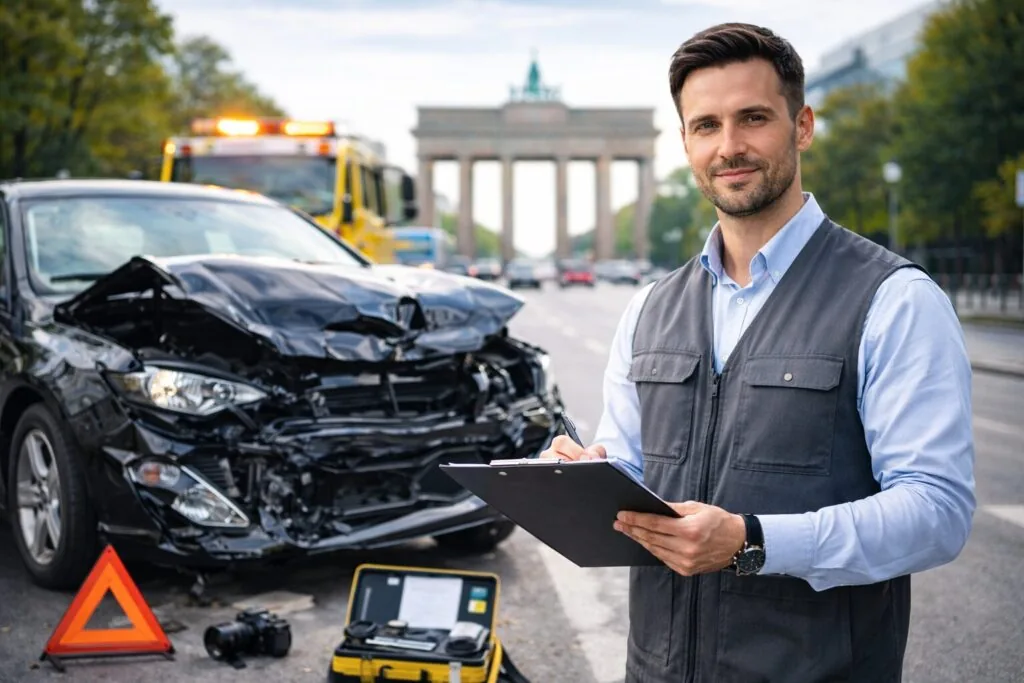
In a technical analysis, we start with structured documentation of the visible and measurable characteristics. In Reinickendorf this means: photo series from defined angles, measurements of panel gaps, comparison with the manufacturer’s pattern and the recording of mechanical and electronic failure symptoms. We also note the condition of the vehicle on site, existing documents on maintenance and previous accidents, and whether foreign bodies, dirt or corrosion could play a role. The order is important: first the immediate recording of findings, then supplementation with documents and witness statements, and finally the analysis with technical aids such as a thickness gauge, panel gap gauge or diagnostic interface. We explicitly distinguish between what can be proven and hypotheses that could explain a cause. This separation makes the report usable for insurers, garages and your own decision-making.
Technical focus areas for unclear damage cases in Reinickendorf and Tegel
Each examination is tailored to the specific features of the damage pattern; here are typical lines of analysis that we follow.
Structural measurement and deformation analysis
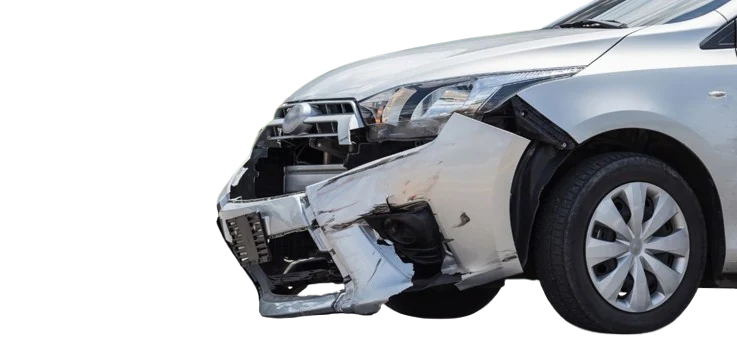
We measure deformations on body and load-bearing structures, document deviations from target dimensions and assess whether visible cracks or dents represent structurally relevant damage. Measurement data and photos are documented in such a way that conclusions about residual strength and repair effort can be drawn. It is important to distinguish whether deformations are structurally relevant or can only be tolerated superficially. For the assessment, we take into account fracture patterns typical of the material, folds and load directions. This information is decisive when it comes to whether a repair is technically sound or parts need to be replaced.
Paint and layer diagnostics with a chain of documentation
The assessment of paint differences, overlaps and layer thickness provides indications of previous repairs or hidden interventions. We measure layer thickness, create photo records with macro shots and label each shot with the date and scale so that later comparisons are possible. If there are colour deviations, edge differences or micro-scratches, the documentation determines whether the damage is fresh or consists of older repair traces. This detailed work is important when several sources of damage are conceivable or when repairs were carried out at different times.
Electrics, sensors and function testing
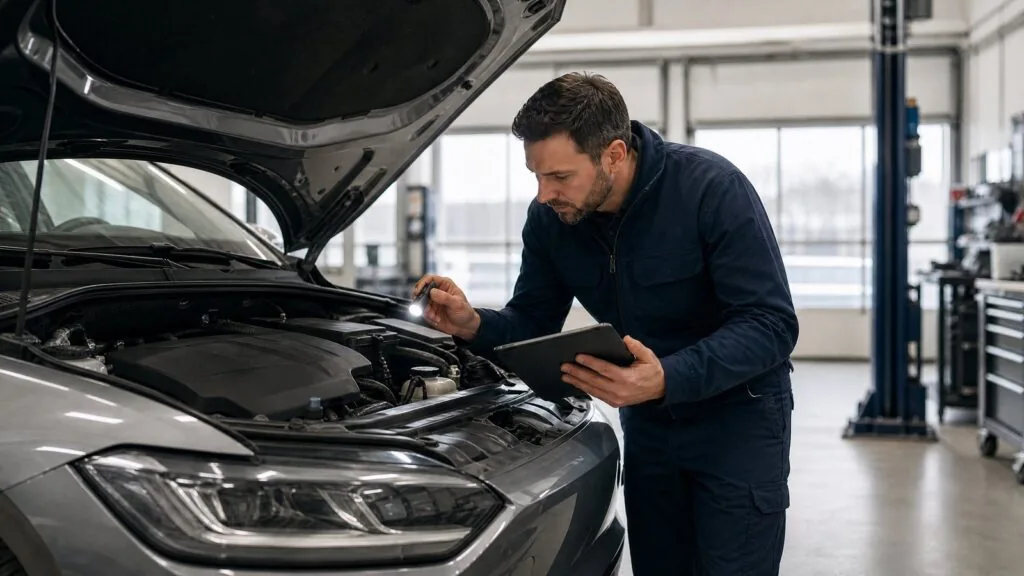
In modern vehicles, damage is often hidden in electronic components or sensors. We check wiring, plug connections, fuses and fault memory entries as far as possible and document functional failures. Particular attention is paid to adaptive systems, airbag sensors and driver assistance components, whose malfunctions are not always visible from the outside. The combination of visual inspection, electronic readout and functional testing shows whether damage is purely mechanical or whether electrical defects may be the cause or consequence.
Corrosion and material findings
Traces of corrosion can indicate age, ingress of moisture or previous damage. We examine transitions between components, inner edges and cavities to assess whether corrosion at the damaged area is the cause or only occurred after an event. Material fatigue, bonding defects or local centres of corrosion can often be distinguished through targeted sampling and macroscopic description.
Why a clean separation of observation and interpretation matters
A precise distinction between what was observed and what is concluded from it is essential in order not to diminish the value of the report. In Reinickendorf, as elsewhere, assumptions based on experience are sometimes presented as facts; this weakens traceability. We therefore document every photograph, every measurement and every source before deriving the probabilities of causes. Observations are reproducible data: dimensions, photo sections, material condition, electronic fault messages. Conclusions are evaluative statements that we give in weighted form after a technical comparison with manufacturer specifications and known damage patterns. This approach makes it easier for you to derive concrete next steps from the report, such as further tests, the choice of a suitable garage or communication with the insurer, without assumptions being mistaken for facts.
Measurable foundations instead of vague statements
You receive data and photos that can be verified later: measurement records, angle specifications, layer thicknesses and documented fault memory states.
Comprehensible hypotheses
When we name causes, they are always linked to documented findings.
Reinickendorf: making intermediate steps transparent
The report contains specific information on which additional documents, spare part checks or garage tests make sense.
Unambiguous photo documentation
The photo documentation follows a standardised scheme with scale references and perspective information so that the findings remain clearly interpretable later on.
When an in-depth technical analysis is advisable
A more in-depth diagnosis is appropriate if the damage pattern appears inconsistent, several components are affected or electronics and mechanics have failed together. In Reinickendorf we are often contacted by owners who have received uncertain statements from third parties or contradictory repair proposals; in such cases a technical analysis creates clarity. An examination is also useful if previous and subsequent damage cannot be clearly separated or if a repair has to be assessed economically. Before the inspection, it should be clarified which documents are available: service book, previous reports, repair receipts, photos of the previous condition and information on previous accidents. The more complete the initial situation, the more precisely it can be assessed which findings are new and which are already known.
Avoiding misinterpretation
Many types of damage look similar at first glance but have to be repaired differently from a technical point of view. A documented analysis reduces the risk of incorrect repairs or unnecessary spare part orders.
A better basis for cost estimates
With technical measurements and clear findings, cost estimates can be calculated more realistically, because the necessary work steps and parts can be named more precisely.
Why you should rely on documented differentiation: technical arguments instead of gut feeling
Safety-relevant prioritisation
The distinction between cosmetic damage and safety-relevant defects enables appropriate prioritisation of repairs.
Transparency towards third parties
A comprehensible report on findings makes communication with garages, third-party assessors and insurers easier, because observations and conclusions are clearly separated.
How your car appraiser in Berlin Reinickendorf works – step by step
The analysis follows a fixed sequence to ensure observability and reproducibility.
Initial consultation and review of documents
First, we take down your information and collect existing documents: photos, invoices, service records and previous reports. This advance information reduces the likelihood of overlooking relevant aspects and forms the basis for the on-site priorities.
Systematic recording of findings
On site, photos are taken from defined directions and measurements and tests are carried out. We mark the areas of findings, document fault memories and create a numbered photo record so that later references are precise.
Technical in-depth analysis and series of measurements
If necessary, targeted measurements follow, such as layer thickness tests, panel gap analysis or functional tests of electronic components. Results are recorded and compared with manufacturer specifications.
Appropriate assessment and report
Finally, we clearly separate established facts from justified assumptions. The written report contains photo evidence, measurement records and a summary assessment with possible next steps.
FAQ – Frequently Asked Questions
The following answers address typical uncertainties that arise with unclear damage patterns. They explain which documents and actions improve the technical findings.
Which evidence is particularly helpful in the technical analysis of damage that is difficult to classify in Reinickendorf?
Collect all available documents: service book, repair invoices, previous reports, TÜV reports and receipts for spare parts. Supplement the papers with dated photos of the vehicle before the damage, if available. The more historical information is available, the better current findings can be distinguished from previous conditions. If you have indications of previous accidents, note the approximate time and, if applicable, the garages involved.
Which photos are particularly helpful for the technical analysis?
Photograph the vehicle from several standardised perspectives: front view, sides, rear and close-ups of affected areas with a scale. Detailed shots of cracks, edges, paint transitions, interior traces and the underbody are important. The date and time of the photos should be recognisable and, if possible, take an overall photo that shows the condition of the vehicle as a whole.
Which indications separate old and new damage in the technical analysis in Reinickendorf?
Mention known previous damage openly and provide any existing evidence. We note this prior information in the report and distinguish which features demonstrably already existed and which are new. If there is no evidence, a clear distinction remains more difficult; in such cases we describe the features and rank them by probability with technical justification.
What role does the current state of repair play in the inspection?
A partially repaired vehicle changes the evidence situation. We document completed and outstanding repairs separately and assess whether relevant traces have been covered up by measures already carried out. If possible, photograph the before-and-after condition; this simplifies the assessment of repair quality and remaining damage.
How is road safety assessed after the analysis?
The inspection lists safety-relevant findings separately from purely cosmetic damage. We explain which components were checked, which follow-up tests are recommended and whether the vehicle should be taken off the road immediately or can continue to be driven. A clear statement on roadworthiness is based on measured values and identified functional restrictions.
How do I provide additional information if more comes to light later?
Supplementary documents or photos can be submitted later; we assess these additions in the context of the existing findings and point out any changed interpretations. Any subsequent information is noted in the report with its date and origin so that the chronology of the findings remains clear.
What can I expect when the results are handed over?
You receive a written report with photos, measurement records and a clear separation of observation and interpretation. The results are formulated in such a way that you can use them to put technical questions to garages and make well-founded decisions about repairs. On request, we explain the results in a final discussion.
Next step: targeted analysis for decisions on your case
If you need a well-founded technical clarification, we offer a structured examination that is based on the specific findings. In Reinickendorf, we first clarify which documents are available, then carry out the recording of findings and deliver a report with a clear separation of observation and interpretation. This gives you a reliable basis for discussions with garages or insurance processes. Send any existing documents in advance so that the on-site appointment can be used efficiently; on this basis you will receive a recommendation on sensible further steps.