Car Appraiser Berlin Zehlendorf – Multi-Stage Assessment from Initial Inspection to Result
Check carefully, explain clearly, decide with confidence
In the event of damage, you need more than a quick estimate: you need a comprehensible procedure that systematically records visible damage, hidden defects and questions of use and later explains them clearly. Our way of working is divided into clearly separate phases: an initial visual recording for quick classification, detailed technical documentation, a review of existing documents and repair receipts, structured photo documentation and finally a personal discussion of the results. In Zehlendorf in particular, precise distinctions between the consequences of an accident and previous damage are often important; that is why we attach importance to comprehensible criteria for every finding. We concentrate on the observations that are really relevant for valuation, liability questions and possible repair decisions, and prepare the information so that you can communicate clearly with insurers, garages and, if necessary, legal counsel. Zehlendorf is characterised by villas, detached houses and plenty of woodland, with Teltower Damm and Clayallee as the main roads. As a car appraiser in Berlin Zehlendorf and vehicle assessor for the south-west, we come to your property. Find out more about us as a car appraiser for Berlin & Brandenburg on the home page.
Local focus: Zehlendorf
Systematic steps instead of a single opinion
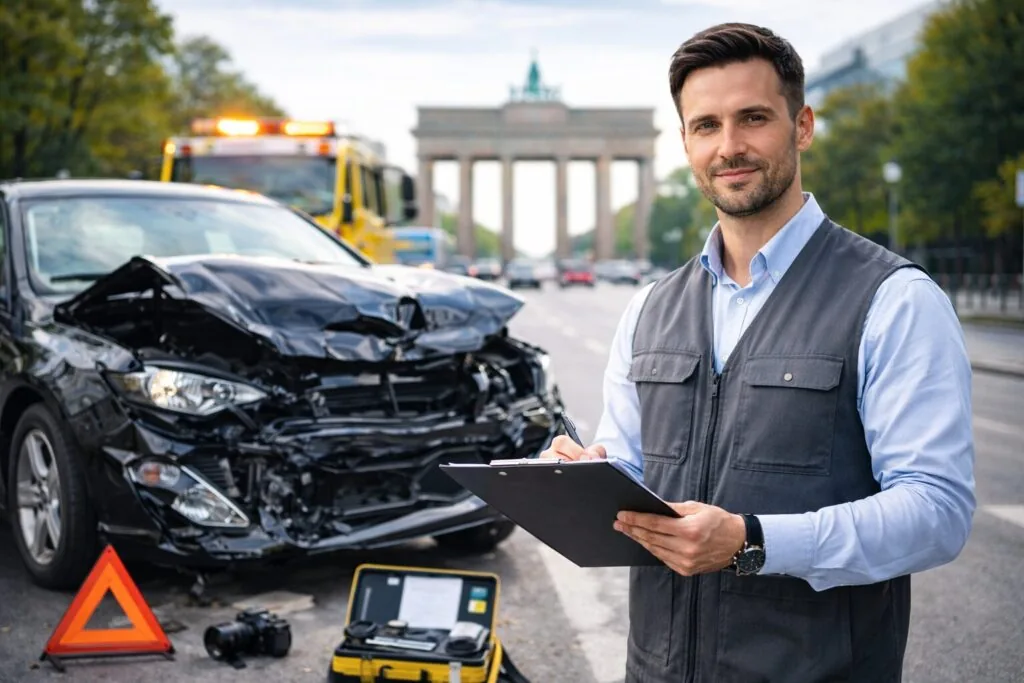
A good report begins with a structured survey of all relevant facts. In Zehlendorf we start with a thorough inspection of the vehicle, documenting external damage, traces on the running gear and bodywork and visible fluid leaks. At the same time, we check existing documents: inspection reports, earlier appraisals, repair invoices and mileage history. Important photos capture the overall situation from several angles as well as detailed shots of impact zones, rust spots, vehicle numbers and traces in the interior. For technical questions, we measure panel gaps, weld seams and the alignment of running gear parts where necessary, in order to distinguish the consequences of an accident from age-related changes. Your information on driving behaviour before and after the damage, service dates and known previous damage is included in the assessment. At the end of this stage you receive clear documentation that lists all observations, the underlying assumptions and open points; this transparency makes later assessment by insurers and garages easier. We also offer this service in the neighbouring areas of Dahlem and Wannsee.
A selection of relevant areas of assessment
In Zehlendorf we offer a combination of initial visual recording, technical analysis and clear presentation of results. Depending on the question, we set different priorities: in accident reports the focus is on the causality of damage, in valuations on the documentation of functional defects and equipment features. Our documentation is structured so that photos, measured values and test records can be used directly for assessments of residual value, need for repair and road safety.
Accident-related damage recorded in detail
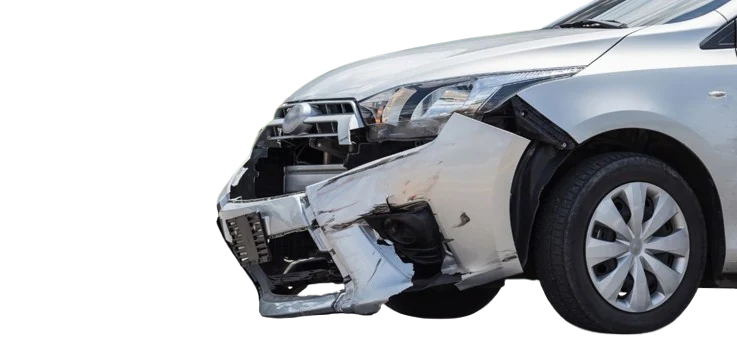
In accident-related assessments, we first record all external damage, mark secondary traces and check the interior for signs of deformation. We then carry out targeted measurements on the body and running gear to identify deviations from the factory standard. Every finding is secured photographically, supplemented with sketches and explained in a structured report so that the origin and possible spread of the damage remain comprehensible. At the same time, we point out immediate safety defects that should be remedied before the vehicle is used further. A price overview for accident, short and valuation reports is available under costs & prices.
Assessment of technical function and state of repair
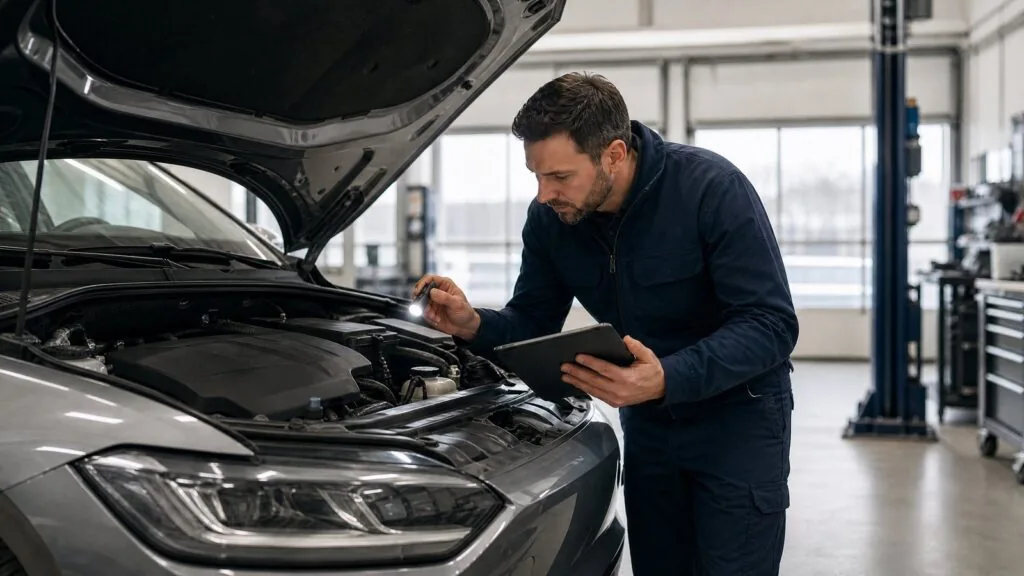
We assess the technical condition independently of repairs that have already been carried out: the recording of findings includes a visual inspection of the engine compartment, drivetrain, steering and brakes as well as a check of electrical connectors and sensor units. If repair receipts are available, we check the scope and quality of the work and mark whether further measures are required. This assessment combines technical criteria with cost aspects so that you receive a sound basis for decisions with garages and insurers.
Determining residual value and restrictions on use
For assessments of residual value or loss in value, we analyse not only the damage pattern but also equipment, age, mileage and customary market comparison values. We document which parts have been or must be replaced, which restrictions on use are to be expected and whether safety-relevant systems could be impaired. The clear distinction between remediable and permanent impairments helps you to weigh up repair, sale or continued use.
Photo documentation with explanatory captions
Our photographic record includes overall views, detailed shots and perspective series, supplemented by explanatory captions and dimensions. Particularly in complex cases of damage in Zehlendorf, we make sure that each image supports a clear finding: shooting position, scale, date and short description. This structured collection of images considerably increases traceability for third parties and makes examination by appraisers, insurers or garages easier.
Why the multi-stage method is decisive
Dividing the work into several survey and inspection steps reduces sources of error and prevents hasty conclusions. In Zehlendorf we often come across vehicles with a complex history, in which previous damage, normal signs of wear and fresh accident traces overlap. By separating the initial inspection, in-depth technical analysis, document review and final discussion of results, we ensure that every conclusion is based on verifiable facts. This methodology reduces the risk of incorrect assessments, creates a clear basis for cost estimates and offers everyone involved a uniform factual basis. At the same time, the staged presentation makes it possible to name open questions specifically and, if necessary, to initiate further examinations without diluting the overall conclusion.
Comprehensible findings instead of vague statements
You receive a report that links every finding to a photo, a measured value and a short justification.
Targeted advice on safety relevance
In addition to the description of the damage, we name clearly prioritised points that are important for road safety, so that you can immediately see which measures are urgent.
Transparent basis for decisions
The multi-stage process shows open points and confirmed findings separately, so that you can weigh up repair, sale or a further report.
Documentation for later accountability
Our structured file with photos, a list of documents and measurement records serves as a reliable reference if a later examination by third parties becomes necessary.
When a staged assessment is particularly useful
A multi-stage assessment is always advisable if, in addition to obvious damage, uncertain or hidden defects are suspected. In Zehlendorf these are, for example, cases with older body repairs, partial corrosion or when information from previous owners is missing. This approach is also worthwhile for accidents with several points of impact, for different states of repair on the front and rear axles or when electronic assistance systems could be affected. Even if insurers require detailed evidence or you need a realistic resale value, the step-by-step procedure provides the necessary chain of evidence. Finally, the staged evaluation makes it possible to work through any contradictions in repair receipts or earlier reports and to name them clearly.
Precise separation of causes
We make a clear distinction between current accident consequences, older traces of repair and wear. This differentiation reduces points of dispute on liability questions and enables targeted cost estimates.
Use of suitable measuring techniques
If necessary, we use simple measuring methods to check panel gaps or alignment; this provides objective indications that go beyond subjective impressions.
Why our method is useful for you
Zehlendorf: bringing evidence together sensibly
Finally, you receive a summary of the findings in plain language, supplemented by a list of the relevant documents and specific suggestions for the next steps.
Zehlendorf: planning the next step with confidence
Our reports are structured so that damage patterns, test values and open questions can be recognised quickly, which speeds up cooperation with garages or insurers.
How your car appraiser in Berlin Zehlendorf works step by step
Our process is divided into clear modules that are combined depending on the case. The aim is a reproducible result that you can use with confidence.
1. Initial inspection and setting priorities
We take a quick, systematic overview: external damage, visible technical defects and safety-relevant points are marked. These priorities serve as a guide for the subsequent in-depth checks.
2. Detailed recording and measurement record
We carry out measurements and take detailed photos at critical points. Panel gaps, weld seams and attachments are checked to identify possible deformations or improper repairs.
3. Document review and comparison
Existing invoices, inspection certificates and earlier reports are reviewed and compared with the current findings. Differences are recorded and assessed.
4. Preparation and handover of results
You receive a structured report with photos, measured values, a summary of the findings and specific recommendations. In a personal conversation we explain the most important points and answer your questions.
FAQ – Frequently Asked Questions
Below you will find questions that often arise before an assessment, each with specific information on which documents and observations are important and how we proceed.
Which documents should I bring to the appointment so that the assessment is complete?
Bring all available documents: earlier reports, repair and maintenance invoices, TÜV inspection reports, the registration certificate Part I and, if available, photos of the damage taken immediately after the incident. These papers make it possible to compare the previous condition with the current findings and help to separate causes. If mileage readings vary in the documents, please note the chronological order. The more complete the documents, the more precisely the influence of earlier repairs or wear on the current damage can be assessed.
How do you document previous damage as opposed to new accident consequences?
We carry out a comparative analysis: visible repair lines, different paint layers, degree of corrosion and wear patterns are checked. In addition, we compare the current photo documentation with existing older pictures or invoices. Technical measurements on the running gear and body provide objective indications of whether components were already impaired before. All indications are listed separately in the report so that it is clear which features are considered pre-existing and which are to be regarded as fresh.
Which photos are particularly relevant as evidence?
What matters are overview shots from all sides of the vehicle, close-ups of the damaged areas from several angles, detailed photos of the vehicle identification number, tyre treads and interior damage and, if possible, pictures of damage traces under the vehicle. Pictures with a scale or ruler are helpful to show proportions. Each photo should be dated and documented in the order in which it was taken so that the series of images in the report forms a comprehensible chronology.
How do you deal with repairs that have already been started or partly completed?
Partial repairs are recorded precisely: we check which work has been carried out, compare it with invoices and assess whether the procedure is professional. If work is only provisional or shows quality defects, we point out further necessary measures. The report clearly states what consequences incomplete repairs can have for safety and residual value and recommends which steps should be carried out first.
Which preparations help to make the assessment appointment efficient?
As far as possible, clean the areas around the damage, collect all relevant vehicle documents and note any particular observations about driving behaviour or noises before and after the incident. If possible, have the vehicle ready on a level surface and ensure access to the engine compartment, boot and underbody. These measures save time and allow a more complete recording on site.
How do you assess damage to modern assistance systems or electronics?
Electronic systems are first checked visually and functionally; where necessary, we request diagnostic reports or fault memory data from the garage. As fault codes often provide additional clues, this information is included in the assessment. We document whether malfunctions are relevant to safety and whether calibration or replacement appears necessary, as well as possible effects on driver assistance systems.
Can the report have an influence in discussions with insurers?
A factually substantiated report provides clear facts and comprehensible findings that you can present to insurers. Because findings, photos and measured values are documented, the room for interpretation is reduced. We name open points and provide recommendations on what should also be checked; this transparency helps to limit necessary queries and to substantiate claims in a well-founded way.
Prepare the next step in a targeted way
If you would like a well-founded, step-by-step assessment in Zehlendorf, we will help you with the preparation and execution. Get in touch with information on the vehicle, the time of the damage and the documents available; we check which assessment modules are required and which documents increase the evidential value of your report. This gives you a reliable basis for repair decisions, negotiations with insurers or considerations about selling. We accompany you through to a clear discussion of the results and are available to answer any questions. We also prepare vehicle reports in Nikolassee, Schlachtensee and Wannsee near Zehlendorf.