Classic Car Appraisal Berlin – Value and Condition of Classic Vehicles
A classic car appraisal in Berlin documents the condition, originality and value of your classic, for example for agreed-value insurance, before a purchase or sale or after an accident. We inspect vehicles in Berlin and Brandenburg directly in your garage, hall or workshop, and the call-out is free of charge.
In short: A classic car appraisal costs from 400 € to 1,000 € depending on the vehicle and the scope of documentation, and more for rare models. It contains a condition grade, the market and replacement value and detailed photo documentation. For the historic H number plate, an additional report under section 23 StVZO from an officially recognised testing organisation is required; our valuation report does not replace it.
Table of contents
- How condition grades are determined and how you can use them
- Original parts, period modifications and specific inspection points
- Restoration quality, invoice and ownership documentation
- Market comparison, special equipment and purpose-specific assessment
- Classic cars after an accident: parts, repair and loss of value
- Frequently asked questions about the service
- Classic car appraisal in Berlin: condition, originality and history as value factors
- Documents and photo documentation for insurance and sale
How condition grades are determined and how you can use them
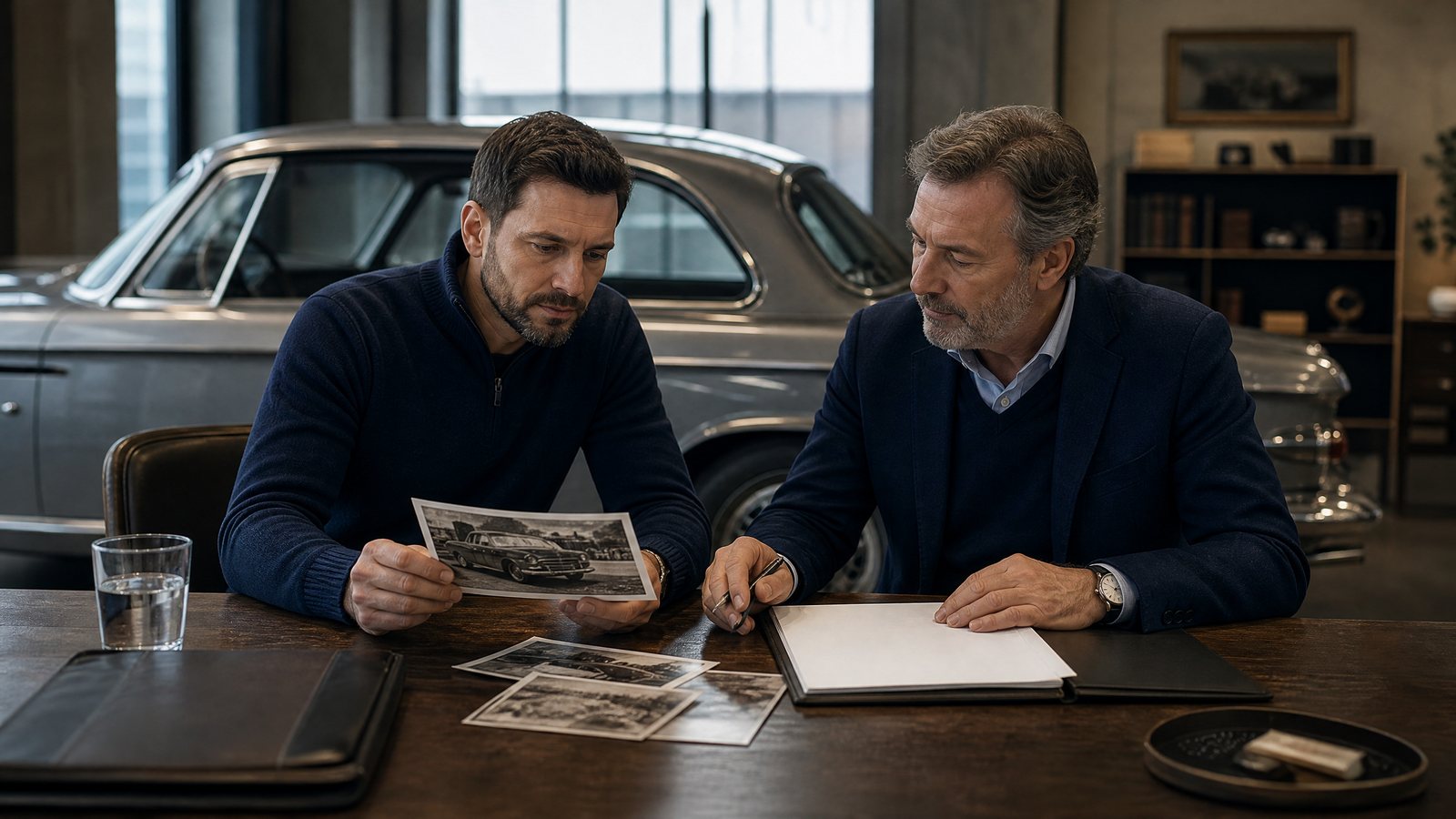
When assigning condition grades, we work systematically and transparently so that the classification remains easy for you to understand. Each grade is based on observable criteria such as the degree of corrosion, the functionality of add-on parts and the condition of the mechanics. We also document deviations from standard production features and make clear whether defects are repairable or structural. The aim is not only an assessment, but practical guidance for maintenance, insurance or a possible sale.
You can find out more about our work as a car appraiser in Berlin on our home page.
The condition grade alone does not replace an overall view of the vehicle, but it gives you a comparable figure for assessing opportunities and risks. In our report, we explain which components had a decisive influence on the grade and give advice on how certain defects can be remedied technically or visually. This gives you a clear basis for further decisions without general value forecasts, for which a detailed valuation report would be required.
Original parts, period modifications and specific inspection points
With a classic vehicle, distinguishing between original parts and period modifications is often decisive for classification and documentation. We assess the origin and design of individual components and check serial numbers, period-typical manufacturing features and visible rework. In doing so, we consider whether modifications are historically justified or follow later trends. The aim is to present the authenticity of the vehicle transparently and to make it clear which parts are original and which have been added.
For the technical and visual assessment, we work to fixed inspection points based on the vehicle’s history and its known original condition. A clearly structured examination helps to assess the influence of modifications on functionality and state of preservation. We also explain which modifications are regarded as period-correct and which can change the character of the vehicle, without claiming a general gain or loss in value.
- Comparison of chassis and engine numbers with known type data
- Assessment of paint layers: original finish, partial respray, touch-ups
- Examination of the interior for material-typical features and seams
- Inspection of add-on parts for factory fitting or later additions
Restoration quality, invoice and ownership documentation
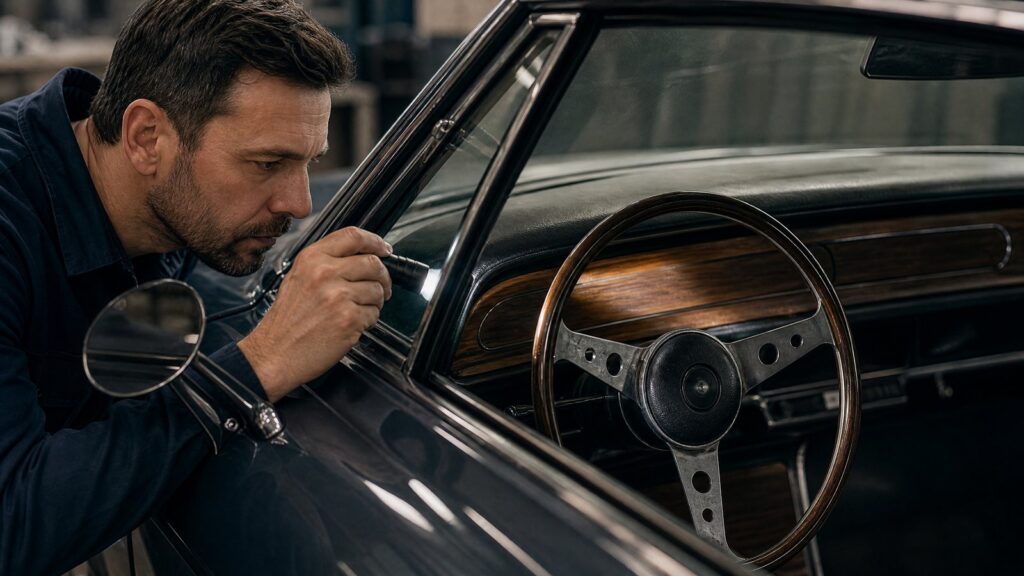
A careful restoration can be assessed on the basis of workmanship, the materials used and the documented scope of work. We check whether methods correspond to the historical original, whether modern spare parts have been sensibly integrated and whether welding or bodywork interventions have been carried out professionally. The inspection is not a judgement of taste, but is carried out from a technical and conservation perspective.
For a complete classification, we look at existing invoices, restoration reports and information on previous owners. These documents supplement the technical survey and provide information on work carried out, the origin of spare parts and the scope of repairs. In a clear overview, we show which evidence is available and where there are gaps, so that you can trace the history of the vehicle and prove it for insurance or sales purposes.
| Inspection aspect | What we look for | Benefit of the documentation |
|---|---|---|
| Bodywork | Welding seams, sheet metal thickness, fit of parts | Evidence of professional repair and long-term stability |
| Mechanics | Condition of engine, gearbox and chassis, replacement records | Allows reliability and maintenance requirements to be assessed |
| Interior and trim | Material adjustments, upholstery technique, original fabrics or reproductions | Shows the degree of preservation and authenticity of the appearance |
Market comparison, special equipment and purpose-specific assessment
A classic vehicle is always classified in the context of comparable vehicles and its existing special equipment, which is what makes a well-founded vehicle valuation. We record standard equipment features as well as factory-available extras and document their condition. At the same time, we look at reference vehicles available on the market in order to better explain your vehicle’s market position. We avoid general value forecasts and instead provide a fact-based classification of its special features.
The specific reason for the valuation influences how the report is prepared: whether for insurance, sale or scholarly documentation – we compile the relevant information and explain which aspects are particularly relevant for the respective purpose. You receive a targeted presentation of special equipment and market characteristics that serves as a basis for your next steps, without conveying a binding price forecast.
Classic car appraisal in Berlin: condition, originality and history as value factors
A classic car is not assessed on its year of manufacture and model alone, much like a motorhome appraisal or a motorcycle appraisal. What matters is the state of care, the quality of earlier work, the originality of components and the plausibility of the vehicle’s history. During the inspection, the bodywork, paint, interior, mechanics and visible details are considered as a whole.
A traceable description of the condition shows which features support the value and where there are deviations, signs of wear or open points. This keeps the assessment understandable even if the vehicle is later to be sold, insured or further restored.
Documents and photo documentation for insurance and sale
Invoices, earlier appraisals, restoration records, historical photos and traceable service records can considerably improve the value context of a classic vehicle. Ideally, they should be available in an organised form for the inspection so that individual work and equipment features can be classified correctly.
The photo documentation supplements these documents with the current findings. It shows the condition at the time of the valuation and creates a clear basis for insurance questions, prospective buyers or your own records. Our service is available in many districts, for example as a car appraiser in Wedding, as a car appraiser in Treptow or as a car appraiser in Moabit.
Classic cars after an accident: parts, repair and loss of value
If a classic car is involved in an accident, different questions arise than with an everyday car. Many spare parts are no longer available new, some only as reproductions or second-hand through clubs and specialist dealers. Whether an original part can be obtained affects the repair costs, the repair time and ultimately the value of the vehicle.
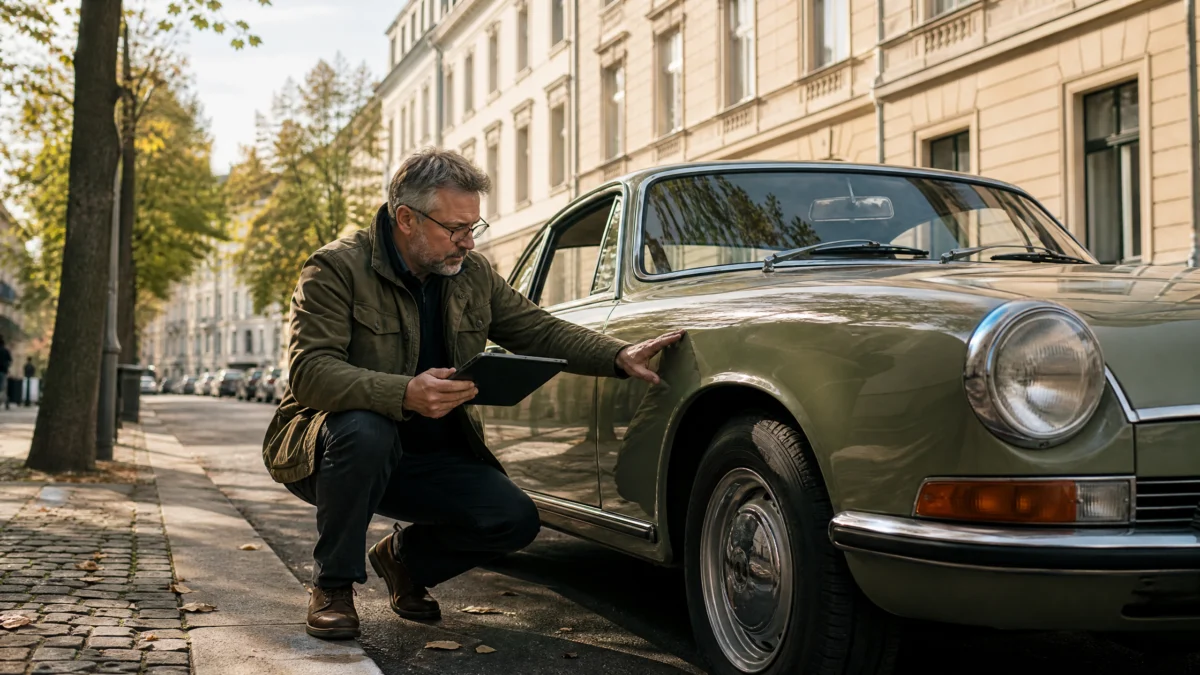
For a classic car appraisal in Berlin, we therefore record which parts are damaged, whether they were original and how they can be replaced. On old bodies, we look for distortion, earlier repair areas and corrosion exposed by the impact. Using paint thickness measurement, we identify which panels have already been reworked, separating the current damage from the vehicle’s previous history.
An important point is whether a loss of value remains after the repair. A vehicle that has been accident-free for decades often loses value on the enthusiast market as a result of major damage, even if the repair is successful. We describe this aspect transparently in the report, based on the condition before the accident. Photos, earlier valuations or an older valuation report are therefore helpful. If you have classic car insurance with an agreed value, please have the policy ready for the appointment.
If the classic car is in a specialist workshop or in a garage outside the city after the accident, we will come there too. If possible, wait to dismantle anything until we have recorded the damage, because with old vehicles the unaltered condition is particularly revealing.
FAQ – Frequently Asked Questions
Which documents should I bring to the appointment?
Please bring all available vehicle papers, invoices from restorations, inspection reports and historical documents. Photos from earlier years and copies of registration documents or technical data sheets are also helpful. The more complete the documents, the more precisely the history can be reconstructed and the more meaningful the inspection will be with regard to originality and the work carried out.
How thoroughly is originality checked?
The originality check covers visible features, comparison of serial numbers and the weighing of historical evidence. We assess materials, manufacturing techniques and documented changes. The aim is to show transparently which components correspond to the original condition and which additions have been made. The assessment is technically oriented and describes the findings without promising any general increase or decrease in value.
Does the report also include a statement on the quality of the restoration?
Yes, part of the examination is devoted to the technical and craft quality of the work carried out. We analyse the workmanship, the materials used and the conformity with historical manufacturing methods. The presentation is factual and documentary, with notes on rectifying defects or necessary additions. A restoration assessment is part of the overall evaluation, but is no guarantee of lasting results.
Can you still give a reliable assessment if invoices are missing?
Even without complete invoices, a professional assessment can be made on the basis of the build condition, material findings and technical features. Missing documents are noted in the report as a gap, and we indicate which evidence would be particularly helpful. The assessment is then based more heavily on the current condition, and we communicate openly what uncertainties this creates. You can find more information about our prices and helpful tips in our guide (in German).
Is the report suitable for insurance purposes?
The report describes the condition, equipment and documented history and can therefore serve as a basis for insurance matters. We provide a well-founded description of the findings and explain special features that may be relevant for insurance. However, the final decision rests with the insurer; our report presents the technical and historical facts that make a proper review by third parties easier.
How do you distinguish between a period modification and a later modification?
The distinction is based on manufacturing techniques, choice of materials and the documented origin of the parts. Period modifications often show type-specific adaptations and materials used in that era, whereas later modifications feature modern manufacturing methods or components that are not typical of the period. We set out the criteria transparently and document the indications so that you can understand how the classification was reached.
Do you need fast, professional help?
We operate across Berlin and Brandenburg. Contact us for a free initial assessment.