
Motorhome Appraisal Berlin – Damage and Value of Motorhomes
A motorhome appraisal in Berlin records damage to the base vehicle and the habitation body or determines the value of your motorhome or caravan. We come free of charge to the pitch, the storage hall or your front door, in Berlin and throughout Brandenburg.
In short: A damage report for a motorhome usually costs from 300 € to 700 €, and from 700 € to 1,200 € for major damage to the body. A valuation for insurance or sale usually costs from 400 € to 1,000 € because of the extensive equipment. Moisture in the body, seals and add-ons such as the awning or solar system are especially important, because such damage is often noticed late.
Table of contents
- Condition assessment of chassis and body
- Detecting moisture, condition of seals and first indicators of leaks
- Equipment, awnings, solar panels and charging systems
- Interior fit-out, seasonal use and suitable inspection locations
- Damage while travelling: what to do on the road
- Frequently asked questions about the service
- Motorhome appraisal in Berlin: inspecting body, seals and special equipment
- Traceable documentation of value and damage for leisure vehicles

Condition assessment of chassis and body
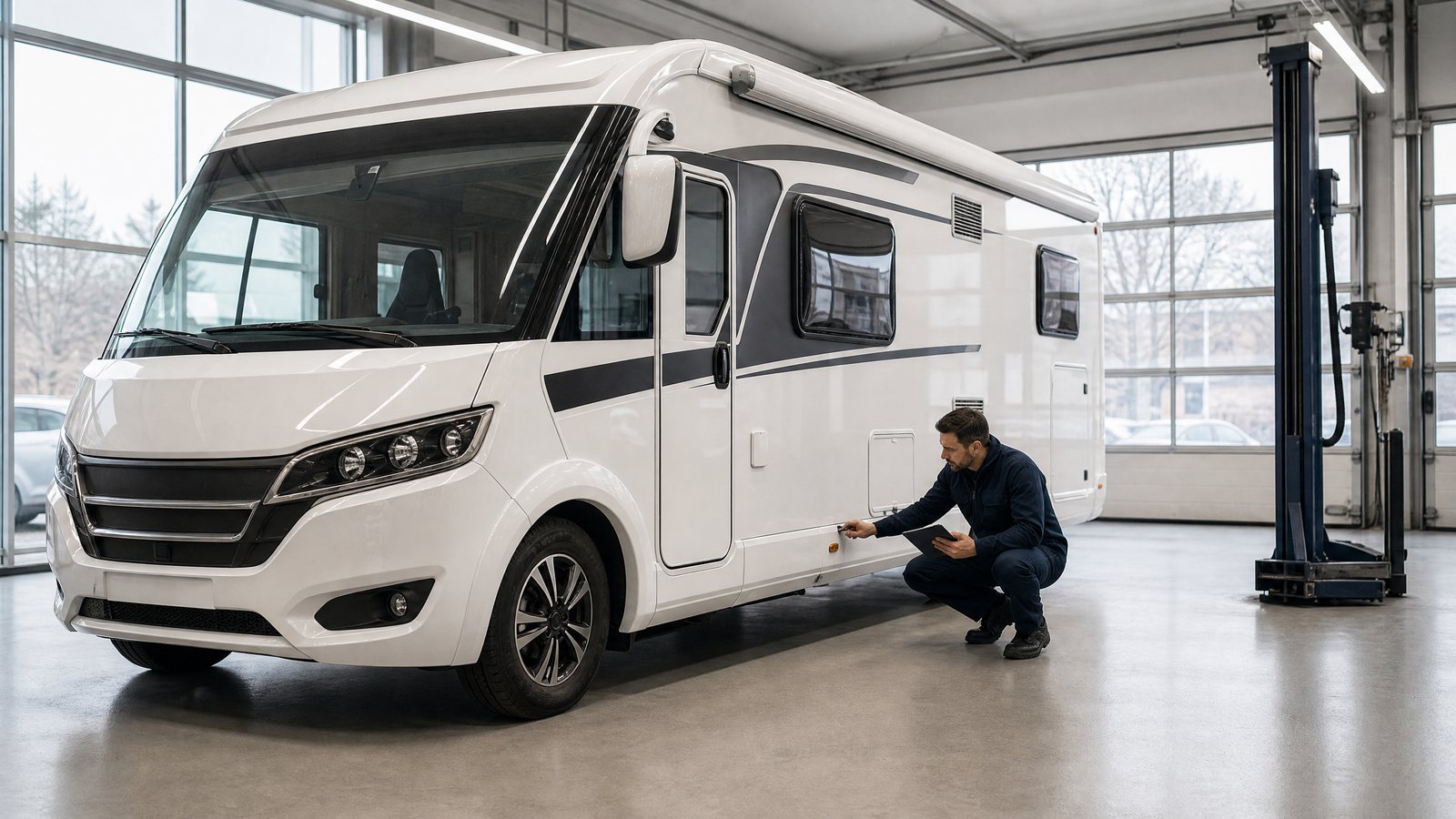
During the inspection, we examine the visible load-bearing and connection points between the chassis and the living body as well as the running gear and suspension elements. These include areas of corrosion on the frame and axles, the condition of the mounting bolts, visible deformation and cracks in load-bearing profiles. We document panel joints, welding seams and transitions, photograph critical points and note safety-relevant abnormalities. These findings help to make the repair effort assessable and give an indication of roadworthiness without carrying out destructive tests.
You can find out more about our work as a car appraiser in Berlin on our home page.
In the report, identified defects are described factually, together with their possible cause and recognisable consequences for stability and driving behaviour. We also take into account traces of earlier repairs, improper reinforcements or missing fixings that can have an adverse effect. The documentation includes measurements, the location of the damage and comparison photos, so that it remains traceable later which areas have been worked on and which parts are relevant for safe assembly.
| Inspection aspect | What we look for | Benefit of the documentation |
|---|---|---|
| Frame/chassis | Corrosion, cracks, deformation, condition of axle mountings | Assessment of load-bearing capacity and indications of repair scope |
| Body-to-chassis connections | Bolted joints, seals, gap dimensions, loosened connections | Evidence of necessary rework and for insurance purposes |
| Roof and side profiles | Sagging, loose flanges, cracked profiles and joints | Planning repairs to the body, avoiding consequential moisture |
Detecting moisture, condition of seals and first indicators of leaks
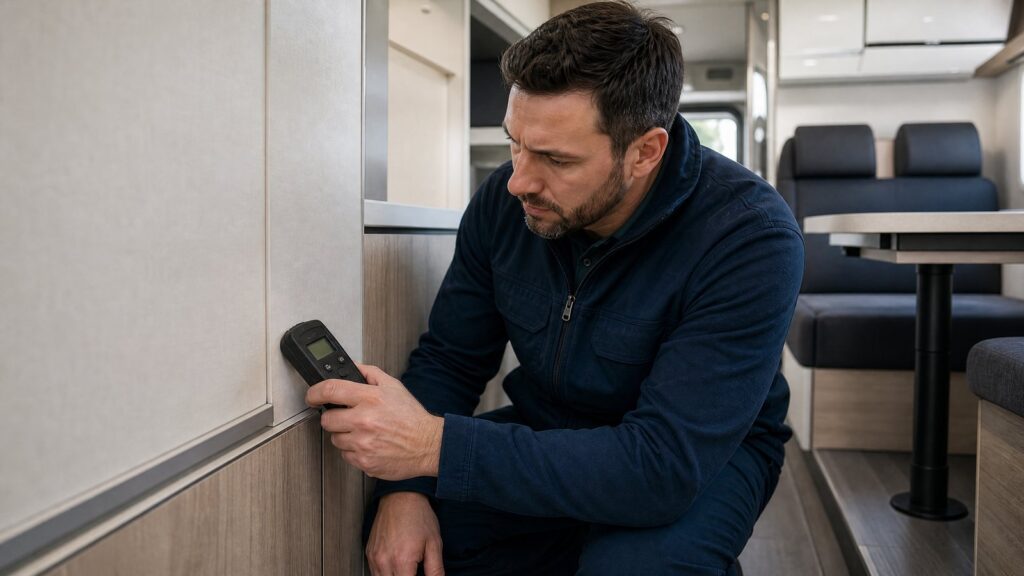
Moisture is a common cause of damage, so we systematically check visible indicators such as discolouration, peeling surfaces, delaminated trims or warped furniture edges. In addition, roof hatches, window joints, roof fittings and seams are checked visually. Surface measurements with moisture meters can provide clues, but do not replace an invasive or standardised leak test. Conspicuous areas are photographed and their location and extent described, so that targeted repair is possible later and possible consequential damage can be assessed.
In the report, we clearly indicate the findings and how visible they are, for example whether they are only superficially recognisable or are already damaging the material. We describe which areas may be particularly at risk during use and which connection details should be checked as a priority. We emphasise that formal leak-testing procedures or pinpoint leak detection are separately required from a technical point of view and cannot be part of this visual inspection.
Equipment, awnings, solar panels and charging systems
Additional equipment, which is often highly individual, influences usability and value and is therefore recorded specifically. Awnings, solar panels, charge controllers, cable routes and bike racks are checked for secure mounting, corrosion, continued function and obvious damage. Visible electrics are only assessed superficially: the condition of connecting cables, plug connections and visible fuses is part of the documentation, without electrical tests being carried out. The findings help to identify technical risks and to record the condition of the installation with photo documentation.
Specific inspection points on site help with structured recording. They relate both to mechanical fixings and to visible weather damage and cable routing. For removable components, we check for completeness and correct fitting as well as signs of overloading. The results are documented in a way that makes a later assessment by specialist companies easier.
- Awnings: check the condition of the fabric, articulated arms, end caps and mounting points
- Solar system: check secure mounting, visible cable routes and module surfaces
- Bike racks: check load capacity, mounting bolts and traces of corrosion
- Plug and charging points: visual check for damage and correct strain relief
Interior fit-out, seasonal use and suitable inspection locations
The interior fit-out is assessed in terms of condition, functionality and moisture damage. This includes furniture joints, hinges, catches, floor coverings and sanitary facilities. With seasonal use, typical effects such as frost cracks, condensation damage or material fatigue must be taken into account; we describe whether there are signs of long-term use, missing winterisation or intensive summer use. Visible aspects of the gas and electrical installation are only recorded as part of a visual damage survey, without this involving a function test or leak test.
Suitable locations help to make inspections meaningful: level ground, sufficient lighting and access to the roof make the inspection easier. A dry, sheltered parking space and the possibility of opening cupboards and panels also improve the quality of the findings. The report notes if inspection conditions were restricted and which areas can therefore only be assessed to a limited extent, so that users can classify the documentation appropriately.
Motorhome appraisal in Berlin: inspecting body, seals and special equipment
A motorhome combines the technology of the base vehicle with a complex living body. The bodywork, roof, side walls, flaps, windows, seals and interior fittings can therefore all be relevant in an inspection. Visible marks must be assessed in connection with the respective type of construction and the existing equipment. For heavy base vehicles, a truck appraisal may also be relevant.
A systematic record is particularly worthwhile in the case of moisture, impact damage or damage to add-on parts. It documents the affected areas and makes it clear which points should be examined more closely for a professional repair.
Traceable documentation of value and damage for leisure vehicles
The value of a motorhome often depends on the layout, mileage, condition of the body, additional equipment and seasonal demand. Awnings, bike racks, solar technology, navigation or comfort systems should therefore not be recorded in general terms, but specifically for the vehicle in question.
A traceable valuation combines this information with the documented condition. This creates a basis for insurance matters, buying or selling and the technical classification after damage.
Damage while travelling: what to do on the road
Many motorhome damages do not happen in Berlin but on the road: when manoeuvring on a tight campsite, at a petrol station with a low roof or in a lane that was narrower than expected. If the vehicle is still roadworthy, you can usually get home and have the damage assessed here. It is important that you photograph it well on the spot, note the names and registration numbers of those involved and call the police if third-party damage occurred and the circumstances are unclear.
Back home, we then check whether moisture can get into the body as a result of the damage. This is crucial especially with damage to roof edges, windows or roof hatches, because water getting in often does more harm over weeks than the impact itself. We check the seals in this area and document the condition of the interior panels.
For the motorhome appraisal in Berlin, it is best to have your vehicle registration certificate ready, along with invoices for retrofitted equipment such as an awning, solar system or bike rack and, if available, proof of the last leak test. This allows us to record the value of the equipment properly. If the motorhome is parked at a site outside the city, we will come there too.
If you store your motorhome over the winter, you should not leave fresh damage until spring. In the cold season, moisture in damaged areas can freeze and put additional strain on the body. A prompt appointment also secures the evidence for the insurer.
FAQ – Frequently Asked Questions
What exactly does the chassis inspection cover?
The inspection records visible damage to the frame, axles, mountings and fixings of the body as well as obvious areas of corrosion and deformation. We document findings with photos and describe their location, extent and possible effects. More in-depth non-destructive testing methods or structural calculations are not part of the standard scope, but can be recommended separately if there are signs of serious damage.
Are gas and electrical systems tested for function?
Electrics and gas are only assessed as part of the visible damage survey: visible cable routing, connection terminals or obvious damage are documented. There is no function test, no pressure or leak test and no intervention in the system. If specific tests are required, we point out the need for specialised testing by appropriately authorised specialist companies.
Can sources of moisture be located reliably?
Surface measurements and visual findings provide indications of entry points and affected components, but cannot pinpoint deep-seated leaks with certainty. We give an assessment based on visible traces, material behaviour and connection details. To reliably locate deeper leaks, further leak detection or a standardised leak test may be necessary, which must be commissioned separately.
How is special equipment documented?
Special equipment such as solar systems, awnings or bike racks is photographed and accompanied by a description of its visible condition. Fixings, obvious damage or missing components are noted. Electrical components are only checked visually; if there are doubts about safety or function, a check by a specialist company is recommended.
Which documents are helpful before the inspection?
Existing installation instructions, inspection reports, repair receipts or proof of maintenance carried out make it easier to assess and classify findings. Information on retrofitted add-ons or modifications to the body in particular helps to better classify the condition in relation to the origin and age of the parts. If documents are missing, we note this in the report and describe the facts established as comprehensively as possible. You can find further information on documents and procedures in our vehicle appraisal guide (in German).
Where should the inspection ideally take place?
A level, well-lit parking space or a workshop environment with access to the vehicle roof and the possibility of opening panels is ideal. Good lighting and dry weather improve the visual inspection. If the inspection has to take place under restricted conditions, this is recorded in the report so that the significance of the findings can be assessed correctly. For an on-site inspection, we agree the necessary conditions with you in advance.
Do you need fast, professional help?
We operate across Berlin and Brandenburg. Contact us for a free initial assessment. On-site appointments are possible in Grunewald, Kaulsdorf and Lichterfelde, among other areas; our overview of costs and prices offers initial guidance.