
Vehicle Damage Appraiser Berlin Friedrichshain: Photo-Based Assessment of Street-Identified Damages
Expert, precise, specialized in photo documentation
Have you discovered damage at a parking space or on the roadside and want to know what lies behind the visible marks? In Friedrichshain, it is common for vehicle owners, residents, or monitoring staff to take photos of damage before making decisions. This introduction explains which details on images are immediately relevant, which additional shots are often missing, and how a focused photo-based appraisal strengthens your basis for making informed decisions. I explain which perspectives, reference points, and scale indicators help to unambiguously categorize bumpers, lights, fenders, and paint chipping. In addition, I clarify which vehicle documents, existing repair invoices, and previous photos facilitate the evaluation. Particularly in the densely built-up streets of Friedrichshain, perspective distortions, shadows cast by buildings, and fluctuating lighting conditions are frequent sources of misunderstandings; I describe how to recognize these factors and minimize them through supplementary photos. By the end, you will know which shots are required, which information increases the reliability of the assessment, and how to reliably prepare a photo-based analysis in practice.
District at a glance

How photos become a meaningful foundation
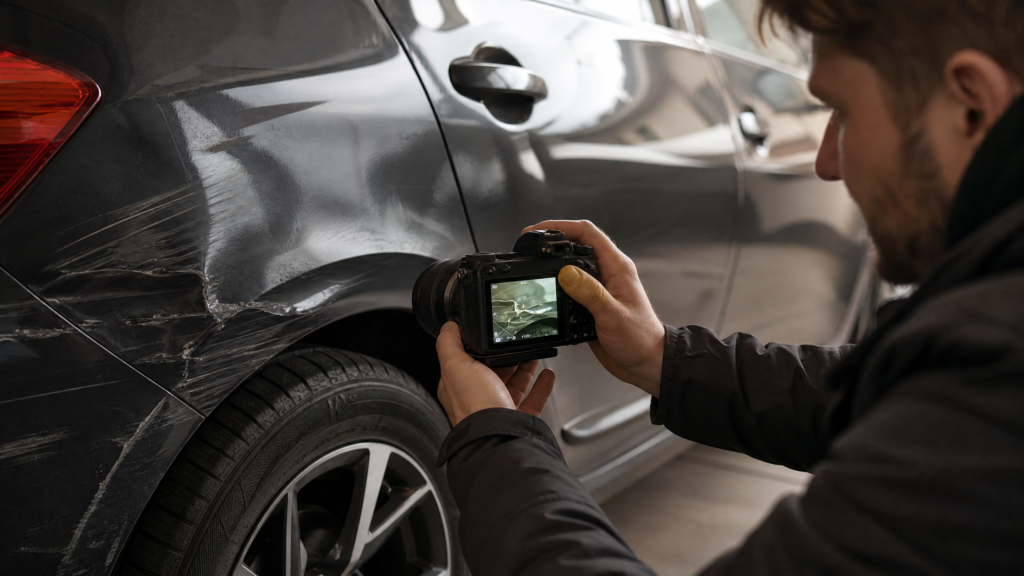
Photographic documentation does not always replace a mechanical inspection, but it creates a solid basis for initial assessments. In Friedrichshain, vehicles are often photographed only superficially: one photo from the side, possibly one of the license plate. For a reliable assessment, however, you should take several photos from defined angles: close-ups of the damaged area from 30 to 50 centimeters, wide-angle shots to show the position on the roadside, detailed photos of screw connections, panel gaps, and paint edges, as well as reference photos with a scale or ruler next to the damaged area. Record the exact location, time, weather conditions, and all visible foreign traces such as paint transfer or scratches showing a different color layer. If previous owners or repair shops already possess repair invoices, include these along with before-and-after photos. For vehicles with popped hoods, damaged suspensions, or misaligned wheels, additional diagonal photos are necessary to correctly detect deformations. When submitting the photos, make sure to save the original files and avoid image editing; metadata can provide information about the timestamp and capture device. With this preparation, it is possible to quickly determine in Friedrichshain whether the damage consists of superficial paint scratches, structural deformations, or traces of previous interventions. Such documentation is also helpful in adjacent districts such as Kreuzberg and Lichtenberg.
Basic photographic services and advanced offerings
For rapid clarification on the street, I offer tiered photo assessments: ranging from an initial evaluation based on submitted images to an in-depth analysis with scale specifications and a damage catalog. The following services are tailored to typical findings in urban parking environments.
Initial evaluation via photo submission
You send a selection of your photos; I examine the type of damage, potential cause, and the urgency of a technical inspection. The assessment classifies visible scratches, dents, and cracks, outlines typical repair approaches, and evaluates whether short-term safeguarding measures, such as towing or disconnecting the battery, are advisable. Additionally, you receive guidance on missing perspectives that would allow for a more precise assessment. This initial analysis helps decide whether a comprehensive expert appraisal is required and what additional documents are needed.
In-depth photo documentation and scale analysis
Based on supplementary photos, I perform a scale-oriented evaluation: panel gaps, height differences, and distances to fixed points are systematically analyzed. This includes identifying paint transfer, differentiating between pressure marks and scrape marks, and assessing whether longitudinal or point loads are present. The evaluation yields a written damage description with photographic annotations and recommendations for inspection and repair paths. This service is advisable when images provide initial indications of structural or load-bearing damage.
Photo-based documentation for insurance and repair discussions
I compile a structured photo report with a chronological overview, comments on evidence preservation, and a neutral assessment of the damage consequences. The file contains photo recommendations for repair shops as well as a list of viewing angles relevant for cost estimates. The objective is to provide you with a reliable foundation for discussions with insurers or workshops without necessarily having to conduct an on-site physical appraisal beforehand. The documentation avoids speculation and focuses strictly on verifiable findings.
Damage demarcation for prior and pre-existing damage
Photos alone often show only the visible surface; this service focuses on differentiating between fresh damage and pre-existing signs of wear and tear. Based on structural features such as fresh fracture edges, varying degrees of corrosion, paint layers, and the positioning of deposits, I assess which areas are new and which cannot be attributed to the incident without further inspection. This reduces incorrect attributions and helps conduct disputes with insurers in a structured manner.
Why photographic details determine the first impression
A single photo can be deceptive: shadows, perspective, and reflections alter the perceived depth of damage. In Friedrichshain, this is particularly relevant because narrow streets and tall buildings heavily influence lighting conditions. Structured photo documentation minimizes such sources of error. What matters is not merely a high volume of images, but purposefully taken shots: a close-up of the fracture edge, an angled overall view to identify deformations, detailed photos of screw connections, and interior shots in the event of concealed damage. Supplementary information such as mileage, recent workshop invoices, or known pre-existing damage significantly enhances the evidentiary value. If you provide the key perspectives, an expert photo-based analysis can already provide definitive statements regarding the type of damage, possible repair methods, and urgency. This saves you time and avoids unnecessary, costly on-site inspections in cases that can be clearly documented.

Quick orientation
A qualified photo evaluation quickly delivers a realistic assessment of whether the incident involves minor superficial damage or a finding that requires technical intervention.
Targeted information requests
You receive precise instructions on which supplementary photos and documents are genuinely required.
Evidence preservation without a workshop visit
With a structured photo report, you have factual documentation for insurance companies and repair shops that makes the vehicle's condition at the time of discovery traceable and verifiable.
Conflict minimization
Clear photographic findings reduce misunderstandings in liability issues and establish an objective foundation for discussions with other involved parties.
When a photographic clarification can be sufficient
Not every identified damage immediately requires a complete on-site appraisal. In Friedrichshain, many minor parking incidents can be reliably documented: superficial paint scratches, slight dents without creasing, or non-structural deformations can often be evaluated accurately via photo documentation. The prerequisite is that the necessary perspectives, a scale indicator, and supplementary information such as operational condition, prior repairs, and environmental factors are provided. However, if the photos show pronounced deformations to load-bearing components, open hoods, or detached suspension components, a physical inspection is recommended to prevent hazards and determine exact repair costs. An in-person inspection is also advisable if the photos provide contradictory information or if initial findings suggest potential consequential damage to electrical systems. Photo-based assessment serves as an ideal, cost-effective initial step to soundly evaluate the actual need for further measures in Friedrichshain.
Time-saving relief
A photo assessment saves travel and waiting time, as many cases can be decided directly based on high-quality photos. This is particularly practical in heavily congested streets with limited parking options.
Cost-conscious selection
You only pay for the necessary level of inspection: a brief image analysis is often sufficient, with in-depth modular services following only when needed. This prevents unnecessary appraisal expenses.
Why this method makes sense in an urban environment: Advantages of photo-based appraisal over official initial inspection
Friedrichshain: enabling a reliable assessment
The structured photo report serves as a neutral foundation for insurers and repair shops, reducing the number of subsequent queries through clear descriptions and image markings.
Risk minimization
Precise photographic documentation helps prevent misdiagnoses; particularly with complex damage that appears superficial, this reduces subsequent disputes.
Procedure of the photo-based analysis
The photo assessment follows established steps to ensure that images yield reliable findings. Here is a typical sequence, tailored to urban incident locations.
Step 1: Initial review and prioritization
I examine your submitted images for completeness, identifiable safety risks, and evident information. If crucial perspectives are missing, you will receive a targeted list of photo requests that quickly improves evidentiary value.
Step 2: Systematic image analysis
Each photo is examined for panel gaps, fracture edges, paint transfers, and deformations. Scales and reference points serve to roughly quantify the extent of structural changes.
Step 3: Supplementary information request
If necessary, I request mileage, recent repair receipts, or earlier photos. This information helps differentiate fresh damage from older signs of wear and tear, ensuring accurate attribution.
Step 4: Result report and recommendation for action
You receive an annotated photo report with conclusions, priority categorization, and actionable next steps — ranging from safety-relevant measures to initiating a comprehensive vehicle appraisal.
Practical questions regarding photo-based appraisal
Here you will find precise answers to specific points that frequently arise when photographing, preparing, and assessing damages identified on the road.
Preferably use unedited JPEG or PNG files with high resolution; 8 megapixels or more are recommended. Avoid filters, subsequent cropping, or automatic color corrections, as these can distort details. Original metadata is also essential: time, date, and, if available, GPS information help determine the exact location. If you take multiple shots from different angles, keep the original files archived so that the exact image versions are available in case of inquiries.
Always take an overall view showing the vehicle in the context of its parking position, a full front and side view, close-ups of the damaged area from different angles, and at least one detail photo with a recognizable scale (ruler, tape measure). For visible deformations, angled shots are helpful to document height differences. Supplement this with photos of the vehicle interior or trunk if internal components appear to be affected.
On photos, fresh damage is often visible through clean fracture edges, sharp paint chips, or high-contrast scratches; corroded or repainted surfaces tend to indicate older damage. Combining this with supporting records such as previous repair shop invoices, before-photos, or longer periods of ownership makes the distinction more robust. If possible, document transition areas between damaged and undamaged surfaces; this is where aging characteristics, paint layering, and potential repair edges become apparent.
Contradictions do not rule out an appraisal; however, they require supplementary information. I will explain specifically which perspectives or measurement data are missing and whether a brief on-site inspection is indicated. In standard cases, a targeted request for additional images or documents can resolve many ambiguities without the immediate need for an on-site appointment.
Helpful documents include purchase contracts, the latest periodic inspection (HU) reports, repair invoices, and previous damage documentation. Mileage records and vehicle handover protocols provide context regarding usage. These documents enable a clearer assessment of whether visible defects plausibly align with regular vehicle use or point to a new incident.
Photos reveal many safety-relevant indicators: protruding parts, damaged headlights, deformed suspension components, or leaked fluids. For a definitive assessment of roadworthiness, physical inspections are often necessary if safety-critical components are involved. However, a photo-based analysis provides a reliable initial appraisal of which components should be inspected without delay.
You will receive a written report containing annotated images, an appraisal of the findings, and clear recommendations for further steps. The dossier also lists any missing photographs if additional information is required, and categorizes the urgency. This document is structured so that you can use it directly for communication with insurance companies or repair shops.
Collect all relevant photos in original quality alongside available invoices, before-photos, and a bullet-point summary of the accident sequence. Note down who was operating the vehicle, at what time, and whether witnesses are available. A structured photo dossier with timestamps and scale references reduces follow-up inquiries and accelerates communication with insurers.
A physical inspection is indicated when load-bearing components, chassis parts, steering elements, airbag systems, or electronic components are visibly affected, or when images suggest concealed deformations. It is also required when photos do not permit definitive conclusions and precise measurements (e.g., gap dimensions, wheel alignments) are necessary for decision-making.
Technical features can often be identified photographically: fracture lines are revealed by characteristic shear marks, weld seams by structural variations, and fresh fracture edges by the absence of corrosion. Such indicators are annotated in the analysis and, where necessary, flagged as points requiring in-depth examination. However, a definitive determination of technical causes may require additional testing or workshop inspections.
How to ensure your photos provide certainty for decision-making
Collect systematically: multiple viewing angles, a scale reference at the damage location, and all available documentation enhance evidential value. In Friedrichshain, a thoroughly documented photo file is often sufficient to plan the next step effectively — whether that is a prompt workshop check or a formal appraisal. If desired, I will specify exactly which shots are missing or which documents would decisively improve the evaluation. This avoids unnecessary appointments and promptly provides you with a reliable appraisal of your situation.