
Total Loss & Residual Value Berlin – Determining the Replacement Value Correctly
Table of contents
- Placing the replacement value in its regional context
- Technical and economic assessment in detail
- Checking and documenting residual value offers objectively
- Making report data, repair viability and the vehicle’s future transparent
- What happens to the vehicle after a total loss
- Frequently asked questions about this service
- Understanding an economic total loss objectively
- Classifying residual value offers and vehicle documents in a structured way
Placing the replacement value in its regional context
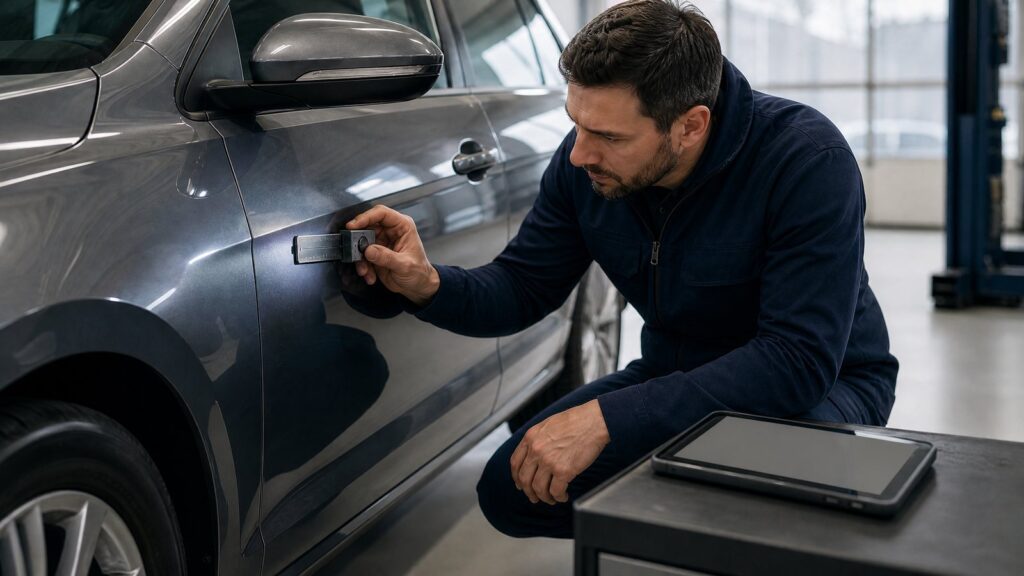
After serious damage, classifying the replacement value is essential for deciding whether a repair makes economic sense. A sound accident report forms the basis for this. In Berlin and the surrounding area, local factors such as demand for certain models, availability of spare parts and the supply of used cars influence the level of the replacement value. We evaluate comparable offers, dealer listings and prices actually achieved on the Berlin market in order to determine the realistic amount needed for an identical vehicle. This regional perspective helps you understand the economic situation of your vehicle and makes damage documentation and claim settlement easier.
Find out more about our work as a car appraiser in Berlin & Brandenburg on our home page.
In our assessment, we take into account the year of manufacture, mileage, equipment, accident damage and technical features that influence the market value. Seasonal fluctuations or specific demand for brands and commercial vehicles in the region are also included in the assessment. A detailed valuation report or a professional vehicle valuation can provide additional certainty here. The aim is not a recommendation to sell, but a reliable, traceable figure as a basis for decisions. The data obtained in this way forms the objective basis for comparing repair costs with the cost of replacement.
Technical and economic assessment in detail
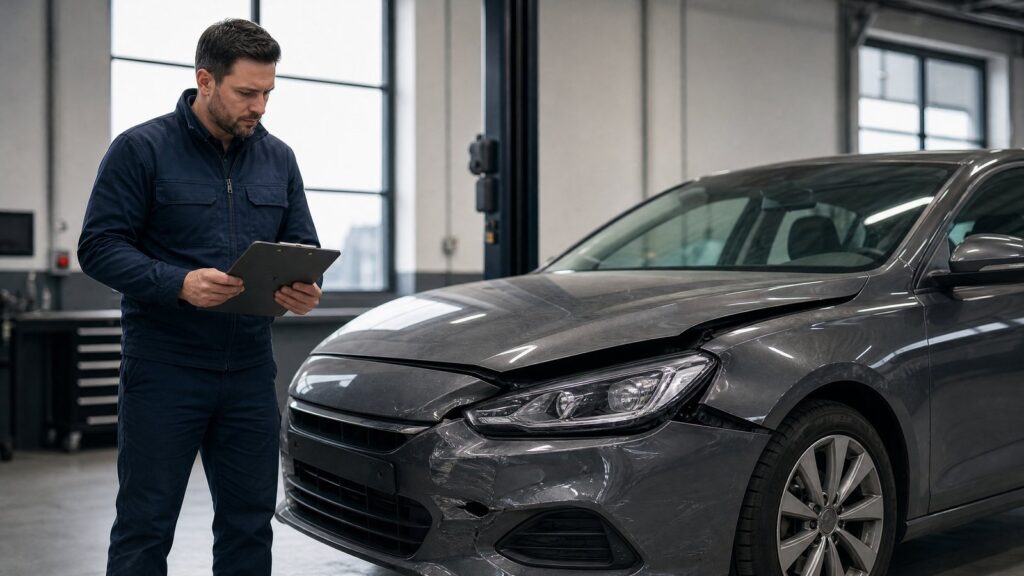
The distinction between a purely technical assessment and an economic assessment is central to correctly classifying severe damage. From a technical point of view, the question is whether the vehicle can be repaired and whether safety-relevant components can be restored. The economic perspective, on the other hand, compares the expected repair costs with the market value of the vehicle. Both perspectives are documented separately so that you can clearly see which conclusion results in each case. As car appraisers, we work for you in various districts, including Buckow, Dahlem and Friedrichshagen.
For the economic assessment, the usual calculation parameters are used: replacement value, residual value, estimated repair costs and individual factors such as remaining service life and expected loss in value after repair. We disclose which assumptions are used for the calculation and how the individual items are made up. This methodological transparency makes it easier for you to weigh up repair, resale or keeping the vehicle. Information on our prices and further helpful tips can be found in our guide (in German).
Checking and documenting residual value offers objectively
Residual value offers can vary considerably depending on who takes over the vehicle and which conditions apply. A transparent offer contains information on remaining defects, necessary collection, an assessment of usable parts and any disposal required. We check these offers in the context of the determined replacement value and the estimated repair costs so that you can compare the economic impact of different assumptions. It is crucial that the offers are documented transparently so that the basis is clear if questions arise later.
- Completeness of the offer: a clear breakdown of which damage is taken over.
- Collection and transport costs: whether additional costs are incurred for collection, loading or disposal.
- Handover conditions: time and place of vehicle handover and the documents required.
- The vehicle’s future: whether parts recycling, repair or scrapping is planned.
Careful documentation of several offers allows a direct comparison and reduces uncertainty. We recommend looking not only at the highest amount, but also at the conditions and costs associated with accepting it. In a report, offers are recorded with photo documentation, offer data and clear explanations so that you can make an informed decision.
Making report data, repair viability and the vehicle’s future transparent
Recording all relevant report data is the basis for transparent decisions about what happens to the vehicle and whether it is worth repairing. In addition to the damage description and cost estimate, a report also brings together market analyses and documented residual value offers. This creates a complete picture that combines both technical and economic aspects. Clean documentation makes communication with insurers, trading partners or garages easier, without making any legal assessments here.
| Aspect checked | What we look at | Benefit of the documentation |
|---|---|---|
| Repair costs | Detailed cost estimate, spare parts prices, labour time | Comparability and transparency of the economic decision |
| Replacement value | Regional market values, comparable offers, year of manufacture and condition | Reliable basis for comparison with the repair costs |
| Residual value offers | Specific offers with conditions, collection costs and assessment of usable parts | Allows selection of the most economically sensible disposal option |
| Vehicle condition | Photo documentation, measurements, notes on structural and frame damage | Creates transparency about hidden defects and remaining usability |
The combination of clear figures, comparative data and visual documentation makes a report a reliable tool for your decision. In particular, what happens to the vehicle influences the achievable residual value and thus the economic viability of a solution. We bring the data together in such a way that you can immediately see the impact of different options on the result, without any guarantee of payment being derived from it.
Understanding an economic total loss objectively
An economic total loss does not automatically mean that a vehicle cannot be repaired technically. What matters is the ratio between the documented repair effort, the value of the vehicle before the incident and other economic factors. The technical damage assessment creates the basis on which this assessment can be carried out transparently.
The document therefore explains not only figures but also the underlying findings. This makes it clear why certain work, parts or inspection steps are taken into account and how they influence the economic assessment.
Classifying residual value offers and vehicle documents in a structured way
When it comes to residual value, orderly documentation is particularly important. Vehicle data, equipment features, mileage, previous damage, available keys and the actual condition all influence the classification. Offers or queries should also refer to a clearly described vehicle condition.
A structured document helps to compare offers and decisions objectively. It also makes communication with the insurer, prospective buyers or the garage easier, without relevant vehicle details being lost.

What happens to the vehicle after a total loss
After an economic total loss, you have several options. You can sell the vehicle at the determined residual value and, if the accident was not your fault, receive the difference to the replacement value from the other party’s insurer. You can keep it and have it repaired if it means a lot to you. Or you can have it properly recycled if no buyer can be found. Which solution is right depends on the condition, the age and your plans.
It is important not to rush anything. Do not sell the car below the residual value stated in the report, and wait with the sale until the insurer has received the report. If you receive a higher residual value offer from the insurer in the meantime, talk to us. We will check whether the offer is binding and whether the buyer will actually collect the vehicle under the stated conditions.
If you want to continue using the vehicle, pay attention to road safety. A total loss and residual value report in Berlin describes the damage precisely, so that a garage can derive the scope of repair from it. Keep the report and repair invoices. You will have to disclose the damage when you sell later anyway, and with complete documents the condition can be proven.
Only deregister the vehicle once it is clear how things will proceed.
FAQ – Frequently Asked Questions
What is the difference between a technical and an economic assessment?
The technical assessment checks whether and to what extent defects can be repaired and which safety-relevant damage is present. The economic assessment, on the other hand, compares the estimated repair costs with the market value in order to answer the question of economic viability. Both results are documented separately, so that it remains clear which conclusions are drawn from a purely technical point of view and which from an economic point of view.
Which documents do you need for a meaningful assessment?
Important documents are the vehicle registration certificate, service book, accident description, photos of the damage and, if available, repair cost breakdowns. Additional information such as the number of previous owners, the last MOT (HU) and proof of accessories or accident damage increases accuracy. The more complete the documents, the more detailed and reliable the replacement value and residual value can be presented.
Should I sell the vehicle before the report or wait?
Selling early without a report can lead to uncertainty about the achievable amount. A report documents condition and market value and makes offers comparable, which often makes the decision-making process easier. It creates transparency that helps you recognise a realistic offer; it therefore makes sense to wait for the assessment before making a final decision on sale or repair.
How are residual value offers obtained and assessed?
Residual value offers are obtained by direct enquiry to recyclers, dealers or specialised buyers and checked for completeness. We assess not only the amount of the offer, but also the costs included, collection conditions and acceptance criteria. Documented offers are part of the report and serve as a basis for comparing different disposal options.
Which factors particularly influence the replacement value in Berlin?
Regional demand, availability of equivalent vehicles, model popularity and spare parts supply play a major role in Berlin. In addition, the mileage, equipment and condition of the vehicle affect pricing. Fluctuations on the local used car market can have a concrete effect on value, which is why a regional market analysis is part of the valuation.
How important is the vehicle’s future for the decision to repair?
What happens to the vehicle has a decisive influence on the residual value: if the vehicle stays with the owner, recycling proceeds may not apply or may have to be assessed differently than if it is handed over to a recycler. Whether usable parts may be removed is also relevant. Clear documentation of the options helps to make the economic consequences of different scenarios transparent.
Do you need fast, professional help?
We work for you in Berlin and Brandenburg. Contact us for a free initial assessment.