
Car Appraiser Berlin Friedrichshain: Photo-Based Clarification of Damage Found at the Roadside
Expert, precise, specialised in photo documentation
Have you discovered damage in a parking space or at the roadside and want to know what lies behind the visible marks? In Friedrichshain it often happens that owners, residents or inspectors photograph damage before any decisions are made. This introduction explains which details in pictures are immediately relevant, which additional shots are often missing and how a focused photo-based assessment strengthens the basis for your decisions. We explain which perspectives, reference points and scales help to assign bumpers, lights, wings and paint chips unambiguously. We also clarify which vehicle documents, existing repair invoices and earlier photos make interpretation easier. Particularly in the densely built-up streets of Friedrichshain, perspective distortion, shadows cast by buildings and varying light conditions are common sources of misunderstanding; we describe how to recognise these influences and reduce them with additional shots. By the end you will know which pictures are required, which information increases the reliability of the assessment and how a photo-based analysis is reliably prepared in practice. You can also read on our homepage how we work as a car appraiser in Berlin & Brandenburg.
District in focus
What turns photos into a meaningful basis
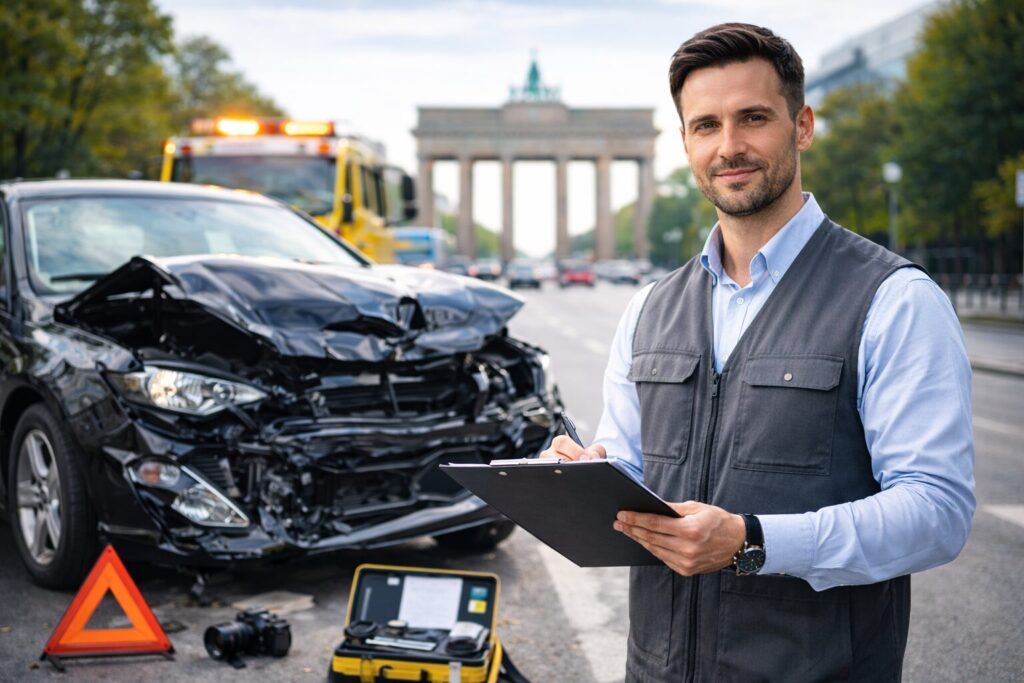
A photographic record of findings does not always replace a mechanical inspection, but it creates a reliable basis for initial assessments. In Friedrichshain it often happens that vehicles are only photographed in passing: one picture from the side, perhaps one of the registration plate. For a reliable assessment, however, you should take several shots from defined angles: close-ups of the damaged area from 30 to 50 centimetres, wide-angle shots showing the position at the roadside, detailed photos of screw connections, panel gaps and paint edges, as well as reference photos with a scale or ruler next to the damage. Note the exact location, time, weather conditions and all visible third-party traces such as paint transfer or scratches with a different paint layer. If previous owners or garages already hold repair invoices, add these together with before-and-after photos. For vehicles with open bonnets, damaged running gear or an abnormal wheel position, additional oblique shots are needed to recognise deformations correctly. When handing over the photos, make sure you keep the original files and avoid image editing; metadata can provide information about the time and the device. With this preparation it is quickly possible in Friedrichshain to distinguish between superficial paint damage, structural deformation or traces of earlier repairs. Such documentation is also helpful in the neighbouring districts of Kreuzberg and Lichtenberg.
Basic photographic services and further options
For quick clarification at the roadside, we offer graduated photo checks: from an initial assessment based on submitted pictures to an in-depth analysis with scale information and a damage catalogue. The following services are based on typical findings in urban parking.
Initial assessment from submitted photos
You send us a selection of your pictures; we check the type of damage, its possible cause and how urgently a technical inspection is needed. The assessment classifies visible scratches, dents and cracks, names typical repair approaches and evaluates whether further short-term safety measures such as towing or disconnecting the battery are advisable. You also receive information on missing perspectives that would allow a more precise assessment. This initial analysis helps you decide whether a full damage report is required and which further documents are needed.
In-depth photo documentation and scale analysis
On the basis of additional pictures, we carry out a scale-based evaluation: panel gaps, differences in height and distances to fixed points are analysed. This includes identifying paint transfer, differentiating between pressure marks and scrape marks, and assessing whether the load was linear or concentrated on a point. The evaluation results in a written damage description with photographic annotations and recommendations for inspection and repair options. This service is useful if the pictures provide initial indications of damage to load-bearing parts.
Photo-based documentation for discussions with insurers and garages
We create a structured photo file with a chronological presentation, comments on the preservation of evidence and a neutral assessment of the consequences of the damage. The file contains photo recommendations for garages as well as a list of the viewing angles relevant for cost estimates. The aim is to give you a reliable basis for discussions with insurers or garages without necessarily having to carry out a physical inspection first. The file avoids speculation and focuses on verifiable findings.
Distinguishing previous and old damage
Photos alone often only show the visible surface; this service concentrates on differentiating between fresh damage and existing signs of wear. Based on structural features such as fresh fracture edges, different degrees of corrosion, paint layers and the position of deposits, we assess which areas are new and which cannot be attributed without further examination. This reduces incorrect attributions and helps to conduct disputes with insurers in a structured manner.
Why photographic details outweigh the first impression
A single photo can be deceptive: shadows, perspective and reflections change the perceived depth of damage. This is particularly relevant in Friedrichshain, because narrow streets and tall buildings strongly influence the light conditions. Structured photo documentation minimises such sources of error. What matters is not just many pictures but deliberately chosen shots: a close-up of the fracture edge, an oblique overall view to make deformations visible, detailed photos of screw connections and interior photos for concealed damage. Additional information such as the mileage, recent garage invoices or known previous damage considerably increases the evidential value. If you supply the most important perspectives, an expert photo-based evaluation can already make statements about the type of damage, possible repair methods and urgency. This saves you time and avoids unnecessary, costly on-site inspections in cases that can be clearly documented.

Quick orientation
A qualified photo evaluation quickly provides a realistic assessment of whether the damage is minor or a finding that requires technical measures.
Targeted follow-up requests
You receive precise instructions on which additional pictures and documents are really necessary.
Preserving evidence without a garage visit
With a structured photo file you have objective documentation for insurers and garages that makes the condition at the time the damage was found traceable and verifiable.
Minimising conflict
Clear photographic findings reduce misunderstandings on questions of liability and create a more objective basis for discussions with other parties involved.
When photographic clarification can be sufficient
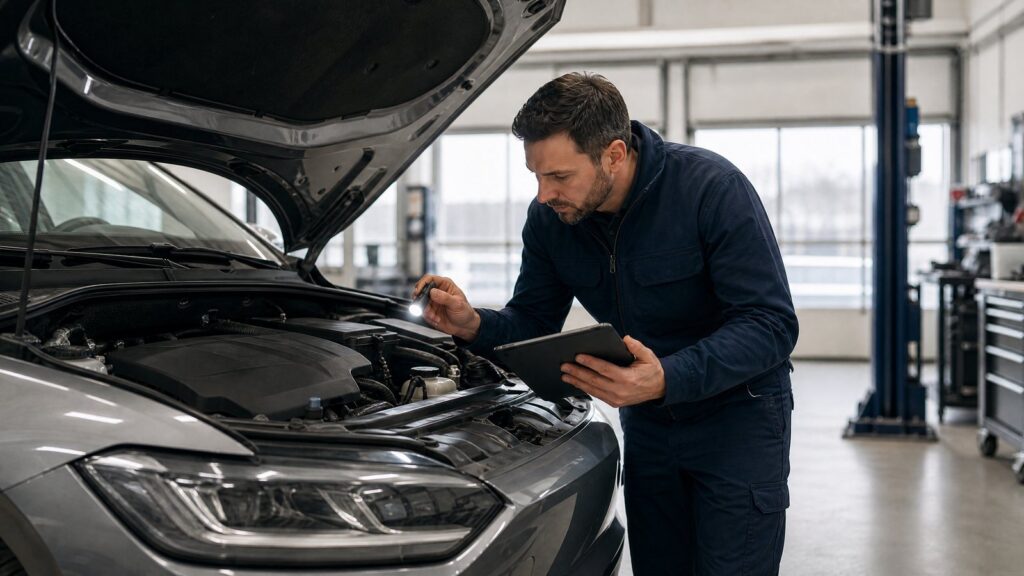
Not every damage that is found immediately requires a full on-site inspection. In Friedrichshain many minor parking bumps can be documented: superficial paint scratches, slight dents without creases or non-load-bearing deformations can often be assessed reliably by means of photo documentation. The prerequisite is that the necessary perspectives, a scale and additional information such as driving condition, previous repairs and environmental factors are available. However, if pictures show pronounced deformation of load-bearing components, open bonnets or protruding running gear components, a physical inspection is recommended to avert danger and determine costs exactly. An in-person inspection is also advisable if the photos provide contradictory information or if initial findings suggest possible consequential damage to electrical systems. Photo-based clarification is ideal as a first, cost-effective step to properly assess the actual need for further measures in Friedrichshain.
Saving time
A photo check saves travel and waiting time, because many cases can already be decided on the basis of good pictures. This is particularly practical in busy streets with limited parking.
Cost-conscious choice
You only pay for the level of inspection that is necessary: a short image analysis is often enough, more in-depth partial services follow only when needed. This avoids unnecessary appraisal costs.
Why this method makes sense in the city: advantages of photo-based assessment over an official initial inspection
Friedrichshain: enabling a reliable classification
The structured photo file serves as a neutral basis for insurers and garages and reduces the number of later queries thanks to clear descriptions and image markings.
Minimising risk
Precise photo templates help to avoid misdiagnoses; especially with complex damage that appears superficial, this reduces later disputes.
How the photo-based analysis works
The photo check follows fixed steps so that reliable findings can be derived from pictures. Here is a typical sequence, adapted to locations in the city.
Step 1: Initial review and prioritisation
We check the pictures you send us for completeness, recognisable safety risks and obvious information. If important perspectives are missing, you receive a targeted list of shots that quickly increases the evidential value.
Step 2: Systematic image analysis
Each photo is examined for panel gaps, fracture edges, paint transfer and deformations. Scales and reference points are used to roughly quantify possible changes in dimensions.
Step 3: Request for additional information
If necessary, we ask for the mileage, recent repair receipts or earlier photos. This information helps to distinguish fresh damage from older signs of wear and to secure the attribution.
Step 4: Result document and recommended action
You receive an annotated photo file with a conclusion, a priority rating and possible next steps — from safety-relevant measures to initiating a full appraisal.
FAQ – Frequently Asked Questions
Here you will find precise answers to specific points that often arise when photographing, preparing and assessing damage found at the roadside.
Which file formats and image resolution should the photos have?
Preferably use unedited, high-resolution JPEG or PNG files; 8 megapixels or more is sensible. Avoid filters, subsequent cropping or automatic colour correction, as these can distort details. The original metadata is also important: time, date and, if available, GPS information help to assign the location. If you take several pictures from different angles, keep the original files in your archive so that the exact image versions are available if there are any queries.
Which perspectives must I not forget when taking photos at the roadside?
Always take an overall view showing the vehicle in the context of its parking position, a frontal and a side overall shot, close-ups of the damaged area from different angles and at least one detailed photo with a recognisable scale (ruler, tape measure). If deformations are visible, oblique views are helpful to document differences in height. Add photos of the vehicle interior or the boot if internal components appear to be affected.
How can previous and old damage be distinguished on photos?
On photos, fresh damage is often visible through clear fracture edges, sharp paint chips or high-contrast scratch marks; corroded or repainted areas tend to indicate older damage. Combining this with evidence such as earlier garage invoices, before photos or longer periods of ownership makes the distinction more reliable. If possible, document the transition areas between damaged and undamaged surfaces; this is where signs of ageing, the layer structure and possible repair edges become visible.
What should be done if the photos give contradictory indications?
Contradictions do not rule out an assessment, but they do require additional information. We explain specifically which perspectives or measurement data are missing and whether a short in-person inspection is advisable. In the average case, a targeted request for further pictures or documents can remove many uncertainties without immediately arranging an on-site appointment.
Which vehicle documents support the photo-based assessment the most?
Purchase contracts, details of the last general inspection (HU), repair invoices and earlier damage documentation are helpful. Mileage information and handover records provide context on how the vehicle has been used. These documents allow a better assessment of whether visible defects plausibly match the usage or indicate a new incident.
To what extent can a photo analysis provide an assessment of roadworthiness?
Photos show many safety-relevant indications: protruding parts, damaged headlights, deformed running gear components or leaked fluids. A final assessment of roadworthiness often requires physical inspections if safety-critical components are affected. However, the photo-based analysis provides a reliable initial assessment of which components should be checked immediately.
How do I receive the result of the photo-based assessment?
You receive a written result with annotated pictures, an assessment of the findings and clear recommendations for further steps. The file also lists any missing pictures if further information is required and classifies the urgency. This document is designed so that you can use it directly for communication with insurers or garages.
How to turn your photos into a sound basis for decisions
Collect in a targeted way: several viewing angles, a scale at the damaged area and all available documents increase the evidential value. In Friedrichshain a well-documented photo file is often enough to plan the next step sensibly — whether a short-term garage check or a formal report. If you wish, we will tell you exactly which pictures are missing or which documents decisively improve the assessment. This way you avoid unnecessary appointments and quickly receive a reliable assessment of your situation.