
Car Appraiser Berlin Treptow: Complete Photo and Text Documentation
Objective, systematic, traceable – reports with a complete chain of evidence
When a vehicle is damaged, it is not a single photo that decides the claim: what matters is the combination of systematic photos, unambiguous text descriptions and a clear distinction between fresh damage and previous damage. In Treptow we document the damage in a fixed sequence of images showing components in their position, type of material and fracture edge, supplemented by short text notes, dimensions and reference points. This results in step-by-step documentation that allows you to show insurers, workshops and third parties exactly how and where the damage occurred. You receive not just individual photos but a logical sequence that makes the condition before, during and after repair preparation traceable. This methodical combination of images and text helps you to answer later queries precisely and reduces room for interpretation. Treptow is part of our regular service area as a car appraiser in Berlin and Brandenburg.
Treptow district

How we set up step sequences for your damage
When preparing a report in Treptow, we start with a systematic inventory: photos of all sides of the vehicle, with a focus on bumpers, wings, doors, suspension and lighting, as well as close-up detail shots of fracture edges, paint transitions and connection points. At the same time, we record the mileage, MOT (TÜV) status, existing repair receipts and the visible age of components. Each photo is assigned a short text naming the location, direction, distance and possible defects. Where necessary, we take measurements and mark kinks with reference points so that later comparisons are possible. For you this means a traceable dossier with images, explanatory texts and an initial assessment that names the scope of repair, safety relevance and gaps in the documentation. In Treptow we pay particular attention to linking image and word so that the chronology of the damage is immediately recognisable to third parties.
Specific documentation services
We do not deliver loose snapshots but structured evidence: image series with context shots, close-ups with a measurement reference, position drawings and written notes on findings. This allows the course and extent of the damage to be traced in a linear way.
Systematic accident recording on site
During the on-site recording, we take a defined sequence of perspectives: overall views of the vehicle’s surroundings, front/rear/side photos, then detailed shots of the damaged areas with calibration references. Each step is documented in the record with the time, lighting conditions and measuring aids. This lets you see later whether a fracture is fresh or already existed, and in Treptow you can make the sequence of the damage visually traceable for appraisers or insurers. This form of recording is also suitable for quantitatively comparing later repair stages.
Photo documentation with standardised image sequences
Our photo records follow fixed rules: distance specifications, focused close-ups, photos at right angles to the damaged area and overall pictures from a defined distance of two metres. The photos are provided with visible reference dimensions, colour charts and short labels. We also produce sketches marking where the photos were taken. In Treptow, this procedure helps to clarify contradictory statements by showing the condition before and after work, thus increasing the evidential value of your documents.
Technical inspection and measurement data
In addition to images, we collect technical data: panel gaps, deformation angles, frame measuring points and, if necessary, measurements of the suspension and axle geometry. These measured values are documented in records with a list of measuring instruments and measurement uncertainties so that the results remain reproducible. For Treptow, this means that a technical classification is possible that goes beyond visual assessments and allows specific statements on road safety and the need for repair.
Residual value, restoration and loss-in-value analysis
On the basis of the documented damage, repair costs and parts availability, we prepare an assessment of restoration and residual value as well as any loss in value. The basis is the photographic chronology, repair quotes and comparable market values. The reasons for decisions, assumptions about parts quality and alternatives to using original parts are documented. In Treptow you thus receive a traceable basis for economic decisions or negotiations with the insurer.
Why a complete sequence of evidence is decisive
A single photo is rarely enough to clarify how damage occurred, its extent and who is responsible. The real strength lies in the order of the documentation: initial image, detail shots, measurement records, sketches and finally photos after dismantling or repair attempts. This sequence reduces uncertainty because each photo fulfils a function and, in combination with the previous one, narrows down the interpretation. In Treptow you thus avoid misunderstandings about the timing and size of damage and create a reliable basis for cost estimates, legal questions and insurance processes. In addition, standardised image and text formats improve verifiability by third parties.

Traceability throughout the entire process
The systematic sequence of images and texts makes it possible to trace every finding in the report back to a specific photo or measurement.
Evidential value through standardised photos
Standardised photo distances, reference dimensions and labelled image series carry more weight than verbal accounts.
A reliable basis for repair decisions and negotiations
When the scope of repair, residual value or loss in value is in question, the documentation provides the basis for traceable decisions and clear arguments in discussions with workshops and insurers.
Identifying gaps and adding to the record
Thanks to the structured recording, you can quickly see where further examinations are needed, such as paint layer measurements, underbody inspections or electronics tests, and take targeted action.
When complete photo and text documentation makes sense
Comprehensive documentation is advisable as soon as relevant damage is visible on your vehicle, whether after an accident, vandalism or in a dispute about the scope of repair. In Treptow it is particularly useful if statements about how the accident happened are contradictory, if several parties are involved or if damage suggests later consequential damage to the suspension, axles or electrics. It also creates clarity before work such as the start of repairs, replacement of parts or a sale. The documentation serves not only to establish the damage but also to safeguard the process: if questions arise at a later date, the sequence of images and text can be used to reconstruct which observations were made and which assumptions the appraiser made.
Pragmatic methodology
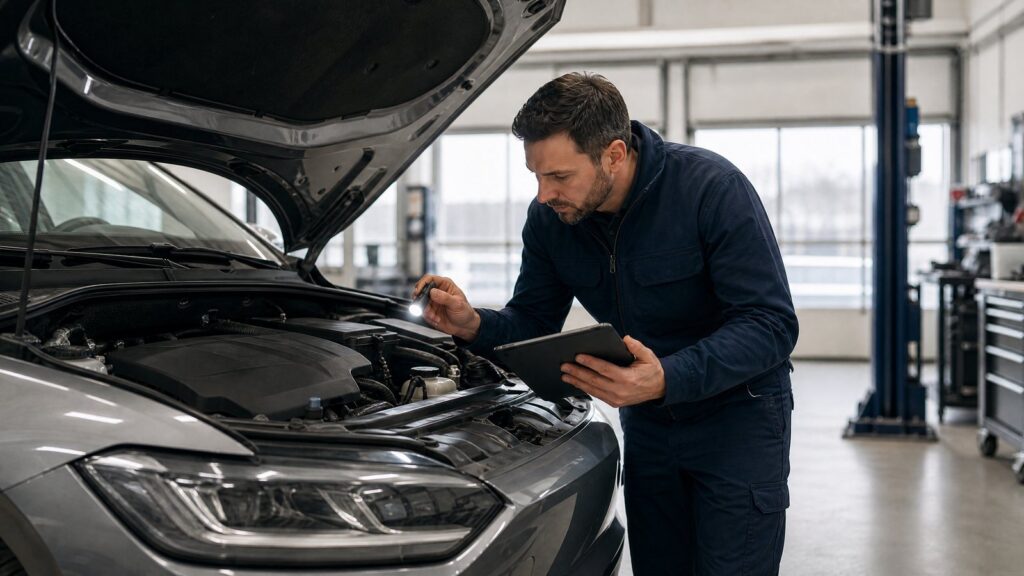
Our way of working follows clear rules: photo sequence, measurement record and brief written findings. The methodology reduces randomness and makes every finding repeatable and verifiable.
Documentation instead of interpretation
We deliberately separate the pure collection of photos and measured values from the expert assessment. This creates transparent foundations on which every conclusion remains traceable.
Why our approach is useful
Documents that communicate clearly
The result is documents that you can share with insurers, workshops or legal counsel without additional explanations. Every photo is labelled and embedded in a sequence.
Flexibility for follow-up tests
The records are set up so that they can be extended at any time with additional measurements, such as paint thickness measurements or wheel alignment, if new questions arise.
The appraisal process as a visible sequence
Every appraisal process is a sequence of actions that we document. The individual steps are designed so that they can later be checked independently.
Initial recording and record of surroundings
We start with an overall photo of the vehicle in its surroundings and note the location, lighting conditions, weather and position on the road. These context data are crucial for correctly classifying later interpretations of the photos.
Systematic photo sequence of the damaged areas
For each affected zone, we take a fixed sequence of photos: one or two overall views, a medium perspective and several close-ups with a reference dimension. Each photo is given a short note on the findings.
Measurement record and technical values
After the photos, we carry out targeted measurements, such as panel gaps, differences in height and material deformations. These values are documented together with the measuring equipment, accuracy and measuring conditions.
Comparison with existing documents
We check existing invoices, MOT (HU) reports and earlier reports for agreement or discrepancies. This helps to distinguish previous damage and establish how current the findings are.
FAQ – Frequently Asked Questions
Answers to the most common practical concerns: from the documents you should bring with you to the technical classification of our measurement results.
Which documents should I bring to the appointment?
Please bring the vehicle registration certificate, the latest MOT (HU) certificate, any known repair invoices and, if available, photos of the condition before the damage. A short written account of the incident and contact details of witnesses help to clarify the context. If cost estimates already exist, please present them too. These documents allow us to better distinguish previous damage from current damage and to compare our assessment with figures already available, so that the appraisal process in Treptow gets off to a quick and targeted start.
How are the photos taken technically so that they can be used?
We work with fixed specifications: defined distances, perpendicular photo planes, reference dimensions in the image and short, unambiguous labels. We also document lighting and camera angle so that later evaluations can reproduce the situation. For critical detail shots, we use macro photos and a colour reference card. This technical consistency increases the evidential value of the photos for insurance assessors or workshops.
How is the vehicle history included in the assessment with complete photo and text documentation in Treptow?
Previous damage is recorded separately and described on the basis of signs of ageing, edge characteristics and existing repair seams. In the images, we clearly mark which areas are classified as not belonging to the current damage. If necessary, we compare with existing invoices or earlier inspection reports to make the chronological sequence plausible. The aim is to document the separation of old and new damage in a way that is traceable for third parties.
How does a repair that has already begun affect the documentation in Treptow?
The repair status influences the scope of the documentation: before repairs begin, we record everything; after work has been carried out, we document the actual work and check its execution against the photo chronology. If parts have already been removed, we note the removed state and possible signs of tampering. This information is important for assessing whether the repair items listed are necessary and have been carried out professionally.
How is age-related wear distinguished from loss in value caused by damage?
We assess wear on the basis of typical signs of use, such as the degree of wear on seats, pedals or paint surfaces, and relate this to the changes caused by the damage. From this comparison we derive a percentage loss in value or depreciation. Documented initial conditions and traceable valuation bases are decisive so that the assessment remains objectively verifiable.
How and in what scope do I receive the report?
You receive a complete dossier with sequenced photos, written notes on findings, measurement records, sketches and a summary assessment. The report is handed over in digital form; on request, we also supply printed copies. The structure of the document makes it possible to pass on individual image series to third parties without losing the overall context.
How can I prepare for the inspection appointment?
Write down brief descriptions of how the accident happened, gather existing documents and, if possible, mark particularly relevant areas on the vehicle with a removable marker. Remove personal items if possible. Have any photos of the vehicle from before the damage ready, as this speeds up the separation of previous damage. Good preparation saves time and leads to complete documentation.
The next traceable step after the inventory
If you need reliable documentation in Treptow, we bring structure to your documents: an orderly sequence of images, clear written findings and reproducible measurement records. This gives you freedom of decision, because all relevant observations are available transparently and verifiably. We also support you in Adlershof and Neukölln with equally structured documentation. Send us your documents in advance for review so that we can plan the appointment in a targeted way and add any missing photos or measured values directly. This way you avoid repetition and receive a practical report that you can use with confidence.