
Repair Confirmation Berlin – Proof of Professional Repair
Table of contents
- Comparison with the original report and scope of work
- Before-and-after documentation and visible inspection records
- Checking invoices, documents and evidence
- Scope for judgement, non-destructive inspection and recognisable limits
- Repair confirmation after notional settlement
- Frequently asked questions about the service
- Confirming professional repair against the original damage
- Which documents and photos support the confirmation
- When the repair confirmation becomes important later on
Comparison with the original report and scope of work
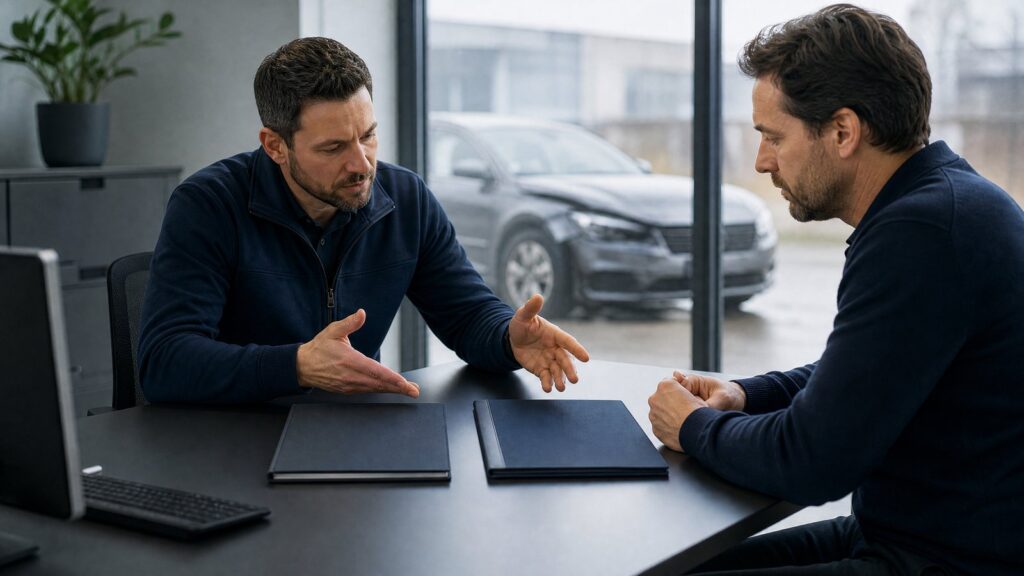
During the inspection, the previously prepared original report is used to compare the documented extent of the damage with the work carried out. We check whether the damage originally identified has been taken into account in type and extent and whether the repair methods chosen correspond to the state of the art. This comparison makes it possible to establish traceably which items of the report have been dealt with and where there may be deviations.
You can find out more about our work as a car appraiser in Berlin & Brandenburg on our home page.
The results of the comparison are documented in writing, so that the insurer, the garage and the vehicle owner have a uniform information base. We note any differences found and refer to verifiable documents such as repair invoices, inspection records or images. The aim is a transparent presentation that reduces queries and makes further processing easier.
Before-and-after documentation and visible inspection records
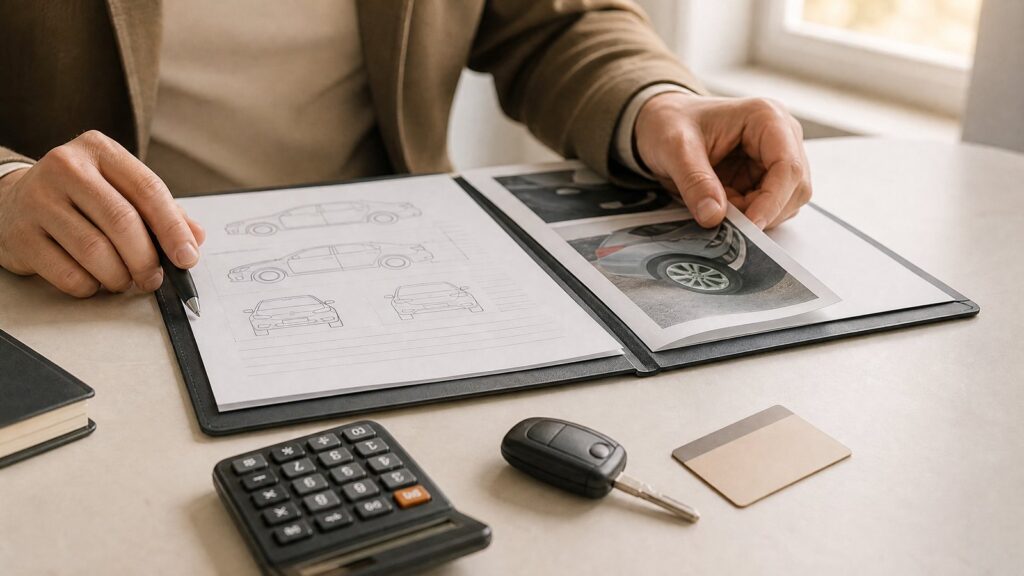
The before-and-after documentation comprises meaningful photographs and a structured description of the repaired areas. Photographs show the condition before the repair, while new shots document the current condition. In addition, we carry out a visual inspection of the affected areas, assessing, for example, panel gaps, paint finish, welding seams and fixings. These visible findings are the basis for assessing whether the externally recognisable defects have been professionally rectified.
For transparency, we include a list of specific inspection points so that it remains clear which aspects were checked and which could only be assessed to a limited extent. The documentation serves as proof for the garage, insurer and owner and can be particularly helpful if loss of use or diminished value is claimed later. The photographic documentation is dated and describes the location, scope and result of the inspection.
- Check panel gaps and body joints for even gaps and transitions
- Examine the paint surface for colour, texture and transitions in the repair area
- Check visible welded or riveted joints for clean workmanship and corrosion protection
- Check fixings, clips and screws for correct fitting and completeness

Checking invoices, documents and evidence
Checking the invoice is a central part of the documentation: items, parts used and work carried out are compared with the original damage pattern. We also review the garage’s inspection records, spare parts receipts and, where applicable, material certificates in order to make the repair more traceable. Careful documentation creates clarity about the scope and quality of the work and supports the assessment of claims such as loss of use or diminished value. For an initial cost classification, a vehicle repair cost estimate can be useful; for clearly limited questions, a short report may be sufficient.
The following table summarises typical inspection aspects, the specific indications considered and the benefit of the documentation. It serves as a compact working tool for organising the most important evidence clearly and making it understandable for everyone involved.
| Inspection aspect | What we look for | Benefit of the documentation |
|---|---|---|
| Invoice items | Clarity about parts used, hours and description of work | Proof that the work invoiced corresponds to the damage |
| Spare part identification | Original or aftermarket part, part number, visible markings | Evidence of quality and of replacement or repair |
| Inspection records | Measurements, adjustment records, function tests after repair | Documentation of technical restoration and functionality |
Scope for judgement, non-destructive inspection and recognisable limits
The assessment is primarily a non-destructive visual and functional inspection. Visible work can be assessed well, as can the assembly condition and surface quality. It is important to point out transparently that internal repairs, concealed soldered or welded seams and hidden structural reinforcements cannot necessarily be fully inspected. A conclusive statement about work carried out internally is therefore only possible to a limited extent unless the vehicle is opened up or a destructive examination is carried out.
These limits are recorded in the written confirmation so that it remains clear which areas were inspected and which statements cannot be made in general terms. The documented findings support the processing of the claim, the notification of loss of use and the assessment of value, without pretending that every internal repair could be fully verified by non-destructive means.
Confirming professional repair against the original damage
A repair confirmation is particularly meaningful if a previous finding or a damage report is available as a basis for comparison. During the inspection, we check whether the previously documented areas have been repaired and whether the visible repair condition matches the expected work.
The confirmation does not replace complete garage documentation, but it can record the completion of a proper repair in a traceable way. This is helpful when a clear document is required for an insurer, a buyer or another party.
Which documents and photos support the confirmation
The original damage record, garage invoices, parts receipts and photos taken before, during or after the repair are helpful. These documents make it possible to trace the connection between the damage and the repair more precisely.
Good preparation ensures that the confirmation not only shows the current visual impression, but also takes the technical and documentary context into account. This reduces queries and makes the statement more reliable. You can find further tips on preparation in our vehicle appraisal guide (in German).
When the repair confirmation becomes important later on
Many vehicle owners do not need the confirmation immediately, but only months or years after the repair. By then, it is often the only proof that the damage was properly rectified.
- Second damage in the same place: The insurer asks about the previous damage. The confirmation proves that the old damage was professionally repaired.
- Selling the vehicle: Buyers ask about accidents. A documented repair creates trust and makes price negotiations easier.
- Notional settlement with later repair: If you initially settled on the basis of the report and have the vehicle repaired later, you may only be able to claim items such as loss of use with proof of repair.
- Returning a leased vehicle: Damage is looked for when the vehicle is returned. Proof of professional repair helps to avoid discussions.
Keep the confirmation together with the report and the garage invoice. Ideally, also keep it as a PDF in your digital vehicle records.
Repair confirmation after notional settlement
If you initially settled a liability claim notionally, i.e. on the basis of the report without a garage invoice, a repair confirmation can become important later. This applies, for example, if you want to claim loss of use for the repair days or if new damage occurs to the same component. It must then be proven that the earlier damage was actually rectified.
For a repair confirmation in Berlin, we inspect the vehicle after the repair and compare its condition with the photos and items in the original report. We check panel gaps, paint finish and the function of the replaced parts, measure the paint thickness if necessary and record whether the repair corresponds to the damage described. A garage invoice is not strictly necessary for this, but receipts for purchased spare parts are helpful.
Schedule the appointment as soon as possible after the repair. The more time passes, the more difficult it is to show when the work was done. A photo of the mileage on the day of completion can further support the confirmation.
The confirmation is also useful if you want to sell the vehicle later. Buyers almost always ask whether previous damage was properly repaired, and the confirmation gives you an objective answer.
FAQ – Frequently Asked Questions
Do you need the original report for the inspection?
Yes, the previously prepared report forms the basis for the comparison. It makes it possible to compare the damage identified and the originally recommended scope of repair in a traceable way. Without the original report, it is more difficult to attribute individual work, but the inspection is still possible in many cases if additional documents such as the repair invoice or garage record are available.
Which documents should be ready for the inspection?
Please have the repair invoice, the original report, inspection records, spare parts receipts and photographic records of the work carried out ready. This information makes the process easier to follow and speeds up the preparation of the confirmation. Missing documents can limit the evidential value of the documentation.
How detailed is the before-and-after photo documentation?
The photo documentation is prepared in such a way that relevant damaged areas and the corresponding repaired areas are clearly recognisable. We take shots from several perspectives and add descriptive texts. The aim is a meaningful presentation that objectively shows the condition before and after the repair.
Can the confirmation help with loss of use or diminished value?
The documented evidence can serve as a supporting basis when loss of use or diminished value is claimed. It shows which work was carried out and to what extent the damage was dealt with. However, specific claims are not determined by the document itself, but are supported by it providing clear facts.
Is the quality of the repair carried out assessed?
As part of the visual inspection, we assess workmanship, paint finish, panel gaps and assembly condition. This assessment gives an indication of professional repair. However, a comprehensive quality assessment, especially for concealed or structural work, is only possible to a limited extent unless further testing methods are used.
Is there a guarantee that all defects will be found?
The inspection is carried out within the limits of a non-destructive visual and functional examination. Obvious and accessible defects can be reliably recorded, but concealed or internal damage is not always recognisable. This methodological limitation is noted in the documentation so that the scope of the statement remains clear.
Do you need fast, professional help?
We operate across Berlin and Brandenburg. Contact us for a free initial assessment. We also offer appointments in Mahlsdorf, Marienfelde and Schmargendorf; our overview of costs and prices for vehicle appraisals provides initial guidance.