
Car Appraiser Berlin Köpenick: Expert Assessment of the Extent of Damage and the Repair Route
Objective reports for realistic information after damage events
After an accident, the situation is often confusing: visible deformations, grinding noises or driving functions that feel unsafe raise questions. In Köpenick, vehicle owners need a clear expert assessment that goes beyond simply recording the damage. A responsible damage assessment report shows precisely which components are affected, how high the expected repair effort is and which documentation is required for insurers or garages. This includes structured photos of the damaged areas, interior shots to detect deformations, OBD readouts in the case of electronic abnormalities and evidence of the previous condition, previous repairs and the use of the vehicle. It is important that the inspection does not lapse into speculation: it should distinguish between direct consequences of the accident, older previous damage and wear. This is the only way to make sensible decisions about repair, restoring road safety or an economical solution. For residents and commuters in Köpenick, a well-documented basis for decisions is particularly valuable because it enables quick and comprehensible steps with garages and insurers. You can also read how we work as a car appraiser in Berlin & Brandenburg on our home page.
District

What an expert assessment means in concrete terms
An expert assessment of a vehicle involves more than a photo of the damage. In Köpenick, it is about differentiating damage patterns, naming causes and proposing specific repair routes. You receive a structured list of which visible parts are affected, which hidden components require inspection and which measured values or diagnostic data help to clarify the situation. Documentation of the previous condition is essential: existing invoices, leasing documents, vehicle papers and photos from before the event help to rule out or classify previous damage. In modern vehicles, the evaluation of control unit data can provide information on airbag deployments, comfort functions or electronic faults. For decision-making, it is also assessed whether a professional repair can restore the original function and safety or whether partial or total loss is more likely. The presentation is designed so that non-technical people can also understand which steps make sense: which components should be checked first, when additional reports (e.g. for damage to the frame or electronics) are advisable and which documents you should have ready for further communication with the garage and insurer. Clear terms, comprehensible photos and a traceable chain of reasoning are the goal.
Specific areas of inspection
The following services focus on the practical assessment of the extent of damage, repair options and the necessary documentation. Each service aims to create comprehensible facts that serve as a basis for decisions.
Detailed recording of findings at the damaged area
On site or in a workshop hall, all visible and hidden damage is recorded systematically. This includes panel gap deviations caused by twisting, paint chips on bumpers, cracks in load-bearing structures and deformations of chassis parts. Photographs are taken from defined perspectives so that comparisons are possible later. At the same time, functional tests are carried out: steering, brakes and chassis responses are assessed as far as is safely possible. If concealing components need to be removed, this is documented and justified so that every examination remains traceable. Precise preservation of evidence serves to base later discussions with garages or insurers on comprehensible findings.
Technical assessment and repair route
Based on the findings, we assess which repair measures are technically necessary and economically sensible. A distinction is made between restoration work using original parts or recognised repair methods and lower-cost solutions such as exchange assemblies. Particular attention is paid to ensuring operational safety: load-bearing structures, safety components and electronic assistance systems are assessed with regard to their influence on road safety. In addition, possible risks of an unprofessional or incomplete repair are highlighted so that you can make an informed decision about the choice of garage and the scope of the repair.
Documentation for insurers and technical review
An effective report provides an orderly chain of evidence: description of the situation, damage categories and justification of the proposed measures. To support the assessment, relevant documents are brought together, such as existing invoices, vehicle papers, TÜV or general inspection (HU) findings and photos from the previous phase. This makes it possible to clearly separate which damage is accident-related and which is based on previous defects. The documentation also contains information on measured values, measurement records and possible reviews by experts or testing organisations. This creates a basis for comparing quotes and holding objective discussions with insurers.
Assessment of electronic components and fault memories
Modern vehicles often show no external damage but have internally caused malfunctions. The report includes reading out relevant fault memories, interpreting error messages and assessing whether electronic faults are logically connected with the damage event. Logs from control units can provide information on triggering forces, active safety systems or recurring fault patterns. These technical findings are explained in an understandable form and accompanied by recommendations for further diagnostic steps so that the garage can carry out targeted checks and repairs.
Why a well-founded damage analysis is important
A well-founded analysis prevents wrong decisions that can later cost time, money and safety. In Köpenick, where many vehicles of different ages are on the road, a careful inspection helps to cleanly separate previous conditions from new damage and thus uncover hidden defects. Only with a comprehensible presentation can repair offers be compared, unclear items in repair estimates identified and necessary rework reduced. A detailed report also protects against restricted operational safety: if load-bearing components, airbag systems or electronic driving aids are not restored correctly, there is an increased risk on the road. The objective assessment provides arguments that hold up in negotiations with garages or insurers and creates a reliable basis for deciding whether a repair should be carried out or whether a more economical solution must be considered.

Köpenick: assessing traces of damage sensibly
You receive an understandable presentation of the damage and the options, allowing you to check quotes and invoices objectively.
Köpenick: assessing findings with a sense of proportion
The assessment highlights safety-relevant defects and shows priorities for repairs.
Clear documentation for third parties
The compiled findings, photos and relevant documents form a comprehensible basis for communication with insurers, garages or testing organisations and reduce misunderstandings.
Avoiding unnecessary work
Targeted inspection separates out which work is actually necessary and which is purely cosmetic.
Times when an expert assessment makes sense
Not every scratch requires a comprehensive report, but there are situations in which a professional assessment is crucial. Immediately after an accident, you should consider an inspection if deformed body parts, irregularities in steering or braking behaviour or deformations in the interior are visible. Even with inconspicuous signs such as uneven panel gaps, sudden noises or electronic error messages, an early check is advisable to prevent consequential damage. When selling or for a vehicle valuation, a technical assessment can serve to reliably document the actual condition. In cases with an unclear damage history, contradictory information from dealers or garages, or if previous owners’ invoices are missing, a report creates transparency and reduces later disputes. This is particularly valuable for vehicle owners in Köpenick, because short-term decisions about garage visits or insurance enquiries often have to be made and a well-founded basis saves time and effort.
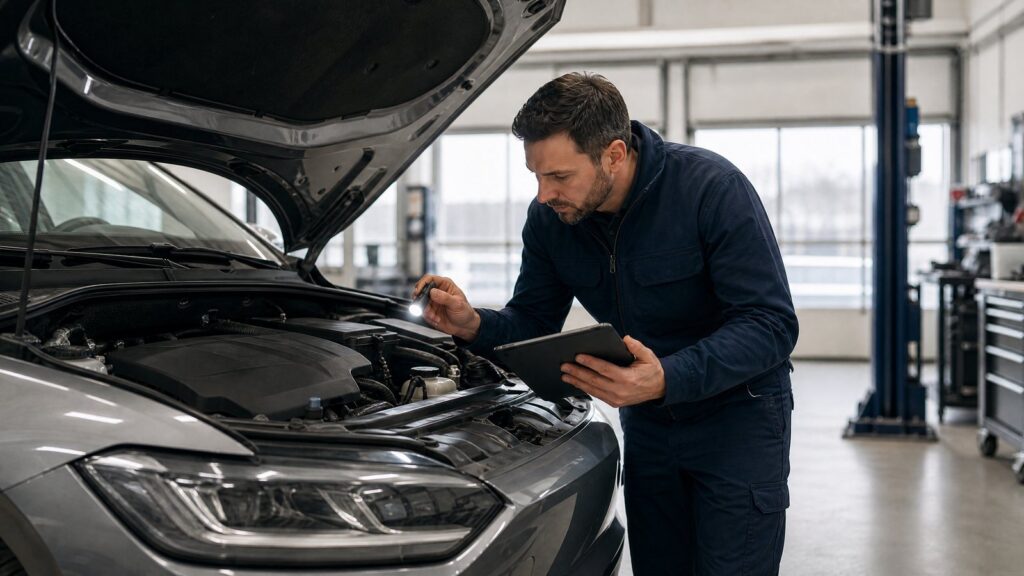
Systematic provision of evidence
Each finding is documented with photos, measured values and comprehensible reasoning. This rigorous provision of evidence prevents room for interpretation and makes later review by third parties easier.
Pragmatic recommendations
The proposed repair routes are technically justified and practice-oriented. Realistic options are presented that weigh up complete restoration against economical repair.
What distinguishes our approach: criteria for a reliable assessment
Technical clarity
Complex technical findings are explained so that you can understand the effects on use and safety. Technical terms are explained and linked to recommendations for action.
Transparent distinctions
Previous damage, wear and accident-related damage are clearly separated. This distinction is crucial for classifying claims and responsibilities appropriately.
How an objective inspection works with us
The process is geared towards creating comprehensible facts: recording, technical assessment, documentation and communication of results. Each step is logged so that you can follow the status at any time.
Initial recording and visual inspection
First, a structured visual inspection is carried out with photo documentation from standardised angles. You should provide existing papers, previous invoices and available photos so that the previous condition can be reconstructed as well as possible.
Technical testing and measurements
This is followed by functional tests and, if indicated, measurements on the chassis, wings or load-bearing parts. In the case of electronic abnormalities, fault memories are read out and logs saved in order to narrow down causes.
Assessment and repair recommendation
Based on the findings, a practicable repair route is proposed that takes into account effort, cost range and safety-relevant priorities. Alternatives are described and justified.
Compilation of the documentation
Finally, you receive an orderly report with photos of the findings, measured values and a clear justification of the results. This document is designed so that it can be used with garages and insurers.
FAQ – Frequently Asked Questions
Below you will find specific answers on choosing documents, recording findings, photo documentation, previous damage, state of repair, assessment, operational safety, handover of results, preparing for the appointment and technical assessment.
Which documents should I bring to an inspection appointment?
Bring all existing vehicle papers, general inspection (HU) reports, garage invoices, earlier photos of damage and, if available, a complete service book. These documents help to reconstruct the previous condition and provide information on work already carried out. If evidence is missing, this is noted in the report and the effects on the assessment are explained. The more complete the documents, the more precisely new and old damage can be distinguished.
How detailed is damage documented on site?
The documentation includes systematic shots from several perspectives, macro shots of impact points and details such as crack edges or paint abrasions. In addition, panel gaps, deformations and mechanical connections are described. Where necessary, components are briefly removed for inspection or measurement and the procedure is justified. This detailed recording of findings forms the basis for reliable statements on cause and extent.
Which types of photos are particularly important for the assessment?
Overview photos showing the location of the damage on the vehicle are important, as are detailed photos that clearly show deformations, breaks or paint damage. Interior photos of deformations or loosened fastenings are just as relevant as photos of the chassis and underbody if frame or structural damage is suspected. The date and context should be documented so that statements can later be made about how the damage occurred.
How does the report deal with existing previous damage?
Existing previous damage is described separately and, where possible, delimited on the basis of earlier evidence. The report classifies existing impairments into categories and explains to what extent they influence the current damage event. If a clear distinction is not possible, the area of uncertainty is presented transparently in the report so that later decisions are based on a realistic foundation.
What happens if the repair has already partly begun?
If work has already begun, the report documents the current state of repair and checks which interventions were carried out correctly and professionally. It states whether open assembly work affects the determination of the cause and which additional checks are necessary. This makes it possible to check whether the measures that have begun are effective or whether corrections would be advisable.
How is the extent of damage assessed in terms of cost and time?
The assessment of the effort separates technical necessity from cosmetic work and provides a realistic cost range as well as a rough time schedule. It is based on typical repair processes, required spare parts and the condition of the affected assemblies. It is a professionally justified estimate that serves as a guide for garage quotes, not a binding cost estimate.
To what extent are technical details such as fault memories or control units taken into account?
If there are technical abnormalities, fault memories are read out and relevant control unit logs are documented. This data helps to narrow down electronic causes and to establish links between mechanical impacts and electronic malfunctions. The interpretation is practice-oriented so that the results serve as a basis for further diagnoses or repair measures.
Next steps after an initial assessment
If you would like to plan specific steps after an initial assessment, we help you compile relevant documents, document the current condition and formulate technical questions for garages or insurers. You receive an objectively structured report that is based on practical cases and clearly sets out the facts needed for decisions. This saves you time when obtaining quotes and reduces the risk of misunderstandings. For residents and vehicle users in Köpenick, a reliable basis is often the quickest route to a safe and economical solution. We also offer our reliable inspections in neighbouring areas such as Adlershof or Friedrichshagen. Contact us to arrange a consultation or to clarify questions about preparing for an inspection appointment.