Car Appraiser Berlin Wilmersdorf – Economic and Technical Assessment for Decisions
Objective. Technically oriented. Economically relevant.
When deciding on a sale, takeover or repair, a differentiated assessment of the technology and value is often more decisive than a first impression. In Wilmersdorf, we support vehicle owners and decision-makers with a systematic inspection that links technical findings with their economic consequences. We show which components justify an economic total loss, which traces of corrosion or accidents permanently reduce the market value and which states of repair affect safe use. For you, this means clear priorities, comprehensible criteria and practical tips on which documents and photos you should prepare. The result is an assessment that is both technically sound and manageable in negotiations or internal decisions. Our approach is objective and the presentation transparent – with a view to realistic replacement values, remaining service life and typical repair costs in urban markets. As a car appraiser for Berlin & Brandenburg, we also come to you in Wilmersdorf free of charge.
Appraisal services in Wilmersdorf
How a combined technical and economic assessment helps you in Wilmersdorf
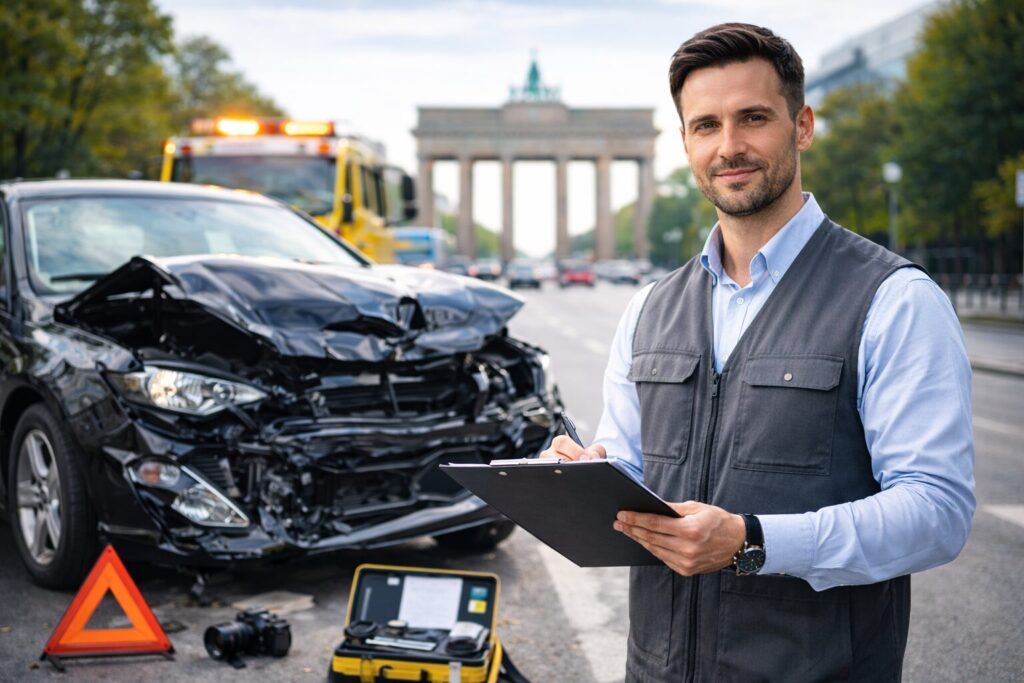
A reliable assessment involves more than a visual inspection: it combines test results, condition documentation, repair history and market research. In Wilmersdorf, it is often about decisions in which detailed values of the vehicle, such as the residual value after a partial repair or an assessment of its resale potential, are decisive. For such an assessment, you need service books that are as complete as possible, reports from the latest general inspections (HU), invoices for earlier work and, if available, the damage history. Photos should be detailed: wheel arches, underbody, axle mountings, engine compartment and all visible panel gaps. For technical clarification, we measure panel gaps, axle offset and paint thickness if required and check electrical functions. Economically relevant factors are the timing and scope of investments, seasonal market fluctuations and the costs of necessary repairs compared with the market value. We explicitly name assumptions and sensitivities so that you can understand how technical risks are weighted against purchase or repair costs.
Specific services for decision cases
Our services are aimed at vehicle sellers, business acquirers and workshops looking for a sound basis for economic decisions. Every service is based on comprehensible observations and verifiable values.
Valuation for a sales offer
You want to formulate a realistic offer and justify your room for negotiation. We check the condition of the bodywork, the engine and gearbox, the braking system and documented repairs and maintenance. Complete service documents, current HU reports and meaningful photos of the interior and chassis components are important. On the basis of technical measurements and market research, we provide a value range, explain typical deductions for hidden defects and supply wording that you can use in your advert or sales conversation.
Inspection before a takeover or purchase
When taking over company cars or buying privately, the question of hidden risks is central. We compare the actual condition with the maintenance documents, check the accident history and clarify whether proposed repairs are economically appropriate. Relevant documents are handover protocols, invoices for past repairs and the latest HU certificates. Additional photos of the suspension, tyre wear and engine compartment help to estimate often costly consequential damage at an early stage. The report names inspection points that should be clarified before the contract is concluded.
Decision support before commissioning a repair
Before an expensive repair, it must be clear whether the expected market value justifies the effort. We determine the scope of the repair, check whether safety-relevant parts are affected and estimate the resale value after the repair. Important documents are cost estimates, parts certificates for bodywork and photos of the damaged areas. The result is an economic recommendation: repair immediately, repair partially with residual risk or advise against a repair and prefer alternatives such as selling the vehicle in its current condition.
Brief technical assessment as decision support
For quick decision-makers, this brief assessment offers focused inspection points: wheel suspensions, visible frame deformation, engine running condition, oil and coolant leaks and a function test of the safety-relevant systems. You need standardised close-ups, proof of mileage and the latest inspection receipts. The brief assessment provides recommendations for action and priorities as to which repairs are essential and which work can be postponed, so that you know promptly whether a vehicle can continue to be operated economically.
What matters most technically and economically
Not every fault carries the same weight: in Wilmersdorf, our assessment pays particular attention to damage that restricts roadworthiness, corrosion in load-bearing areas and hidden engine damage. Technical tests such as oil cloudiness analysis, compression measurement and wheel alignment provide concrete indications of upcoming investments. Economically, what counts are the replacement costs, the remaining service life of the vehicle and typical market deductions for visible defects. We bring these aspects together, assess the economic viability of a repair and document which assumptions influence the assessment. The aim is to give you a clearly prioritised basis for decision-making, not just a list of defects.

A calculable basis for decisions
You do not receive a blanket recommendation but an assessment based on test values and market data that puts repair costs and residual value in relation to each other.
Weighted technical inspection points
Not all defects are equally relevant: we distinguish between safety-relevant findings, costly damage and cosmetic defects.
Wilmersdorf: expert explanation of findings
The report summarises findings, measurements and photographic documentation so that buyers, workshops or experts can also understand the basis for the decision.
Practical recommendations for action
Every assessment ends with concrete proposals: scope of repair, realistic cost estimates and alternatives such as selling in the current condition.
Typical occasions for a combined assessment
In Wilmersdorf, decisions about vehicles regularly arise in various contexts: before a used vehicle is sold, when vehicles are taken over in a fleet, before major repairs or in the event of disagreements after a workshop order. An inspection is useful if documents are incomplete, if there are initial signs of body deformation or fluid leakage or if several investment options need to be weighed up. We then discuss which measurements and documents have the greatest influence on the result and how uncertainties can be quantified. This reduces the risk of a wrong decision and makes budget planning for possible repairs more reliable.
Measurable foundations instead of estimates
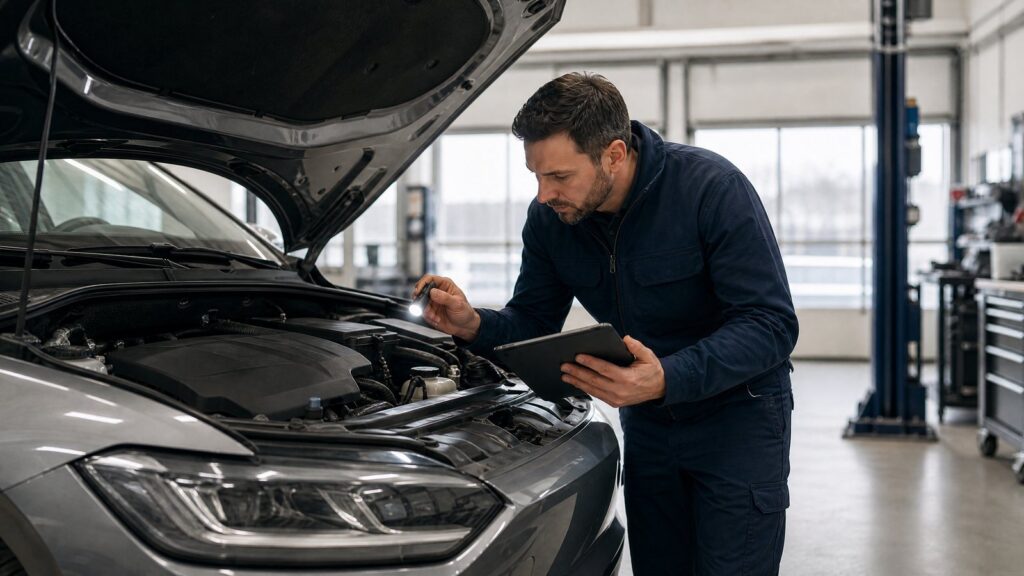
Objective measurements and standardised tests reduce subjective assessments. We document findings in such a way that technical causes can be clearly named and economic effects quantified. This creates certainty for your decisions.
Transparent assumptions
We disclose which market prices, residual values and repair costs led to the conclusions. This way you can see which factors would vary with a different price assumption and adjust your own priorities.
Why this approach makes sense: the benefit of technical facts for economic decisions
Support for your arguments in negotiations
A comprehensible report helps when selling or negotiating with workshops and buyers. Technical findings with photographic evidence and a cost estimate are a reliable basis for claims or compromises.
Limiting risk
Early clarity about safety-relevant damage and economic consequences helps you avoid unforeseen follow-up costs and minimises liability risks for buyers and sellers.
The process of a holistic assessment
The inspection follows a clearly structured process: document review, visual and technical recording of findings, market analysis and preparation of the results. Every step is designed to combine technical facts with an economic assessment and present them transparently.
Initial consultation and document check
We clarify the reason for the inspection, record the documents available and define the scope of the examination. Please have your service book, HU reports, invoices and the most meaningful photos possible ready. This conversation determines the depth of the subsequent checks and provides an initial cost estimate.
Visual inspection and targeted measurements
On site, we check the bodywork, underbody, suspension, engine running and safety-relevant systems. In addition, we carry out measurements such as paint thickness testing, a compression test and wheel alignment. Every finding is documented photographically and classified technically.
Value analysis and repair estimate
Based on the findings, we compare standard market prices, calculate repair costs and estimate resale values before and after repair. We name uncertainties and show alternative courses of action with their respective cost implications.
Report preparation and discussion
You receive a written report with a photo appendix, measurement results and a clear recommendation for sale, takeover or repair. In a final discussion, we explain the basis for the decision and answer your questions.
FAQ – Frequently Asked Questions
The following questions concern the preparation, inspection and benefits of the assessment. The answers explain which documents and evidence are useful and which expectations are realistic.
Which papers should I have ready so that the assessment is meaningful?
Important are the service book or proof of maintenance, the latest general inspection (HU) reports including defect reports, invoices for major repairs and information on modifications or replacement parts. If available, handover protocols, purchase contracts or earlier appraisal reports provide additional context. Such documents allow conclusions to be drawn about maintenance intervals, previous damage and the quality of repairs. If documents are missing, the report can still be prepared, but must explicitly mark assumptions and rate the uncertainty higher.
How much detail does the inspection go into regarding previous damage?
We document previous damage with its location, extent and technical relevance. This includes visible body damage, frame damage, areas of corrosion and indications of hidden damage. For each finding, we assess whether it is relevant to safety, whether professional repairs are recognisable and what follow-up costs are to be expected. If the quality of a repair is unclear, we recommend additional checks or a comparative estimate in order to put the economic consequences into figures.
Which photos are required for a reliable remote assessment?
Meaningful photos include close-ups of damaged areas, the engine compartment, underbody areas with visible rust zones, shots of the wheel arches, interior damage and images of the chassis number and mileage. Each photo should be taken from several angles and with as few strong reflections as possible. Good photos enable a preliminary risk assessment, but do not always replace the need for technical measurements or an on-site inspection if hidden damage is to be assumed.
How do you deal with earlier repairs that are not documented?
Missing documentation makes a more detailed examination necessary: we look for indications of non-original parts, uneven panel gaps, different paint applications and weld seams. Technical measurements can make deviations visible. We assess such findings with regard to repair quality, possible consequential damage and the effects on residual value and safety in use, and explicitly mark where uncertainties remain.
Which information on repair costs is realistic in a report?
Repair cost figures are based on standardised hourly rates, spare parts prices and the expected effort, using assumptions about the repair method. We usually give a range, distinguish between pure repair costs and total costs including paintwork or special parts, and explain which variants influence the estimates. In the case of major uncertainties, we state minimum and maximum values and explain which additional checks would narrow the range.
Can the report also assess whether the vehicle can still be used safely?
Yes, the assessment of immediate road safety is part of the scope of the inspection. We assess braking performance, steering behaviour, the structural integrity of load-bearing components and obvious leaks. If there are safety-critical defects, we document them clearly and give a recommendation as to whether the vehicle should not be operated until the defects have been rectified. Our assessment presents technical facts and does not replace an official order, but it provides a reliable basis for your next steps.
How do I receive the result and how quickly is the report available?
After completing the examination, we prepare a written report with photos, measurement results and a summary recommendation. It is usually completed within an agreed period, depending on the scope of the examination and any further research required. In urgent cases, we offer a shortened overview of the results in advance. The final document explains all assumptions, calculations and uncertainty factors in a comprehensible way.
Prepare your basis for decision-making
If you want to make a well-founded decision about a sale, takeover or repair in Wilmersdorf, a fact-based valuation helps to quantify risks and estimate costs realistically. Have the relevant documents ready and take meaningful photos. We prepare a technical and economic assessment, name priorities and give specific recommendations for action. This gives you a reliable basis for your next move, whether an immediate repair, a sales offer or deciding against further investment. We are also there for you as a car appraiser in Charlottenburg and Schmargendorf.