
Third-Party Liability Claim Appraisal Berlin – Your Right to Your Own Appraiser
Table of contents
- What is a third-party liability claim?
- You can choose the appraiser yourself
- What the report on a liability claim contains
- How the inspection works
- The first steps after an accident caused by someone else
- Claims that are often forgotten
- Liability claim with a total loss
- What applies in the case of partial fault?
- Typical mistakes after a liability claim
- If the insurer makes cuts
- Liability claim in Berlin or Brandenburg?
- Frequently asked questions
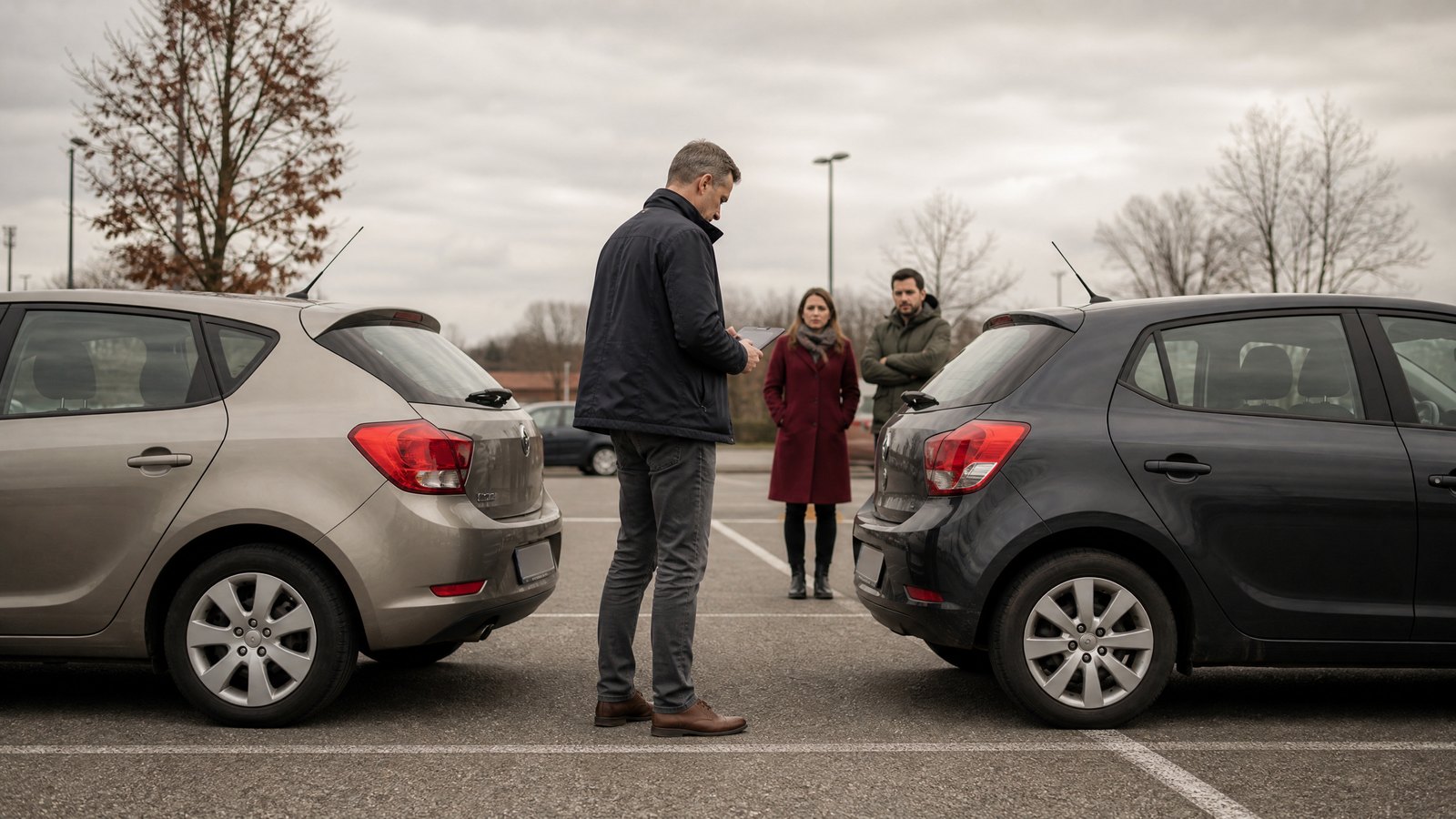
What is a third-party liability claim?
A third-party liability claim arises when another road user has damaged your vehicle and their motor liability insurer has to pay for the damage. Typical cases are rear-end collisions, failure to give way, lane-change accidents or a bump when pulling out of a parking space. Unlike a comprehensive insurance claim, where you claim on your own insurance, here you are dealing with the other party’s insurer – which naturally has an interest in paying as little as possible.
That is exactly why an independent vehicle appraisal after a liability claim is so important. It records what is actually damaged on your vehicle, what a proper repair costs and what other items you are entitled to. As a car appraiser for Berlin & Brandenburg, we prepare such reports regularly and know what insurers look for when checking them.
You can choose the appraiser yourself
Many injured parties do not know that, after an accident that was not their fault, they are usually entitled to commission an independent expert themselves. If the other party’s insurer calls and offers its own appraiser or a partner garage, you do not have to accept. An appraiser commissioned by the insurer works on behalf of the insurer – an expert you choose yourself works on your behalf.
In a liability claim, the cost of the report is part of the damage itself. If the damage is above the minor damage threshold and you are not at fault, the insurer of the party who caused the accident usually bears the appraiser’s fee. In the case of shared liability, the costs are usually only reimbursed proportionately. Further information can be found on our page about the costs of a vehicle appraisal.
What the report on a liability claim contains
A complete report contains much more than the repair costs. To ensure that you do not lose any claims, we document all values that may play a role in the settlement:
- Repair costs according to the manufacturer’s specifications, including spare parts, labour time and paintwork
- Expected repair time – important for a hire car or loss of use
- Mercantile loss in value if the vehicle is worth less as an accident car after the repair
- Replacement value and residual value in the event of a possible total loss
- Photo documentation with overview and detailed shots
- Distinction from previous damage so that it is not mixed up with the new damage
| Item | Why it matters |
|---|---|
| Repair costs | Basis for reimbursement, whether you repair or opt for a notional settlement |
| Repair time | Determines how long a hire car or loss of use is paid for |
| Loss in value | Compensates for the lower sale value of an accident vehicle |
| Replacement value | Decisive if the repair is not economically worthwhile |
How the inspection works
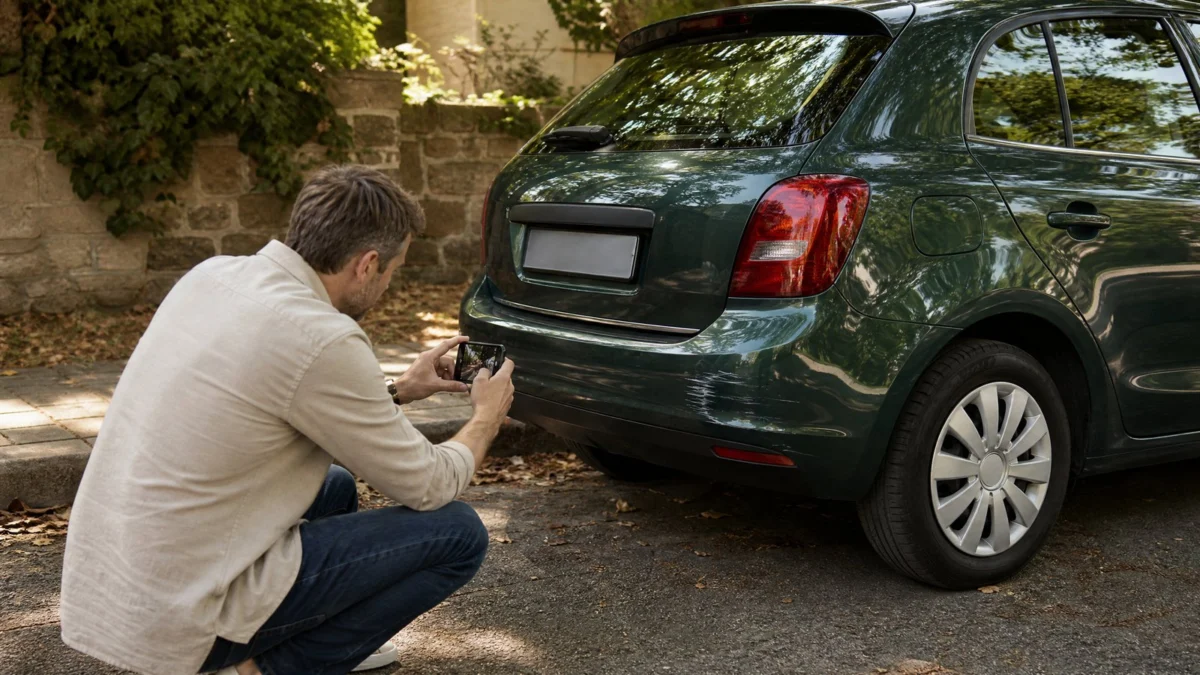
You get in touch by phone, WhatsApp or via the contact form and briefly describe what happened. We arrange an appointment as quickly as possible and come to you free of charge – at home, at work, at the garage or at the towing service. During the inspection, we record the damage, check adjacent components and note all vehicle data. We then prepare the written report, which you can pass on to the other party’s insurer or your law firm.
It is important that the vehicle is not repaired before the inspection if possible. You should also avoid washing it, because foreign paint and abrasion marks can play a role in attributing the damage. An accident report is essentially exactly this documentation – with a liability claim, it is also important that every item is justified in a way the other party’s insurer can follow.
The first steps after an accident caused by someone else
What you do immediately after the accident often determines how smoothly the settlement goes later. First secure the accident scene and look after anyone injured. Then it is about evidence: photograph the vehicle positions, both vehicles with their registration plates, the damage close up and the surroundings with traffic lights, signs and road markings. Note down the name, address and insurer of the other party and ask witnesses for their contact details.
Do not sign an admission of guilt at the scene and do not let yourself be pushed towards a garage or appraiser recommended to you. If there are injuries, a dispute about how the accident happened, suspicion of alcohol or if the other party refuses to provide details, the police should record the accident. Then report the damage to the other party’s insurer and arrange an appointment with an appraiser – ideally before the car goes to the garage.
Claims that are often forgotten
After a liability claim, it is not just about the repair. Depending on the case, further items may be part of the damage that injured parties are often unaware of or do not claim:
- Compensation for loss of use if you do not take a hire car for the duration of the repair
- Hire car costs for the necessary repair time
- Towing and storage costs
- Mercantile loss in value for younger or well-preserved vehicles
- A flat-rate allowance for phone calls, postage and journeys
- Costs for child seats or cargo damaged in the accident
Which items can be enforced in an individual case is a legal question. For the technical basis – repair time, loss in value, replacement value – the report provides the figures.
Liability claim with a total loss
If the repair costs exceed the replacement value of the vehicle, this is referred to as an economic total loss. The other party’s insurer then usually reimburses the replacement value minus the residual value, i.e. what the damaged car is still worth. If you would still like to repair your vehicle and keep driving it, a repair of up to 130 per cent of the replacement value can be reimbursed under certain conditions. One of the requirements is a proper, complete repair. The necessary values are stated in the report; you can read more on our page about total loss and residual value.
What applies in the case of partial fault?
Not every accident is clear-cut. If both parties contributed to the accident, liability is often split according to quotas, for example 70 to 30 or 50 to 50. The other party’s insurer then only reimburses the share for which its policyholder is liable – this applies to the repair costs as well as the appraisal costs. You bear the remaining share yourself, or your fully comprehensive insurance does if you have one.
Thorough documentation is particularly important where liability is unclear. Points of impact, direction of deformation and traces on the vehicle can help to reconstruct how the accident happened. How the quota ends up is decided by insurers, lawyers or, in the event of a dispute, a court; the report provides the technical basis for this.
Typical mistakes after a liability claim
- The car is repaired before an appraiser has seen it – afterwards, the damage can hardly be proven.
- People let the other party’s insurer steer them to its partner garage or appraiser without knowing their own rights.
- Previous damage is not disclosed, which can jeopardise the entire settlement.
- Photos of the accident scene are missing or only show your own damage.
- Loss of use or loss in value is not claimed because nobody points it out.
Many of these mistakes can be avoided with a short phone call immediately after the accident. We tell you what is important now and arrange the appointment as quickly as possible.
If the insurer makes cuts
It happens that the other party’s insurer questions individual items in the report – for example the hourly labour rates, the costs of transferring the car to the paint shop or the amount of the loss in value. A so-called audit report is often presented for this purpose. We answer technical queries about the report objectively on the basis of our documentation. For the legal enforcement of your claims, we recommend a law firm specialising in traffic law, whose costs are usually also borne by the other party’s insurer where liability is clear.
Clean documentation is particularly important if the other party disputes the course of events or claims previous damage. Careful evidence preservation that records impact heights, traces and deformation helps here.
Liability claim in Berlin or Brandenburg?
We assess third-party liability claims throughout Berlin – from Spandau to Marzahn – and in the surrounding Brandenburg area. The call-out is free of charge for you. Especially if your car can no longer be driven after the accident or is at the towing service, this saves you extra journeys.
FAQ – Frequently Asked Questions
Who pays for the report in a third-party liability claim?
If you did not cause the accident and the damage is above the minor damage threshold, the liability insurer of the party who caused the accident usually bears the appraisal costs. In the case of shared liability, they are usually reimbursed proportionately.
Where is the minor damage threshold?
There is no fixed statutory limit. Case law often cites a figure of around 750 euros. Below that, a cost estimate is often sufficient; above it, a report is usually appropriate.
Do I have to accept the other party’s insurer’s appraiser?
No. As the injured party, you can usually commission an independent expert of your choice. You do not have to accept an appraiser sent by the insurer.
What is the difference from a comprehensive insurance claim?
With a liability claim, the other party’s insurer pays; with a comprehensive insurance claim, your own insurer pays. With comprehensive claims, the insurer usually determines how the damage is recorded, and a report you commission yourself is not automatically reimbursed.
Can I have the damage paid out?
Yes, in an accident caused by someone else, a notional settlement based on the report is usually also possible. VAT is usually not reimbursed in this case.
How quickly can I get an appointment?
We offer appointments as quickly as possible and come to you free of charge, in Berlin and the surrounding Brandenburg area.
Which documents do I need?
Vehicle registration certificate, keys, details of the other party and their insurer, the police reference number if available, and photos of the accident scene.
Do you need fast, professional help?
We work for you in Berlin and Brandenburg and come to you free of charge. We offer appointments as quickly as possible.