
Car Appraiser Berlin Marienfelde: Precise Documents for Coordination Between Owner and Garage
Objective findings that make coordination easier
When coordinating after damage, it is not opinions that count but traceable documents. In Marienfelde it is particularly helpful if the vehicle owner, the garage and the other parties involved share the same basis: structured photo documentation, clear descriptions of components and the extent of the damage, and a clear separation between previous damage and new consequences of the accident. An appraisal that brings these elements together helps to clarify the scope of repairs, the search for parts and cost estimates in a targeted way. We explain which additional photos you should take, which vehicle data are relevant and how recorded observations minimise later queries. In this way, misunderstandings can be reduced and concrete agreements with garages can be reached more quickly. You can also read about how we work as a car appraiser in Berlin & Brandenburg on our home page.
For Marienfelde and the surrounding area, including Tempelhof and Lichterfelde
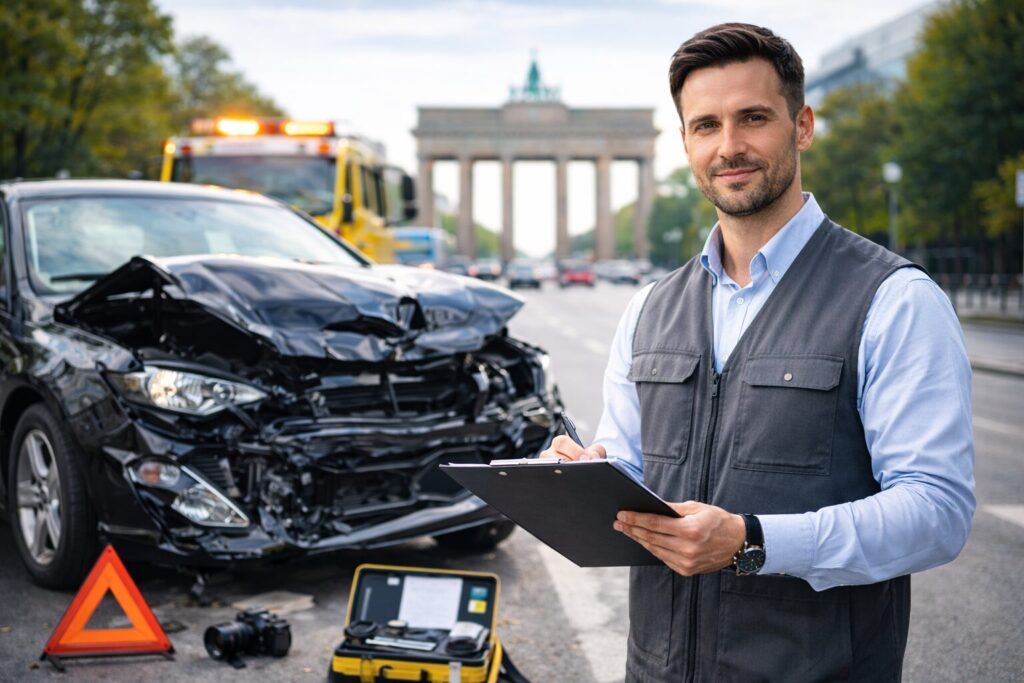
How structured documents prevent conflicts over repairs
If you need to coordinate with a garage, your comprehensive insurer or sales partners in Marienfelde after an accident or damage incident, details matter. Relevant papers include the vehicle documents with the chassis number, the last service receipt, existing repair invoices and a list of known previous damage. In addition, current mileage, MOT (TÜV/HU) details and vehicle equipment (e.g. assistance systems) are important. Take a systematic approach to photo documentation: wide-angle shots of the overall situation, detailed shots of fracture edges, paint transitions, interior dents and the underbody, as well as serial numbers or markings on spare parts. Also note who last drove the vehicle and whether any road safety measures have already been taken. An appraisal summarises these points, describes technical findings and clearly separates which damage arose from the current incident and which existed before. This makes it easier for everyone involved to assess the scope of repairs and to agree on cost coverage or repair options.
Specific documents and findings modules that help
Every case requires a different focus. We deliver modular findings with text, images and measurement data, so that you can immediately use the information relevant to your coordination.
Damage recording with a reproducible photo sequence
When recording damage in Marienfelde, we use a clearly defined sequence: exterior views from four sides, close-ups of the damaged areas with scale references, interior and underbody photos, and detailed images of serial numbers, component edges and fracture points. In addition, we record the positions of scratches in relation to body markings and document colour and paint transitions as well as paint chips. This standardised image sequence allows garages and insurers to get their bearings quickly and minimises room for interpretation. Photographic evidence is archived digitally and can be provided in a bundled PDF, so that all parties receive the same visual references.
Technical assessment of repair effort and spare parts
The technical assessment includes an estimate of the required scope of work, a differentiation between original and alternative spare parts, and notes on necessary adjustment or calibration work, for example on assistance systems. We record visible deformations, assess component assemblies and state where removal and refitting are to be expected. We also note whether safety-relevant systems are affected, which checks are necessary after the repair and which spare part groups are likely to be affected. These technical notes support garages in preparing quotes and help vehicle owners and insurers to estimate costs and time frames more realistically.
Distinguishing existing damage from new accident consequences
A key contribution to coordinated decisions is the traceable distinction between pre-existing damage and the consequences of the accident. To do this, we compare current findings with existing documents and photos, and check paint ageing, traces of corrosion and the type of deformation. Where possible, we document transition zones, old repair seams or colour differences that indicate previous conditions. This clear separation reduces points of dispute when garages or insurers have to decide which items are to be repaired or reimbursed. The results are delivered in writing with image references and traceable reasoning.
Residual value and economic viability check as a basis for decisions
If, after damage, the question arises as to whether a repair is economical or whether it is a total loss, we provide a structured assessment of the replacement value and the expected repair costs. This is based on the current condition, the expected material and labour costs and the influence of technical limitations on the market value. We also explain which spare part qualities and checks should be considered for a cost-efficient repair. This gives everyone involved in Marienfelde an objective basis for decisions about repair, sale or replacement.
Why complete documents speed up coordination
Incomplete or unsystematic documents usually lead to queries, delays and additional cost estimates during coordination. In Marienfelde this is particularly evident when repair shops have to rely solely on verbal information or when images are available without a scale. An appraisal that clearly separates causes, extent and technical consequences reduces the number of queries required. In addition, clear photos and descriptions make it possible to compare quotes from different garages quickly. For vehicle owners, this means a transparent basis for weighing up options; for garages and insurers, the basis for decisions remains traceable. Overall, this reduces the risk of extra costs and misunderstandings.

Visible facts instead of vague statements
Clear photos with a scale and a precise description replace differing recollections.
Faster comparison of quotes
A structured presentation of damaged components and labour allows garages to prepare well-founded quotes.
Decisions with technical classification
In addition to pure cost information, a technical classification provides indications of necessary calibrations, safety-relevant checks and spare part qualities.
Documentation package for each party
We compile findings so that owner, garage and insurer each receive the sections relevant to them.
When precise documentation makes sense
There are situations in which structured appraisal documentation is particularly useful: immediately after an accident, before repair work begins, before selling a vehicle or when previous damage needs to be distinguished. In Marienfelde it is advisable to record the damage as early as possible in order to avoid changes caused by repairs or further journeys. Documentation also helps with decisions if the cause of the damage is unclear or if safety-relevant systems could be affected. Even with minor scratches, clean photo documentation helps to avoid recurring queries. The aim is always to record the condition at the time of the survey precisely, so that all further agreements can be based on a reliable foundation.
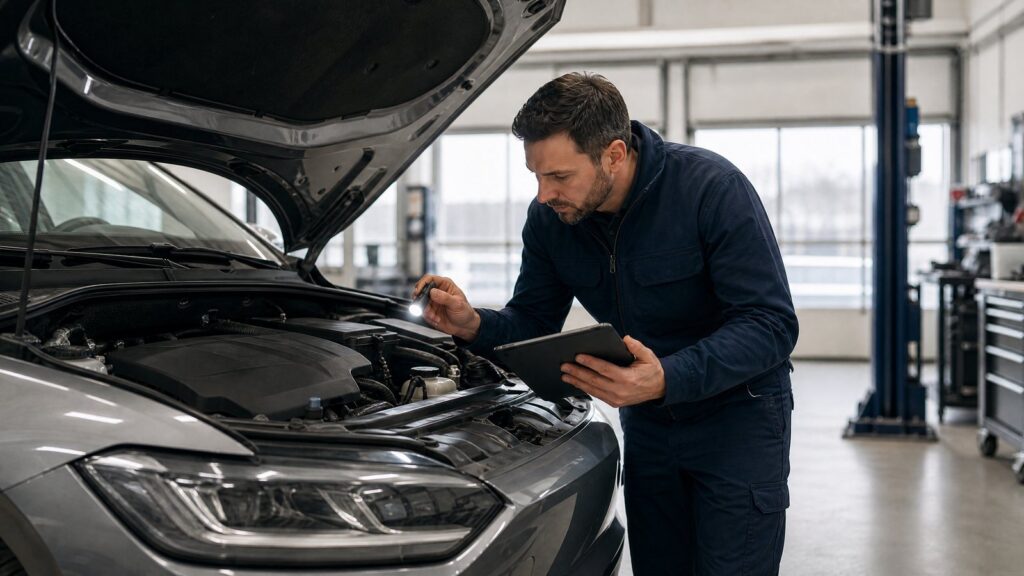
Structured image sequence with measurement references
Our photo documentation follows a fixed scheme with wide-angle shots, detailed photos and scale references. This structure makes it easier to compare the condition before and after and reduces errors of interpretation when checking quotes.
Technical annotations instead of general descriptions
Every abnormality is described technically: type of deformation, affected components, possible inspection steps. This helps garages to identify the necessary work packages and insurers to assess inspection obligations.
What specifically makes our documentation different: features that make coordination easier
Bundled handover for different recipients
We deliver the appraisal in different extracts: a short version for quick decisions, a detailed version for technical reviews and an image package for garages. This way, each party receives exactly the information it needs.
Justified distinctions
When separating previous damage from new damage, we always state justified indications that can be traced using photos and technical features. This traceability strengthens the acceptance of the results.
How findings are prepared with a focus on easy coordination
Our process is designed so that, at the end, there is a usable package for everyone involved. We attach great importance to clear handovers and traceable reasoning.
Preparation: documents and initial contact
At the start, we discuss by phone or email which documents are available and what special features there are. You receive advice on which additional photos or documents are useful in advance, so that the inspection can be prepared efficiently. This step reduces duplicated work and ensures that all relevant information is available for the inspection in Marienfelde.
Recording findings: systematic inspection and photography
On site or at an agreed handover point, we carry out a structured inspection, document damage with a standardised image sequence, measure key dimensions and check safety-relevant components. All observations are given photo references, so that statements can be traced back at any time.
Evaluation: technical classification and economic viability
The data collected is then evaluated. We prepare a technical classification of the damage, name the necessary work and give an assessment of spare part requirements and economic viability. Previous damage is listed separately and justified.
Handover: bundled reports and support with coordination
You receive a bundled appraisal with a short and a long version as well as an image folder. On request, we prepare wording for communication with the garage or insurer, so that coordination takes place directly on a shared, documented basis.
FAQ – Frequently Asked Questions
The following questions deal specifically with which documents and photos are useful, how previous damage is assessed and how you can use the results for coordination.
Which documents should you have ready before the vehicle is inspected?
Collect the vehicle documents with the chassis number, current service and repair invoices, the latest inspection report (HU/AU) and, if applicable, earlier appraisals or sales adverts. Note the exact mileage and any special equipment features. If there are photos of the condition before the damage, provide these as well. Such documents allow previous damage to be distinguished more quickly, help to identify original parts and speed up the technical assessment of the replacement value.
How should photos be taken so that the garage and the insurer can both use them?
Take photos systematically: wide-angle shots from all sides, front and rear views, and close-ups of the damaged areas with a scale or a recognisable reference point. Interior shots in the case of interior damage and detailed photos of serial numbers, type plates or affected components are important. Make sure there is sufficient lighting and avoid blurred images. Label or number the images so that they can be clearly referenced in reports later.
How is previous damage distinguished from a new consequence of an accident?
The distinction is based on visible indications such as the age of the paint, traces of corrosion and deformation patterns, as well as on existing repair marks or rivet and welding points. If photos of the previous condition or earlier invoices are available, they are compared. Every distinction is justified and given photo references, so that it remains traceable why damage was assessed as old or new. The aim is to minimise points of dispute about cost coverage.
What information is important if the vehicle has already been partially repaired?
If work has already been carried out, document the type and extent of the measures taken, provide repair invoices and receipts for the spare parts used, and photograph the repaired areas from different angles. Tell us about any tests or calibrations carried out, for example on assistance systems. A precise description of the repair status helps in assessing whether further work is needed and which items might still be disputed.
How is the assessment of the repair effort made up?
The assessment combines visible findings with typical working times for removal, repair and refitting, the spare parts required and any necessary inspection or calibration work. Items are assessed according to effort and technical necessity and, where possible, grouped together (e.g. bodywork, electrics, interior). This breakdown makes it easier for garages to prepare quotes and for insurers to check individual items.
How does the appraisal address the safe use of the vehicle?
The appraisal clearly names safety-relevant abnormalities and describes which checks or repairs are required to restore roadworthiness. These include damage to load-bearing components, steering and braking systems, and airbag and sensor components. We give guidance on priorities without making legal assessments, so that garages and owners can act in a targeted manner.
What should you bring to prepare for an inspection appointment in Marienfelde?
Bring the relevant vehicle documents, existing invoices and photos of the vehicle before the damage. Note your observations on how the accident happened and, if applicable, the names of witnesses. Make sure that the vehicle is as accessible and clean as possible, so that damage can be recorded clearly. This preparation shortens the inspection time and improves the level of detail of the documentation.
Prepare your documents and speed up coordination
If you want to simplify coordination with a garage or insurer in Marienfelde, complete documentation from the outset helps. Collect your vehicle documents, service records and invoices as well as any existing “before” photos, and note the mileage. Take additional photos following our photo sequence, so that the subsequent description of the findings is complete. With this preparation, you can make targeted use of the technical assessment and coordinate more efficiently, because all parties can rely on the same traceable basis.