Car Appraiser Berlin Prenzlauer Berg – Orderly Damage Recording That Fits Into Your Everyday Life
Objective, structured and tailored to your daily schedule
After an accident, what matters is clear, traceable damage recording that can be reconciled with your everyday life. In Prenzlauer Berg it is often important to schedule appraisal appointments flexibly while documenting all relevant findings thoroughly. We place great value on structured recording: visible damage, measured values, mileage, existing repair receipts and vehicle documents are noted systematically. Photos with a scale, clear descriptions of the extent of the damage and a precise separation between new damage and earlier defects make later assessments easier. The aim is a traceable basis for insurers and workshops as well as an efficient handover of the results to you. This lets you plan the further handling in a focused way without losing track. Whether in Prenzlauer Berg or the surrounding area: as an independent car appraiser for Berlin and Brandenburg, we are with you quickly.
District
How orderly documentation reduces your effort
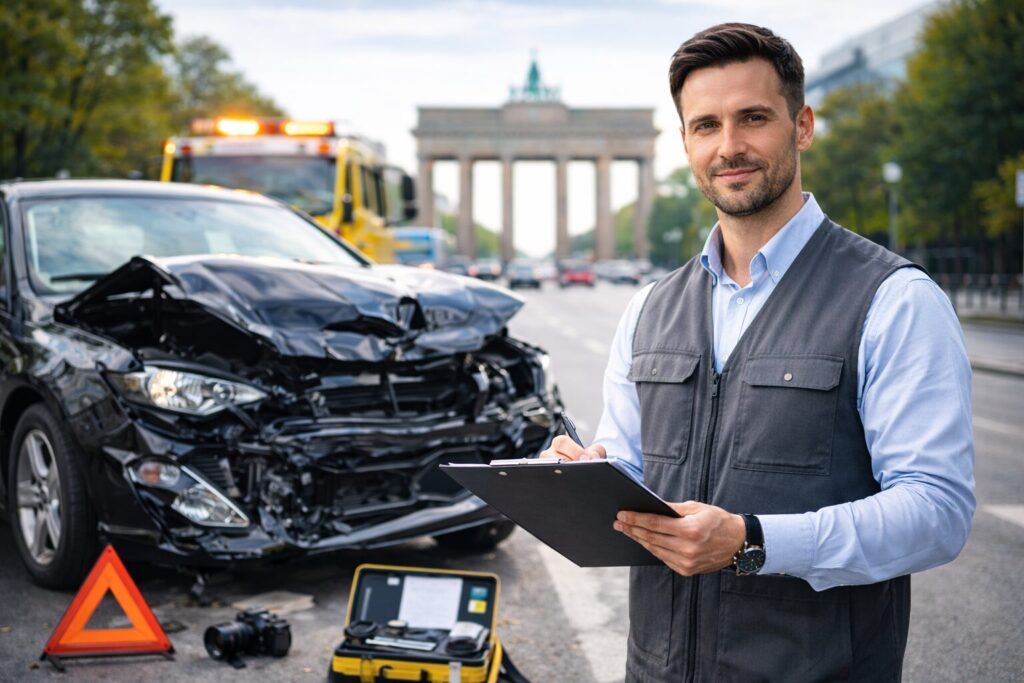
If you are out and about in Prenzlauer Berg and your vehicle is damaged, systematic damage recording reduces later queries and delays. During the inspection we concentrate on observable facts: photo documentation from several angles with distances or scales, precise notation of the affected components, an overview of visible deformations and points of impact, and a determination of whether safety-relevant systems such as airbags, lights or brakes are affected. The documents are just as important: the vehicle registration certificate or a copy of it, the service history, invoices for earlier damage and, where applicable, proof of a rental vehicle. If necessary, we point out additional measurements, for example panel gap checks or test drives to check steering behaviour. Our aim is to structure the inspection clearly so that you can make decisions in everyday life without having to submit details later.
Specific recording areas for a vehicle appraisal in Prenzlauer Berg
The inspection is organised so that it remains clear and fits into your schedule. Every point checked is documented, photographed and briefly explained. This gives you a working basis that can also be used in communication with third parties.
Documenting exterior and paint damage precisely
For exterior and paint damage, we record both large-scale deformations and fine scratches with specific information on their location and extent. Photos are always taken from several distances and angles so that it is later clear whether damage is superficial or structural. We also note the height of the damage, fracture edges, distances to adjacent components and recognisable external impacts. In addition, we document colour differences and filler areas as well as signs of possible previous repairs. This clear separation makes later classification by workshops and insurers easier and reduces lengthy queries.
Checking internal components and safety systems
The inspection of internal components covers anchorages, fixings, controls and safety-relevant parts. We note functional failures, unusual noises and visible damage to airbag covers, seat belts or the steering column. In the case of electronic abnormalities, we document error messages, warning lights and the last mileage reading. Where necessary, we recommend targeted checks at a workshop, with notes on which measured values or test reports make sense. The aim is to present the operational safety of your vehicle transparently without presuming technical diagnoses in advance.
Assessing the underbody, axles and frame in a targeted way
Damage to the underbody, axles or frame can affect road safety. We check visible deformations, differences in panel gaps, welding traces and cracks as well as stress points in the chassis. If manipulation or subsequent repairs are recognisable, these are described separately and supported by photographs. Notes on tread depth, brake pad wear and fluid leaks are also part of the documentation. This creates a comprehensive picture that gives workshops and experts a solid basis for further technical assessments.
Checking and organising additional documents
A complete inspection also takes existing documents into account: inspection reports, service book entries, earlier reports and invoices. We record which documents are available, which are missing and what conclusions they allow about how the damage occurred. We also mark receipts that prove the mileage or repair history and give clear indications of which further evidence would be useful for later processing. This structured collection prevents important information from being overlooked during the claims settlement.
Why structured recording is crucial
Structured recording creates certainty: in Prenzlauer Berg, as elsewhere, insurers, workshops and private decisions require clear facts. Without traceable documentation, discrepancies often arise about the extent of the damage, timings and responsibilities. We attach importance to traceable photo series, precisely dated notes and a separation of current defects from earlier, pre-existing defects. This reduces the communication effort and enables faster, more targeted processing by experts or repair shops. In addition, systematic filing makes it easier for you to review everything later if invoices, quotation scenarios or compensation claims need to be checked. The aim is always to minimise your effort and to lay the foundation for sound decisions.

Saving time on clarifications
Clear photo documentation and structured findings significantly reduce queries from third parties.
Certainty with safety-relevant defects
If systems such as brakes, steering or airbags are affected, this is noted and explained separately.
Better comparability of quotes
Uniform, traceable documentation enables workshops and insurers to compare quotes and assessments directly.
Traceable handover of the findings
The structured handover contains photo series, descriptions and a list of the documents checked.
At which points in time orderly recording helps
Structured damage recording is most effective immediately after the incident, but it is still useful later on. In Prenzlauer Berg, as in the neighbouring districts of Pankow and Weißensee, it can happen that you only get a complete picture of the damage after a short time; in such cases, additional findings can be documented and time-stamped. A photo series taken as soon as possible and the immediate securing of receipts such as towing records, police reports or workshop orders reduce the risk of unclear statements. If a vehicle is initially driven on, a follow-up recording is important to document changes compared with the initial findings. Orderly recording is also advisable before repairs are approved, so that quoted amounts can be based on objective findings. The aim is to avoid later disputes and keep the processes plannable.
Clarity
Every finding is described in such a way that its meaning remains understandable even without subsequent explanation. Photos are given reference points, dimensions and distances are stated and times are documented.
Clear distinction
We actively distinguish between fresh damage and older defects. Signs of previous repairs or existing signs of wear are listed separately to prevent confusion.
Principles of our approach: guidelines for the inspection
Practical recommendation
In addition to the pure documentation, we give practical advice on which further steps make sense, such as measurement reports, a test drive or workshop checks, without jumping to conclusions.
Traceable filing
All findings are handed over in a clear form so that you can understand and pass on the information without any technical knowledge.
Process: how your vehicle assessor works in Prenzlauer Berg
The procedure is geared towards efficiency and traceability. Each step is documented and brought together in a handover.
Initial contact and clarification of the framework
When you first get in touch, we briefly clarify the time of the accident, the condition of the vehicle and your availability. This results in a plannable framework for the location and scope of the recording. The aim is to disrupt your everyday life as little as possible while still capturing all relevant points.
Prenzlauer Berg: clarifying technical questions in a focused way
We create structured photo series: overall views, detailed shots and comparative perspective images with scale information. Each photo is dated and briefly labelled so that it is immediately clear later what was seen.
Technical visual inspection
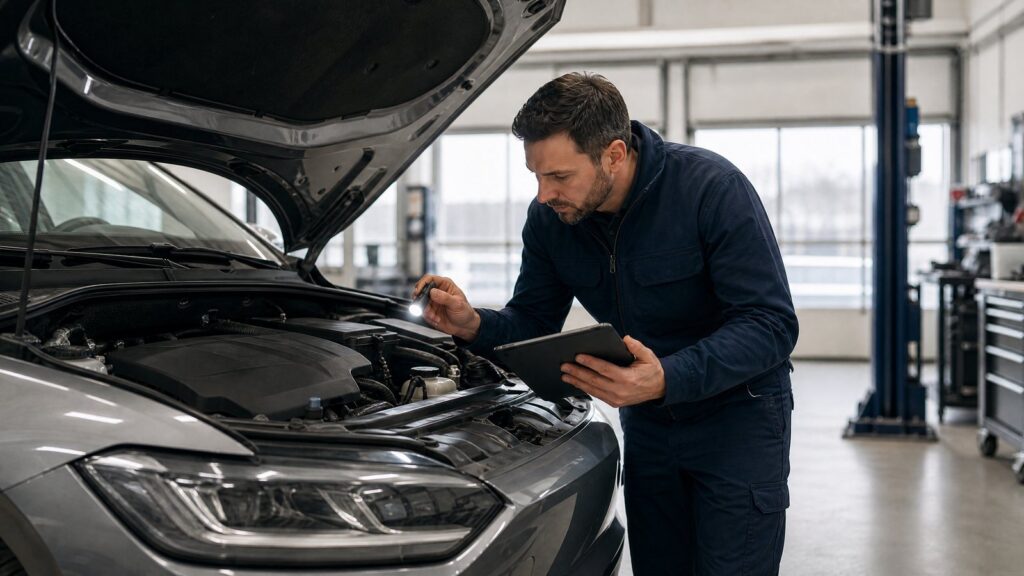
The following points are checked: visible deformations, condition of fixings, fluid levels and recognisable malfunctions. Safety-relevant components are specially marked and, where appropriate, a recommendation for further measurements is given.
Compilation and handover
At the end, you receive an organised collection of photos, findings and a list of the documents checked. This handover serves as a basis for discussions with insurers or workshops and can be provided electronically.
FAQ – Frequently Asked Questions
The following questions address typical uncertainties and give specific advice on how you can support the damage recording efficiently. The answers explain which documents are useful, what to look out for when taking photos and how findings are to be interpreted.
Which documents should you have ready for the inspection appointment?
If possible, bring the vehicle registration certificate and, if available, the service book as well as invoices for earlier repairs. These documents help to clarify previous conditions and earlier work. If there is already a towing report, police report or workshop diagnosis, please present these documents too. If certain evidence is missing, we note this in the report and indicate which additional documents would be useful to avoid later clarifications.
Which photos are particularly useful?
Photograph the damage from several distances: a wide shot, a medium view and a close-up with a reference point or scale. Also photograph the vehicle identification number, mileage and number plate. Make sure there is good lighting and avoid reflective angles that obscure details. Pictures of the interior and of relevant controls are also useful if there is damage or malfunction there.
How should previous damage be handled?
Earlier damage and repairs are documented separately. If old filler areas, paint differences or weld seams are recognisable, we identify them as not current and describe them separately from the new damage. This differentiation protects you against incorrect attribution and makes a correct assessment by experts and invoice auditors easier.
What is included in recording the state of repair on site?
We note whether provisional measures have already been taken, such as temporary fixings, covers or initial workshop work. We also record visible assembly work, missing components and the condition of fastening elements. This helps to classify later invoice items and avoids misunderstandings about which work was carried out after the damage.
How is the loss in value estimated?
An initial estimate of the loss in value can be given on the basis of the damage pattern and the location of the surface damage, but it does not replace a complete economic appraisal. We document the basis relevant to such an assessment, for example replacement of affected parts, visibility of the damage and repair requirements. A binding recommendation on the loss in value requires a supplementary economic assessment by an expert qualified for this purpose.
What advice do you give on road safety after damage?
If safety-relevant components are affected, we mark this clearly and recommend any immediately necessary measures. This includes notes on braking function, steering precision, airbag systems or the lighting system. We describe the observed limitations objectively and give a graded recommendation as to whether an immediate workshop check or a prompt repair is advisable.
How and in what format do you receive the appraisal result?
The result of the orderly recording is handed over in a structured compilation containing photo series, a description of the findings and a list of the documents checked. You receive the documents in common electronic formats so that you can forward them by email or print them out. On request, we explain the key points in person so that the next steps are clear.
Next step: get organised instead of getting bogged down
If damage puts a strain on your day in Prenzlauer Berg, structured recording brings order to further decisions. We offer focused, documented recording that is based on your availability and at the same time delivers complete findings. You receive an organised file with photos, findings and a list of the documents checked, which you can pass on directly. This way you stay in control of the process and avoid unnecessary queries. Get in touch to discuss a clarifying inspection and to agree on the framework that suits you.