
Car Appraiser Berlin Hohenschönhausen – A Second Perspective When Assessments Contradict Each Other
Objective inspection. Clearly documented decisions.
When two assessments differ or the damage pattern is not clear-cut, you need more than a sweeping statement. In Hohenschönhausen we offer you an independent second perspective that is specifically geared towards ambiguous findings. The focus is on a structured inspection decision: which parts of the vehicle are visibly affected, which documents (invoices, appraisals, inspection reports) support earlier statements, which photos and measured values are missing, and which questions are still open? You do not receive a mere opinion, but traceable documentation with clear distinctions between pre-existing damage, new damage and possible consequential faults. This approach helps to maintain road safety, to make the scope of repairs and costs transparent and to create a basis for discussions with garages or insurers. The examination can begin on site in Hohenschönhausen, but is completed with systematic photography, inspection records and an understandable assessment, so that you have a usable basis for decisions in your hands. We also offer this systematic recording of findings for vehicles in Lichtenberg and Weißensee. As a car appraiser for Berlin & Brandenburg, we also come to you in Hohenschönhausen free of charge.
District: Hohenschönhausen
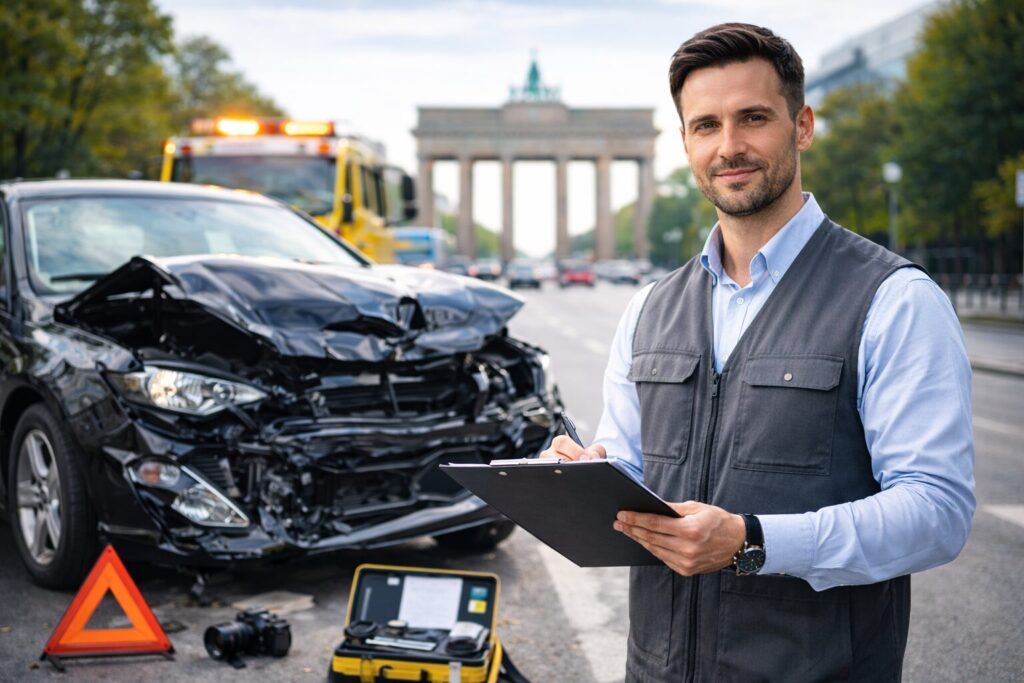
Why an independent second inspection makes sense
Unclear damage patterns often arise from incomplete documentation, imprecise communication between garage and insurer, or because damage only becomes apparent after detailed dismantling. In Hohenschönhausen, a second, neutral inspection can help to clarify methodologically open questions: has the affected component already been repaired or replaced, can previous and subsequent damage be reliably distinguished, and which findings are based on measured values rather than subjective impressions? We work according to a decision tree that leads from the visual inspection via photo-documented measuring points to the evaluation of repair invoices and earlier appraisals. Relevant documents are clearly named: accident reports, photos from the time of the accident, garage invoices, vehicle history and earlier appraisals. For you, this means no vague wording, but a structured statement about which findings are confirmed, which assumptions require additional checks and which conclusions can be drawn directly from them. The focus is on creating a reliable basis for your next steps, whether for dealing with an opposing party, deciding on a repair or assessing road safety.
Inspection assignments we take on in Hohenschönhausen
Every inspection assignment begins with a clear question: what exactly is to be ruled out or confirmed? This is the only way to define a narrow scope of examination and avoid unnecessary inspection effort.
Second appraisal in the case of contradictory reports
If two appraisals come to different conclusions, we analyse both assessments systematically. We compare photo positions, measured values, the damage catalogues used and the underlying reference dimensions. The report specifies exactly where opinions differ and which findings can be confirmed by documentation or re-measurement. The aim is a traceable basis for decisions, so that you know whether a correction, an arbitration appraisal or a more in-depth examination is required.
Photographic review of findings and missing documents
Missing or poor-quality photos often leave room for interpretation. We assess existing photo documentation for relevance and supplement it with standardised shots with dimensional references and notes on perspective. We also list missing documents such as invoices or inspection records and explain what influence their submission would have on the damage assessment. This reduces uncertainties in further clarification with garages or insurers.
Distinguishing previous damage and the consequences of repairs
A clear separation between existing wear or earlier damage and the current damage is crucial. We examine signs of corrosion, paint build-up, welding and rivet marks as well as material fatigue in order to identify features caused by repairs or of older origin. The report describes each observation with photographic evidence and states which statements are based on confirmed findings and where uncertainties are to be expected.
Safety-related assessment before further use
Sometimes the question of safe use takes centre stage: is the vehicle still roadworthy, or are safety-relevant components affected? We examine load-bearing components, steering and braking systems and airbag-relevant areas, and document which repairs are mandatory and where temporary measures are sufficient. The assessment is technically sound and shows which risks exist if the vehicle continues to be used.
Which observations determine the inspection status
The quality of an inspection depends on specific observations: visible crack or deformation patterns, differences in colour shade and paint thickness, panel gaps compared with factory or reference values, and the presence or absence of screw and welding marks. In Hohenschönhausen we start with a standardised visual check, supplemented by photographic measurements. Accompanying documents are also decisive: previous repair invoices, notes from the general inspection (HU) and detailed photos from the time of the accident. Only when these elements are brought together is it possible to separate which damage is new, which stems from an earlier incident and which may have been caused by improper repair. On the basis of these observations, we make well-founded inspection decisions: what is confirmed, what can be reliably estimated and where further dismantling or measurement is needed. The presentation in the appraisal includes traceable conclusions and alternative scenarios, so that you can assess the consequences.

Hohenschönhausen: preparing a sound decision
You receive a documented procedure with clear naming of the parts inspected, photographic evidence and a statement of which assumptions are not reliable without further examination.
Targeted reduction of uncertainties
Speculation is curbed by specifically adding missing photos and documents.
Prioritisation of safety defects
The examination ranks findings by urgency: which defects must be remedied immediately and which can be checked later.
Documented basis for comparison
If several appraisals are available, we compare the relevant findings side by side.
Situations in which an additional inspection is advisable
An additional, independent inspection is particularly appropriate when different parties make contradictory statements, photos are of poor quality or repair proposals differ greatly from one another. In Hohenschönhausen there are frequent cases in which an initial appraisal is only superficially documented or unfavourable indications only come to light during dismantling. A second opinion also makes sense if safe use is unclear, in the case of complex body damage or if electrical systems are affected. An additional inspection is likewise recommended if previous reports are missing or garage invoices appear incomplete. The aim of every additional inspection is to narrow down the scope so that a usable statement emerges at the end: what is reliably proven, which assumptions remain speculative and which measures are technically necessary. Only with this precision can well-founded decisions be made afterwards, for example on cost coverage, the type of repair or whether a vehicle may continue to be used.
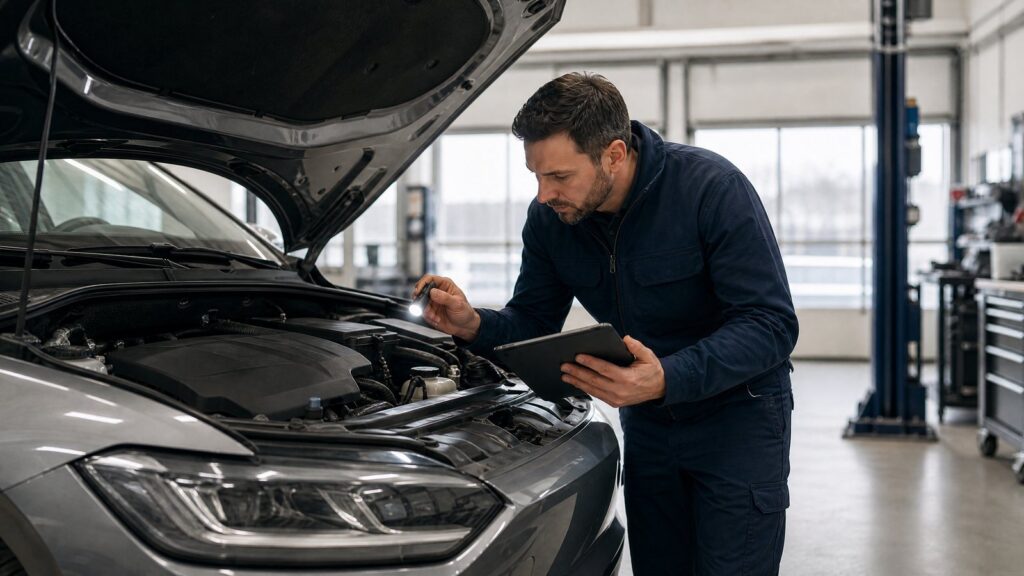
Objectivity instead of vested interests
A neutral inspection with no ties to a garage or insurer focuses on the technical assessment. This reduces outside influence and provides an objective basis for decisions.
Methodological reproducibility
Standardised photo points, measurement records and traceable documentation steps allow findings to be followed or verified by third parties.
Reasons for a structured second opinion: rational aspects that support an independent inspection
Cost-efficient clarity
With targeted additional checks, expensive dismantling is only recommended where it is relevant to the decision. This saves time and reduces unnecessary expenditure.
Conflict prevention
A clear, traceable presentation of findings reduces points of dispute with insurers or garages and provides an objective basis for discussions.
How we proceed with unclear findings
Our inspection process is designed for well-founded decisions: every step is documented, every finding is backed up with photographic evidence or a measured value.
Recording the assignment and defining the objectives
At the start, we jointly clarify the inspection objectives: which question has priority and which documents are already available? On this basis, we define the scope of the inspection and the evidence required.
Visual inspection and standardised photography
We carry out a systematic visual check and take photographs with dimensional and positional references. These photos later serve as the basis for comparisons and for attributing previous or new damage.
Checking documents and invoices
Existing invoices, earlier appraisals and inspection reports are checked to see whether they match the observed findings in terms of timing and content. Discrepancies are clearly named.
Assessment, conclusion and options for action
Finally, we formulate traceable conclusions: what is confirmed, which assumptions remain open and which further steps make technical sense. The options are pragmatic and geared to your needs.
FAQ – Frequently Asked Questions
Below we answer frequently asked, specific questions about which documents, photos and decisions are required for a meaningful second inspection.
Which documents should you bring so that the second inspection is meaningful?
Bring all available written documents: accident report, cost estimates, repair invoices, earlier appraisals and any existing photo and video documentation. Time stamps on images and a short account of how the damage occurred are particularly helpful. If some of these documents are missing, we specifically note which documents should be submitted later and which gaps affect the assessment. Without complete documents, parts of the assessment remain marked as assumptions.
Which photos are particularly important for the assessment?
Essential are overview shots showing the location of the damage, detailed shots with a scale or ruler, and comparison shots of adjacent areas. Pictures from different angles and with good lighting help to identify deformations and differences in paint layers. Shots of interior areas and mounting points are also often decisive. We check the existing photos for accuracy and add standardised shots on site if necessary.
How is possible previous damage distinguished from new damage?
The distinction is made on the basis of technical features such as the degree of corrosion, paint thickness, wear patterns and the type of fasteners. Signs of ageing and typical wear features relate differently to fresh damage. In addition, dating via invoices or earlier inspection reports helps. In our report, such distinctions are provided with photographic evidence and an assessment of probability, so that the statements are traceable and verifiable.
How important are repair invoices for the inspection?
Invoices are important pieces of evidence: they provide information on the scope of work carried out, the spare parts used and the dates of repair. Discrepancies between the invoice and the visible findings can indicate incomplete or faulty repairs. We compare invoice details with visible components and assess whether the documented work corresponds to the current condition or whether further examinations are necessary.
How do you hand over the result, and what information does the report contain?
The report contains a summary of the question at issue, a documented list of findings with photos, an assessment of confirmed and unconfirmed statements as well as concrete recommendations for action. Technical measured values and reference data are stated so that third parties can follow the assessment. The report is handed over in written form and can be discussed on request to explain open points.
How can I prepare for an inspection appointment?
Collect all available documents and prepare a short chronology of the incident in advance. Note any open questions that are important for your decision, and clarify whether certain areas of the vehicle can be made accessible. Clean, well-lit conditions and the possibility of briefly removing components make the examination easier and reduce the need for additional appointments later.
When does dismantling or further measurement make sense?
Dismantling is appropriate if superficial findings do not provide clear information or if load-bearing elements are affected whose condition only becomes visible once removed. Further measurements also make sense in the case of heavily corroded connections or if panel gaps lie within narrow tolerances. Such interventions are only recommended if they are relevant to the decision and the expected gain in knowledge justifies the effort.
If you would like a well-founded second opinion
If the first assessment is not sufficient or documents leave gaps, we offer a precise, traceable second inspection in Hohenschönhausen. We prepare structured documentation with photographic evidence, measured values and a clear presentation of which statements are confirmed and where further examinations are needed. This basis makes decisions about repair, further dealings with insurers or the assessment of road safety easier. Contact us to discuss the inspection assignment in detail and to get an estimate of the expected scope of the inspection.