
Car Appraiser Berlin Kreuzberg: Evidence-Proof Recording of Damage in City Traffic
Careful recording of findings for safe use of the vehicle and clear separation from previous damage
When damage has to be recorded quickly in everyday city life, the right documentation determines whether the evidence can be used later. This text explains precisely which observations, photos and documents are particularly relevant in Kreuzberg so that you can record the condition of your vehicle in a comprehensible way. Besides typical parking bumps, minor contact with kerbs, bicycle stands or delivery vehicles also leaves traces that only become meaningful when they are recorded systematically. A damage assessment report is not about judgements but about traceability: measurable information on deformations, paint layer thickness, visible cracks and the documented condition of safety-relevant components creates a reliable picture. Supplementary documents such as the vehicle registration certificate, photos taken before and after the incident, repair invoices and, if available, dashcam footage increase the evidential value. Read on to find out exactly which photos are needed from which perspective, how previous damage is clearly separated and which short technical description helps when a report is handed over. In the old streets around Bergmannstraße and Oranienstraße, cars are parked tightly and double-parked delivery traffic causes side damage. If you need a car appraiser in Berlin Kreuzberg or a car report at short notice, you can reach us directly. Our full range of services as an independent car appraiser for Berlin & Brandenburg is on the home page.
Location focus: Kreuzberg

What to look out for when documenting damage in the city centre
During an inspection in Kreuzberg it is important to proceed systematically, even if the situation in everyday city life seems hectic. First record the basic identification data: make, model, registration number, vehicle identification number (VIN) and mileage. Note the time and exact location and, if possible, add the lighting conditions and the traffic situation. Photograph each damaged area from several angles: an overall view of the vehicle, close-ups with a scale or comparable reference, and detailed shots of the surface structure. Take pictures of the underbody and wheel arches if damage occurs there. Review the available documents: first registration, last general inspection (HU), previous invoices and reports to the police or insurer. A clean record clearly distinguishes between fresh damage and existing defects; dates on photos (e.g. smartphone time stamps), earlier pictures and invoices help here. If there are witnesses, note their names and contact details. For the technical assessment, information on the vehicle’s handling immediately after the incident (steering behaviour, unusual noises, braking effect) is useful. This structured recording later makes it easier to distinguish between repair requirements, claims for compensation of value (which can be recorded in a valuation report) and any restrictions on use.
Recording fields that make sense in dense city traffic
The following areas describe specific aspects that should be taken into account in every fact-finding inspection in Kreuzberg. Each point is designed for practical traceability and avoids assumptions without verifiable measurements or photo documentation.
Visual findings and photos with scale
The visual findings begin with overall photos that show the vehicle in context, followed by close-ups of each area of damage with a defined scale. A scale can be a ruler or a standardised measuring stick; notes on distance and camera position belong in the record. Look out for deformations, chipped paint and stress cracks. For more in-depth statements, paint thickness measurements and sheet metal deformation measurements are documented. A traceable photo sequence with labelled image numbers later helps to assign individual findings and serves the preservation of evidence.
Short technical check of roadworthiness
Examine safety-relevant functions: steering, braking performance, lighting, tyre pressure, field of vision through windows and mirrors. Note any unusual noises and the behaviour when pulling away. If airbags have been deployed or sensors are damaged, this must be noted immediately. These checks clarify whether the vehicle can continue to be driven or needs to be towed. Technical restrictions are decisive for insurers and garages, so these points should be documented objectively and measurably.
Review of documents and history
Check the registration certificate, previous repair invoices and current general inspection (HU) details. If available, specifically add damage from previous reports or repair documents to the record in order to clearly mark previous damage. In the case of damage caused by a third party, the exchange of insurance details and, if possible, the recording of witness statements or CCTV information is relevant. Each document should be dated and accompanied by a brief explanation of its relevance.
Digital evidence and time stamps
Dashcam, parking camera or mobile phone footage often provides exact time windows. Save the original files in uncompressed form and note the storage location and file names. Screenshots alone are rarely sufficient; the original files allow metadata to be checked and are important for reconstructing the sequence of events. For digital recordings, note the time and, if possible, the position based on visible markings or road signs.
Why meticulous documentation makes later decisions easier
Consistent, comprehensible documentation reduces room for interpretation in later assessments. In Kreuzberg, what initially looks like a small paint chip can, on closer inspection, point to deeper damage to load-bearing parts; without precise photo series or measurements, this possibility remains open and makes it harder to delimit the damage. If you provide measurements of paint thickness, material deformation or the exact position of a dent, later decisions on the scope of repair or a total loss can be quantified, which is also relevant for the costs & prices. Clearly labelled evidence also makes communication with garages and insurers easier, because technical terms and descriptions of location can be assigned unambiguously. Notes on restrictions on use – such as limited steering or visible corrosion – serve as a basis for safe decision-making, for example on interim replacement journeys or immediate repair. In short: precise recording reduces later discussions about the cause and extent of the damage.
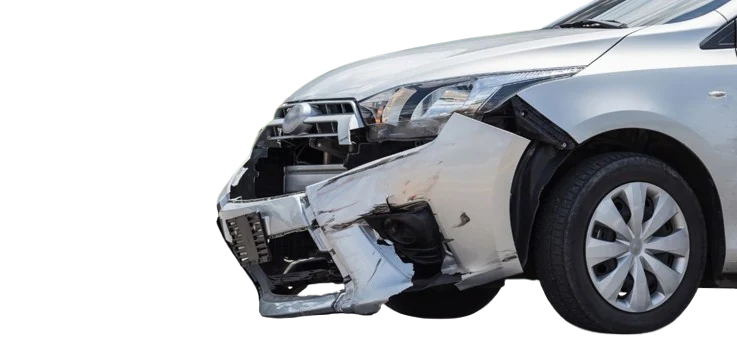
Clear separation of fresh and old damage
Clear documentation with dates, previous invoices and earlier photos makes it possible to systematically distinguish between existing wear and new impairments.
Better technical assessment on site
Focused short checks of steering, brakes and lighting immediately provide reliable indications of roadworthiness.
Traceable photo and measurement documentation
Standardised photo perspectives combined with dimensions and measured values create a usable data basis.
Including witness statements and digital evidence
Systematically documented witness statements and original video files broaden the factual basis.
Timing and priority: which steps are needed when
Acting quickly secures evidence. In Kreuzberg, the initial recording should take place as soon as possible after the incident in order to minimise changing influences such as weather, further damage or movements of the vehicle. Priority is given to: photos of the overall situation, close-ups of the damage with a scale, visibility of the registration plates and a check of the mileage. If there are technical restrictions, immediate notes on roadworthiness should be recorded. Save digital recordings uncompressed; also photograph or scan paper documents such as invoices or previous reports. Witness statements should be noted promptly, before memories fade. If the vehicle is later taken to a garage, document the time of handover and the recipient. If temporary repairs have to be carried out, record the scope of and reason for the immediate measures so that later assessments can trace the original findings. This step-by-step approach protects evidence and creates a chronological basis for later decisions.
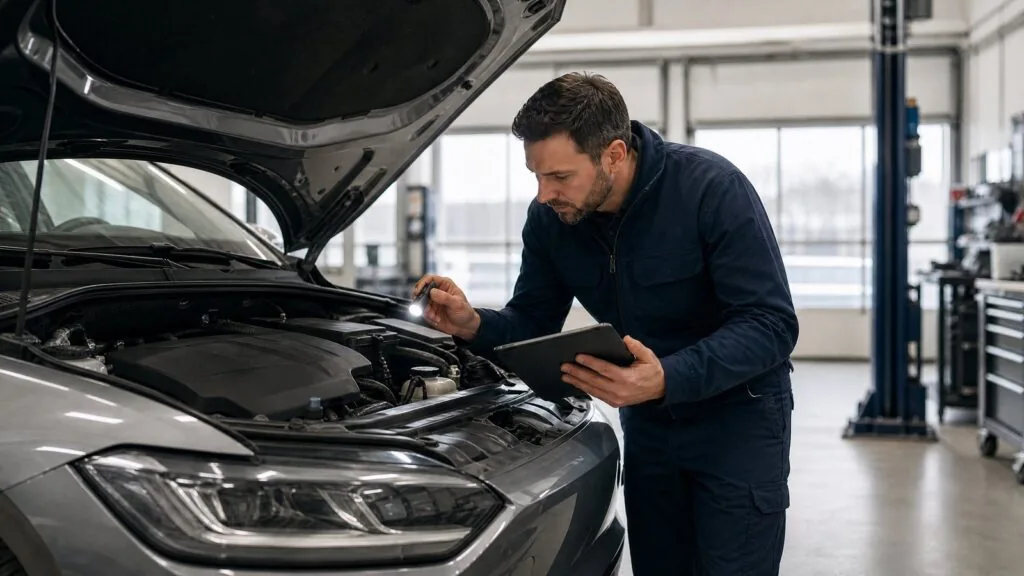
Short record or detailed report
A short record documents findings and photos without in-depth technical analysis; it is sufficient for a quick damage notification. A detailed report contains additional measurements, material tests and a technical assessment of possible consequential damage. Choose according to the extent of visible damage and your later need to clarify costs or use.
When additional measuring technology is needed
If deformations are visible on load-bearing components or the paint surface shows unevenness, measurements such as paint thickness measurement, panel gap checks or frame alignment checks justify the additional effort. Such data is decisive for the choice between restoration and more extensive repair.
When a written evaluation makes sense
Document basis for insurance questions
Chronologically ordered documents and clear photo series are important for meaningful communication with insurers. Show which information comes from your own documents and which was added through the inspection in order to avoid misunderstandings.
Securing the original evidence
Original documents and raw files of digital recordings should be archived unchanged. Changes or subsequent compression weaken their usability. A complete filing system increases acceptance during reviews.
How your car appraiser in Berlin Kreuzberg records the damage
The following steps describe an objective sequence for recording damage in an urban environment. Each step provides concrete evidence and reduces room for interpretation.
Initial information and location documentation
Note the time, exact location, traffic conditions and weather. Record the registration number and VIN as well as the mileage. This information forms the basis for later assignment and allows all further evidence to be referenced unambiguously.
Overall and detailed photographs
Take a series of overall photos, followed by structured close-ups with a scale. Add interior photos and pictures of the underbody, if visible. Label each file with a consecutive image number and a short contextual comment.
Short check of safety-relevant functions
Check steering and braking behaviour, lighting and tyres. Note any abnormalities and state whether the vehicle is roadworthy. If not, document the reasons and recommend the type of transport.
Compiling and labelling documents
Collect registration documents, invoices and previous reports. Create a chronological file and note the origin and relevance of each file. This structured filing makes later assessments and queries easier.
FAQ – Frequently Asked Questions
The answers are based on technical and documentary steps, not on legal advice. They show specifically which attachments and observations support the appraisal process.
Which documents should you have ready immediately after damage?
Important documents are the registration certificate Part I (Zulassungsbescheinigung Teil I), the vehicle registration document, the current mileage and any existing repair invoices. If you have earlier photos of the vehicle, include them to prove or rule out previous damage. Documents from previous reports or the last general inspection are useful, as are insurance details and, if available, contact details of witnesses. All papers should be dated and, if possible, saved in digital form so that they can be archived unchanged and referenced at any time.
How should you record findings on site so that no doubts remain later?
Prepare a short record with the time, place, parties involved and vehicle data. Supplement this record with systematic photo documentation: overview pictures, detailed shots with a scale and close-ups of the affected components. Note technical observations such as cracking noises, restricted steering or fluid leaks. If possible, measure panel gaps or paint layer thickness and record the measurement results and the measuring device used in writing.
Which photo perspectives are particularly important for parking damage in the city?
Start with wide-angle shots that show the vehicle in the context of the street so that its position and surroundings are comprehensible. These are followed by close-ups of the damage from two to three angles and a side view to capture depth. Place a tape measure or ruler against the damage, photograph the registration plates and take interior photos if airbags have been deployed. Also document visible traces on third-party objects such as bollards or other vehicles, if present.
How is previous vehicle damage separated when damage is recorded for evidence purposes in Kreuzberg?
Collect all previous invoices and photos that prove the condition before the current incident. Clearly mark in the record which damage is considered to be pre-existing and compare these reference pictures with the current findings. If uncertainties remain, a material analysis or layer thickness measurement can help to distinguish between different repair processes.
Which indications regarding the need for repair should you document?
Note whether visible damage is cosmetic or affects load-bearing components. Record whether airbags, sensors or chassis components are affected and whether an immediate repair is necessary for safety reasons. If interim solutions such as temporary fastenings are carried out, document the scope and purpose of these measures as well as the garage responsible and the time of the work.
Which criteria are included in a technical assessment?
For a technical classification, the condition of the material, the degree of deformation, the repair history and the relevance to safety are considered. Measured values such as paint thickness, panel gaps and sheet metal deformation are compared with manufacturer specifications or tolerances typical for garages. The assessment distinguishes between restoration effort, possible consequential damage and a restriction of usability.
How do you assess whether the vehicle can still be used safely?
Check steering and braking behaviour, suspension and wheel fastening, lighting and visibility. Visible frame damage, deployed airbags or leaking brake lines are clear reasons not to continue driving. A documented short technical check with specific measured values and a clear recommendation on whether to continue driving or transport the vehicle forms the basis for safe decisions.
Next steps for reliable documentation
If you need a clear, technically comprehensible record in Kreuzberg or in neighbouring districts such as Friedrichshain and Neukölln, start with structured recording: vehicle data, date, a comprehensive photo sequence and all available documents. Save original digital files and create a chronological file. Record safety-relevant defects immediately so that the question of roadworthiness is clearly resolved. Once you have prepared these documents, further technical checks can be planned in a targeted way. This approach increases the evidential value of your evidence and reduces later requests for further information or uncertainties in the assessment. Whether you need a car appraiser in Kreuzberg or a vehicle report after a knock by the Landwehr Canal: we get there quickly.