
Damage Report Berlin – Complete Documentation of Vehicle Damage
You need a damage report in Berlin when damage to your vehicle has to be recorded completely and independently, for example after a comprehensive (Kasko) claim, a parking scrape with an unknown culprit or a collision with wildlife in Brandenburg. We come to you free of charge, offer appointments as quickly as possible and clarify in a free initial assessment whether a full report is needed or a short report is sufficient. If someone else caused the accident, the specifics are on the page about the liability claim report in Berlin.
In short: A damage report costs from 300 € to 700 €, and for major damage with extensive costing from 700 € to 1,200 €. Who pays depends on the case: the other party’s insurer if they were at fault, and for a Kasko claim usually you or, by arrangement, your own insurer. The report lists spare parts, labour, paintwork, loss in value and repair time, backed by photos and measurements such as paint thickness measurement.
Table of contents
- How it differs from a cost estimate: purpose and significance
- Attributing damage and dealing with previous damage
- Professional assessment of dismantling and supplementary-cost risks
- Photo documentation, calculation principles and impaired use
- Preparing for the appointment: what you can do yourself
- Frequently asked questions about the service
- Damage report in Berlin: recording the full extent of damage, not just visible marks
- Presenting repair costs, diminished value and loss of use in a traceable way
- Parking, rear-end and wildlife damage: what matters in each damage report

How it differs from a cost estimate: purpose and significance
An appraisal serves a different purpose from a simple cost estimate. While a cost estimate often lists the expected repair costs, an appraisal provides an expert classification of the extent of the damage, how it was determined and the technical background. The appraisal documents findings, test methods and conclusions in a traceable form, so that third parties can follow the assessment. In addition to obvious damage, it also takes into account hidden damage, component connections and possible consequential damage that a mere cost estimate does not necessarily cover.
You can find out more about our work as a car appraiser in Berlin on our home page. For electric and hybrid cars we offer our EV appraisal.
For you as the vehicle owner, this means a more comprehensive basis for assessing the next steps. The appraisal not only describes material and labour costs, but also explains the methodical derivation of the assessment, making it easier to see repair alternatives, economic considerations and technical intermediate steps. This documentation supports you in clarifying cause and effect, checking previous damage and deciding whether a professional repair or alternative solutions should be pursued.
Attributing damage and dealing with previous damage
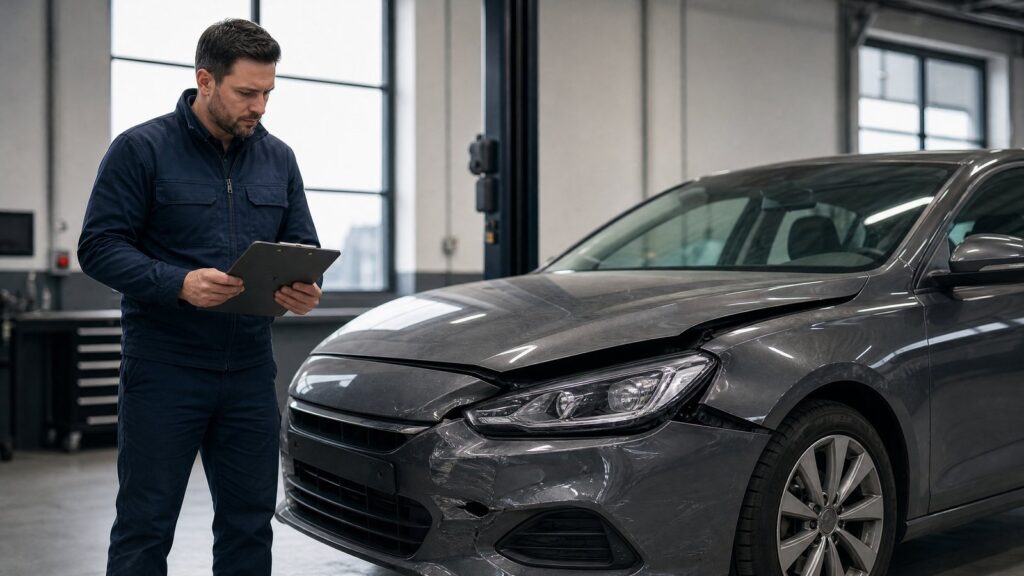
Attributing the causes of damage and distinguishing them from pre-existing damage requires a systematic examination. This involves checking whether features such as paint transitions, traces of corrosion, deformed mounting points or atypical repair signatures indicate new damage or represent defects that already existed. A clean attribution of damage is important for documenting responsibilities and for assessing which measures are technically necessary and to what extent they make sense.
During the examination, we use visual findings, measurement-based checks and the vehicle history to distinguish previous damage more reliably. In practice, typical inspection points are worked through in order to collect and document clear evidence:
- Paint transitions and colour deviations at places typical of repairs
- Irregularities in screw connections, rivets and weld seams
- Corrosion patterns that point either to longer exposure or to fresh damage
- Panel gaps and component fits that have changed due to collisions or part replacement
Professional assessment of dismantling and supplementary-cost risks
During the inspection, it is important to identify areas that can only be fully assessed after dismantling. Some damage is hidden under covers, behind trim panels or inside load-bearing structural components. A differentiated assessment of the risk of supplementary costs is part of our professional responsibility: the aim is to create transparency about possible additional work and to make the limits of the visual inspection clear.
The following table summarises key inspection aspects, typical indications found during the examination and the benefit of a documented statement. A clear presentation makes your decision easier and shows in which cases additional dismantling work makes sense.
| Inspection aspect | What we look for | Benefit of the documentation |
|---|---|---|
| Hidden deformations | Deformed mounting points, ill-fitting panel gaps | Shows possible consequential damage and the scope of repairs |
| Electrical components | Traces of moisture, defective plug connections | Avoids consequential damage through early checks |
| Structural components | Cracks, embrittlement or overlapping material | Allows conclusions about safety and repairability |
Photo documentation, calculation principles and impaired use
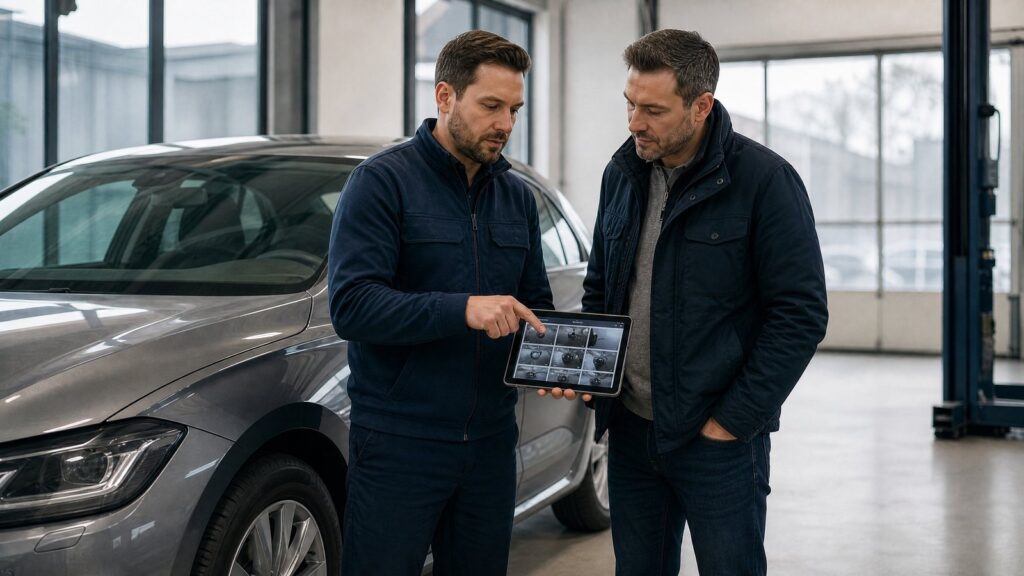
Meaningful photo documentation is indispensable for the traceability of an appraisal. Photographs should cover damaged areas, close-ups of findings and contextual overall views, supplemented by dimensions or reference points. In addition to photos, annotated images, measurement records and comparison documents are used where appropriate. The visual documentation serves as evidence of the condition at the time of inspection and supports the technical reasoning in the event of uncertainties or later reviews.
In line with the calculation logic, the individual items are broken down in a traceable way: materials, working time, required special work and, where applicable, the effort for additional checks. In addition, the impairment of use is described, such as restrictions on driving safety, comfort or resale value. The aim is a transparent presentation that takes both technical and economic aspects into account without anticipating a result.
Damage report in Berlin: recording the full extent of damage, not just visible marks
A scratch, a dent or a misalignment on the bodywork does not always show the full need for repair. A professional damage survey therefore also looks at adjacent components, mounting points, sensor areas and the function of affected systems. Depending on the findings, an additional diagnosis or a check in the garage may make sense.
The assessment records in a traceable way what is immediately visible and which points should be examined further from a technical point of view. This creates clarity for repair planning and prevents relevant findings from remaining only as a vague assumption.
Presenting repair costs, diminished value and loss of use in a traceable way
The amount of damage does not consist solely of a garage price. Depending on the case, spare parts, working hours, paintwork items, transfer to other workshops, diminished value or the period during which the vehicle cannot be used may play a role. A structured damage report makes it transparent which items are based on which technical findings.
This preparation makes coordination with the garage and the party settling the claim easier. It also helps to plan the repair realistically, because necessary work steps and dependencies that need checking become visible.
Parking, rear-end and wildlife damage: what matters in each damage report
Every type of damage has its own focal points. That is why the inspection after a minor parking bump looks different from one after a rear-end collision or a collision with wildlife.
Parking damage
This often involves small areas but expensive details: parking sensors, paintwork on adjacent parts and plastic brackets. We check whether the height of the impact matches the reported sequence of events. This is important if the party responsible disputes the damage.
Rear-end collision
With rear damage, the decisive findings are often under the bumper. Cross members, impact absorbers, the rear panel and the boot floor are also assessed. In the case of a heavier impact, a frame measurement may make sense.
Collision with wildlife
For partially comprehensive insurance (Teilkasko), it must be possible to attribute the damage to the collision with the animal. We therefore document hair, traces of blood and the typical damage pattern on the front, radiator and headlights before anything is cleaned or repaired.
Preparing for the appointment: what you can do yourself
There are several things you can do before the appointment to make sure the damage report is complete. If possible, do not drive the vehicle any more if lights, mirrors or wheels are damaged. If it can still be moved safely, park it so that we have space all around it. Washing it beforehand is not necessary, but heavy dirt on the damaged side makes it harder to assess scratches and paint damage.
Note when and where the damage occurred and whether there are witnesses or a police reference number. In the case of a comprehensive insurance claim, your insurer’s claim number helps. Photos taken immediately after the incident are particularly valuable because they show the condition before any changes. Send us these pictures in advance so that we can plan the appointment in a more targeted way.
On the vehicle itself, we then check more than just the visible marks. We look behind trim panels, measure the paint thickness if necessary and read out fault memories if sensors or control units may be affected. This way, the damage report for Berlin and Brandenburg also includes damage that only becomes apparent at second glance.
If you have already taken the vehicle to a garage, let them know that an inspection will take place before work begins. If parts have already been removed, ask for them to be kept so that we can look at them.
FAQ – Frequently Asked Questions
When should I have an appraisal carried out instead of just a cost estimate?
An appraisal is advisable when independent, traceable documentation of the damage is required, for example if the causes are unclear, the damage is extensive or previous damage is suspected. It provides a technical justification and more comprehensive recording than a simple cost estimate. An appraisal is particularly advisable if later disputes or more detailed reviews are to be expected. After a road traffic accident, an accident report forms the appropriate basis for the technical classification.
How does the expert go about attributing damage?
Damage is attributed on the basis of visible findings, comparative measurements, material testing and analysis of fracture or deformation patterns. Vehicle records, repair history and, where applicable, witness statements are also taken into account. The aim is to show in a traceable way which features point to a specific time of damage or to an earlier impact. You can find further explanations in our vehicle appraisal guide (in German).
What does supplementary-cost risk mean and how is it assessed?
Supplementary-cost risk describes the possibility that additional damage becomes apparent after the repair has started. It is assessed by weighing up the likelihood of hidden damage based on the findings and the technical design. The appraisal describes and justifies the risk and, where possible, objectively classifies the expected additional effort.
What role does photo documentation play in the appraisal?
Images are evidence and serve to illustrate technical findings. They document damaged areas, proportions and affected components. Properly taken pictures make the appraisal easier to understand, support the technical reasoning and help to identify later changes to the vehicle.
How is previous damage dealt with in the appraisal?
Previous damage is examined and described separately as part of the inspection. The report shows which features indicate older damage and which indicate current damage. The determination is based on technical evidence and, where possible, on comparison with vehicle documents or earlier documentation.
How transparent is the calculation logic in the appraisal?
The calculation is prepared in such a way that individual items such as materials, labour and special work are traceable. The derivation is documented so that the chosen approach and the technical assumptions remain clear to third parties. The aim is an objective and verifiable presentation without sweeping statements about settlement outcomes.
Do you need fast, professional help?
We are at your service in Berlin and Brandenburg. Contact us for a free initial assessment. On-site appointments are also possible in Steglitz, Friedrichshain and Kreuzberg; our overview of costs and prices provides initial guidance.