
Car Appraiser Berlin Spandau – Recording Directly Where the Vehicle Is Parked
Precise assessment, comprehensible results, tailored to the location
If a vehicle is to be assessed where it stands, you benefit from a recording that brings context and condition together. During an on-site appointment we not only analyse visible body damage but also document the position of the car, adjacent traces in the surroundings, any effects of the weather and obstacles at the parking location. In Spandau this can mean parking in a courtyard entrance, along a street or on private land – every particularity is included in the report. This includes reliable identification of the vehicle identification number and mileage, functional checks of lights and tyres, findings on leaks and systematic photographs from several angles. The on-site assessment therefore provides a reliable basis for assessing condition, need for repair and safety of use. In the report you receive a clear presentation of the findings, photo documentation with captions and a structured assessment on the basis of which you can plan further steps with the garage or insurer. Spandau lies in the west of Berlin on the Havel and the Spree, with its old town, the citadel and large residential areas such as Falkenhagener Feld. As a car appraiser in Berlin Spandau, we come to every part of the borough and as far as neighbouring Falkensee. Our services as a car appraiser for Berlin & Brandenburg are listed on the home page.
Service area Spandau

Why an assessment at the parking location makes sense
An assessment directly where the vehicle is parked avoids loss of information, because the condition is recorded exactly where traces, position and surroundings interact. On site we check visual and functional features in situ: paint damage in relation to the parking position, foreign bodies or ground residues under the vehicle, traces on adjacent surfaces and indications of third-party interference. For a precise assessment we usually need the registration certificate Part I (Fahrzeugschein), access to the keys if meaningful functional checks are to be carried out, and any existing damage photos or repair invoices for cross-checking. We take systematic photographs with a dimensional reference and describe the exact time of discovery, the weather conditions and the position of the vehicle on the property or in the street. On request we also note statements from eyewitnesses on site. This information helps to distinguish previous damage, put the chronology in order and make a well-founded decision on repair, taking the vehicle out of use or follow-up measures. For those involved in Spandau, we thus produce a complete report that serves as comprehensible documentation both for communication with garages and for insurers.
What we record and evaluate on site
Our recording of findings at the parking location is designed to bring technical facts and situational indications together. We attach importance to comprehensible documentation and clear wording that both laypeople and professionals can understand.
Documenting accident damage with reference to the location
We record accident traces in the context of the parking location: the position of the vehicle relative to the accident scene, possible skid marks, foreign particles and damage to nearby objects. On site we measure damaged areas, check structural elements for deformation and take an extensive series of photos from different perspectives, including detailed shots. In addition, we record technical data such as the vehicle identification number, mileage and existing repair receipts. This combined view reduces room for interpretation and creates a reliable basis for the damage claim and any legal or insurance questions. If necessary, we distinguish fresh fractures from older damage and note safety-relevant defects that should be remedied immediately.
Valuation taking the location into account
The assessment of the vehicle’s value takes into account not only technical and visual criteria but also circumstances at the parking location that can influence the condition and market value. We check for signs of corrosion, environmental influences due to the parking position, proper access for care and maintenance, and existing documentation of service intervals. Based on the defects found and the complete photo documentation, we prepare a market-oriented assessment that can be used for purchase negotiations, sale preparations or insurance valuations. Being able to assess the car where it is regularly parked helps to realistically compare external influences with the actual condition.
Preservation of evidence and safety-of-use check
If consequential damage is suspected or there are safety-relevant defects, we carry out a targeted preservation of evidence and record defects with recommendations for action. As part of the on-site inspection we check the braking system, lights, tyre tread and visible attachments for function and damage, insofar as an immediate test is possible. Every abnormality is documented with pictures and a technical comment so that it remains clear which measures are required to restore roadworthiness. The findings support your decisions on towing, immediate repairs or further reports.
Visible substance check and detailed shots
In addition to obvious damage, we record subtle signs of material fatigue, dents or paint chips that only show up under correct lighting and from certain angles. We work with standardised photo angles and also document interior damage, missing equipment features and visible technical defects such as leaked fluids. This precise photo documentation enables later comparison with repair photos and serves as a reference for a correct repair or valuation.
Why recording at the original location strengthens the evidential value
The quality of a report increases when the circumstances of the location are included in the documentation. On site it can be determined whether environmental influences, incorrectly positioned vehicles or adjacent property damage have contributed to the condition. In Spandau, the position on a street, in a courtyard or in a parking space can produce different traces that can only be interpreted correctly in their original context. In addition, with in-situ recording the evidential gap remains short: changes due to transport or interim storage do not occur, so photos and measured values reflect the time of recording exactly. Such a report stands up to queries from garages, insurers or later appraisers, because in addition to the technical findings it also records the situational observations and the time frame. This approach creates a clear basis for decisions on the scope of repair, immediate safety measures or an economic total loss.
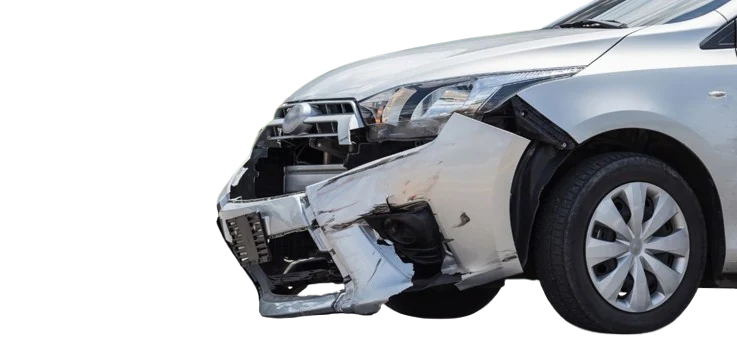
Clear evidential photos
Targeted photo documentation at the location provides meaningful pictures with reference to position and dimensions.
Contextual assessment
In addition to pure measured values, we include environmental factors in the assessment, such as the direction of impact, parking conditions or the weather at the time of recording.
Recommendations for action on site
Once the recording is complete, you receive specific advice on which steps are necessary in the short term — from towing and temporary sealing to close coordination with the garage.
Spandau: making interim steps transparent
The report is structured so that it can be used and understood by insurers, garages and private individuals.
Situations in which recording at the location is helpful
On-site recording is particularly advisable if the vehicle cannot be transported, is parked on public land or environmental factors are relevant to how the damage occurred. If you find a parked car in Spandau with obvious damage, it is worth documenting it on the spot so that traces are not altered by movement or the weather. Recording before a sale is just as useful, in order to prove condition and defects in their original state, or after a defect that becomes noticeable later, in order to narrow down the cause and time. If there is uncertainty about previous damage or a suspicion of third-party interference, situational documentation secures concrete evidence. Even if you have to decide whether to tow the vehicle, have it repaired immediately or park it on private property, a report with reference to the location gives you a reliable basis for your decision. We are also quickly on site for you in the neighbouring districts of Charlottenburg and Reinickendorf.
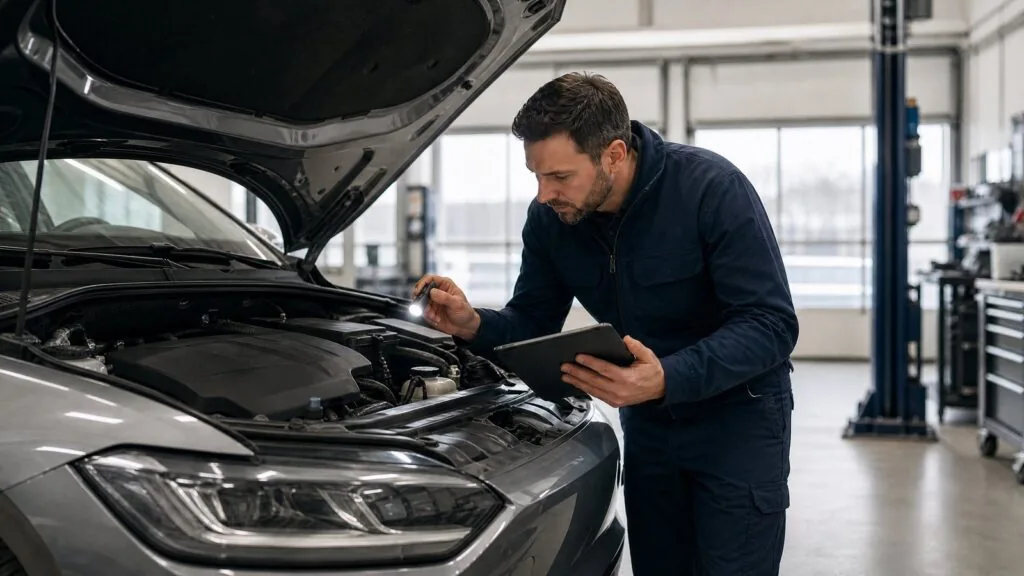
Objective recording of findings
Our recording follows a standardised procedure that systematically captures visible and functional features. This structure allows us to avoid subjective judgements and instead provide comprehensible facts. Every result is backed up with a photo and a comment.
Technical classification instead of superficial description
In addition to the pure description of the damage, we provide a technical classification: which components are affected, which types of repair are conceivable and which risks exist if the damage is not remedied. This information supports further decision-making.
What sets our approach apart: precision, traceability and technical clarity
Careful differentiation between old and new damage
An important element of our work is distinguishing between existing defects and fresh damage. This increases the evidential value for insurers and prevents misunderstandings in later repair invoices.
Practical advice for the next steps
The report always contains pragmatic suggestions: necessary immediate measures, suitable categories of garage and tips on keeping spare parts or evidence. This advice takes into account the local context and the situation on site.
How your car appraiser in Berlin Spandau works at the parking location
Our process is designed to gather as much meaningful information as possible without unnecessary delay. Every phase is documented so that you can understand at any time how the result was reached.
Arrival and description of the situation
We begin by recording the exact situation: location, surroundings, position of the vehicle and first notes on visible particularities. This initial description of the situation forms the basis for all further measurements and photos.
Identification and basic data
We then record vehicle data such as the vehicle identification number, registration number and mileage as well as the available documents. This basic data ensures that all findings can be clearly assigned to one vehicle.
Detailed recording of findings
This is followed by systematic documentation of the exterior and interior, functional checks as far as possible and targeted photographs with a view to dimensional references and damage details. We note material damage, cracks and visible technical defects.
Report preparation and recommendations
Finally, we summarise the results in a structured report, add technical comments to the findings and give specific recommendations on repair priority and further checks. You receive this report in writing.
FAQ – Frequently Asked Questions
The following explanations give you guidance on the preparation, procedure and evidential value of a report prepared on site. The answers are factual and intended to provide information.
Which documents should you have ready before we come to you in Spandau?
For an efficient recording, the registration certificate Part I (Fahrzeugschein) and any existing service records or repair invoices are very helpful. If possible, include older damage photos or correspondence with insurers; this makes it easier to distinguish previous damage. Access to the keys is useful if simple functional checks of the lights or doors seem sensible. If there were witnesses to the damage, note their contact details or provide short notes on when they made their observations. The more complete the documents, the more precisely the condition can be classified.
Which specific observations are made when recording the findings?
We document visible damage such as dents, cracks, paint abrasion and deformations and note their position and extent. Technical indications such as fluid leaks, damaged lights, tyre tread and drivetrain noises are recorded, insofar as they can be checked on site. We also record environmental factors, such as indications of third-party interference, skid marks or local obstacles. Each observation is provided with photo documentation and a technical assessment so that the findings can be traced later.
How many photos are taken and how are they labelled?
The number of pictures depends on the extent and complexity of the damage; extensive overview shots from several angles as well as detailed photos of damaged areas, component numbers and measuring points are usual. Each photo is given a caption with the location, viewing direction and distance or scale. We also note the time and the light conditions. This structured photo documentation enables later comparison with repair photos and increases traceability for third parties.
How do you deal with existing previous damage?
During the recording we distinguish between presumably fresh damage and pre-existing defects. To do this, we compare existing documents, external signs of ageing such as the degree of corrosion and the test results of neighbouring components. Where clear distinctions are difficult, we mark uncertainties in the report and, if necessary, recommend further examinations, such as dismantling or garage inspections, in order to clarify the history technically.
How is the state of repair assessed if work has already been partly carried out?
Partially completed repairs are assessed by documenting visible work results and any remaining defects. We check the fit of attachments, visible edges and colour match as well as the professional execution of recognisable seams and fastenings. If a final functional test is not possible due to missing keys or safety-related locks, we note this and state which further checks are required after the repair has been completed.
How is the safety of use of the vehicle assessed?
The assessment of roadworthiness is based on visible safety-relevant findings: the condition of brakes, tyres, lights and load-bearing body parts, insofar as they can be checked on site. If the findings indicate an acute hazard, we document this clearly and recommend immediate measures such as towing or temporary securing. Where more in-depth checks are necessary, we state which specialist examinations are required in the garage in order to finally clarify safe use.
How and within what time frame will you receive the result of the report?
After the on-site recording, we prepare a written report of findings with photo documentation and technical comments. The time until handover depends on the extent of the findings; simple recordings are documented promptly, while more complex cases require additional research. Regardless of the scope, you receive a structured presentation of the findings so that you can plan the next steps immediately. On request, we will explain the results in a discussion.
How to prepare for an efficient recording
If you would like your vehicle to be recorded on site in Spandau, collect the relevant documents in advance, have the keys ready and briefly note the circumstances in which the damage was found. A short description by phone or e-mail before the appointment saves time on site, because we can then plan the necessary checks in a targeted way. During the recording we capture all findings in photos and text and then provide you with a structured report with specific recommendations. Contact us for a brief consultation so that we can tailor the visit optimally to your situation. As a vehicle assessor in Spandau, we also prepare your report in Staaken, Kladow or Hakenfelde.